
Outside Bangkok, eye care in Thailand thins out quickly. Chiang Mai has a hospital dedicated to eyes and a university department with genuine subspecialty depth; Phuket has private hospital eye centers but no eye-only hospital. For anyone living in the provinces the practical question is which conditions can be handled locally and which are worth a flight to the capital. This national comparison covers ten providers across three provinces and reports only what each institution publishes officially about its eye services, so that the gaps are visible too.
Our sourcing rules for this comparison
This list spans Bangkok, Chiang Mai and Phuket, and deliberately mixes hospitals dedicated to eyes, private hospital eye centers and one public university department, because the sensible answer differs by province. Each entry needed an official page describing its eye service, and subspecialties appear only where the provider names them. Where a department page describes general eye examinations without naming subspecialties, we report exactly that instead of assuming a wider scope on its behalf.
Ten eye providers in three provinces

TRSC International Eye and Vision Center
TRSC International Eye and Vision Center is a Bangkok-only proposition, working from Rama IV Road on refractive procedures and cataract surgery rather than general eye disease. The published range on the center's site takes in ReLEx SMILE and SMILE Pro, PRK, ICL implantation and refractive lens exchange. Anyone considering elective vision correction from Chiang Mai or Phuket should count on screening, surgery and the early review visits all happening in the capital. Ask how many days must separate assessment and procedure before you book travel around them.
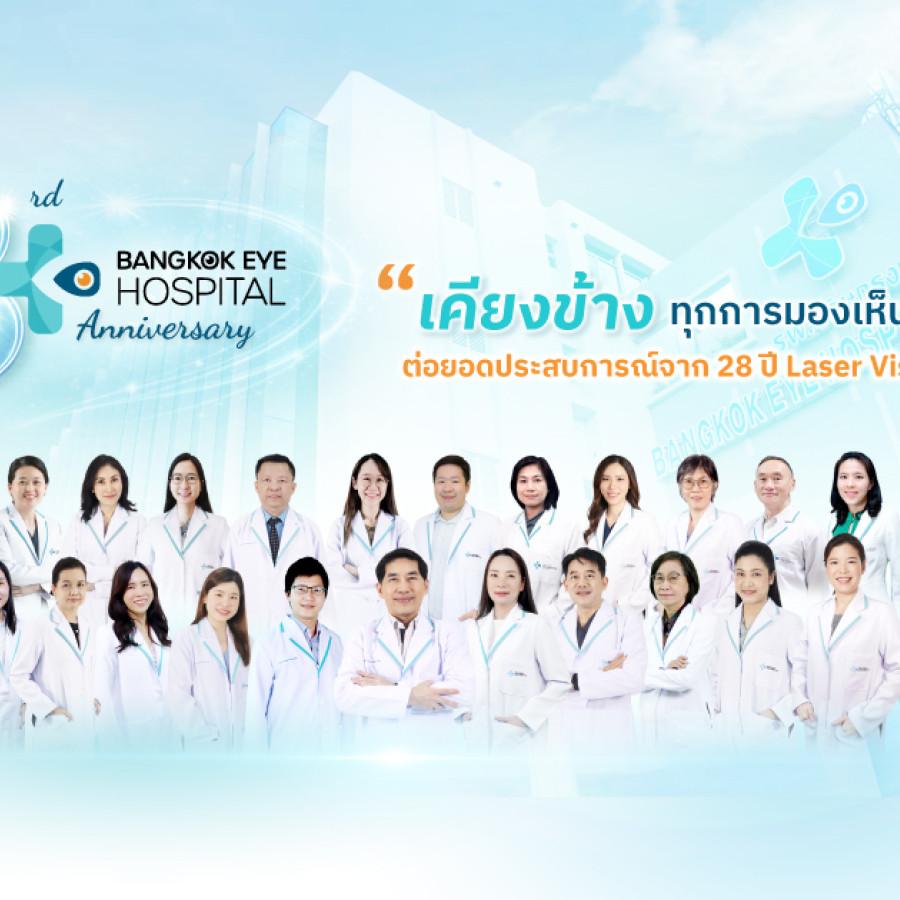
Bangkok Eye Hospital
Bangkok Eye Hospital states on its site that it serves expatriates and fly-in patients, and publishes AACI accreditation. Its Bueng Kum address sits nearer the northeastern edge of Bangkok than the airports or the central hotel districts, so a visitor arriving for treatment should treat transport as part of the plan rather than an afterthought. Its centers span cataract, retina, glaucoma, cornea and children's eyes. Ask whether preoperative assessment and surgery can be arranged on consecutive days if you are traveling in for them.
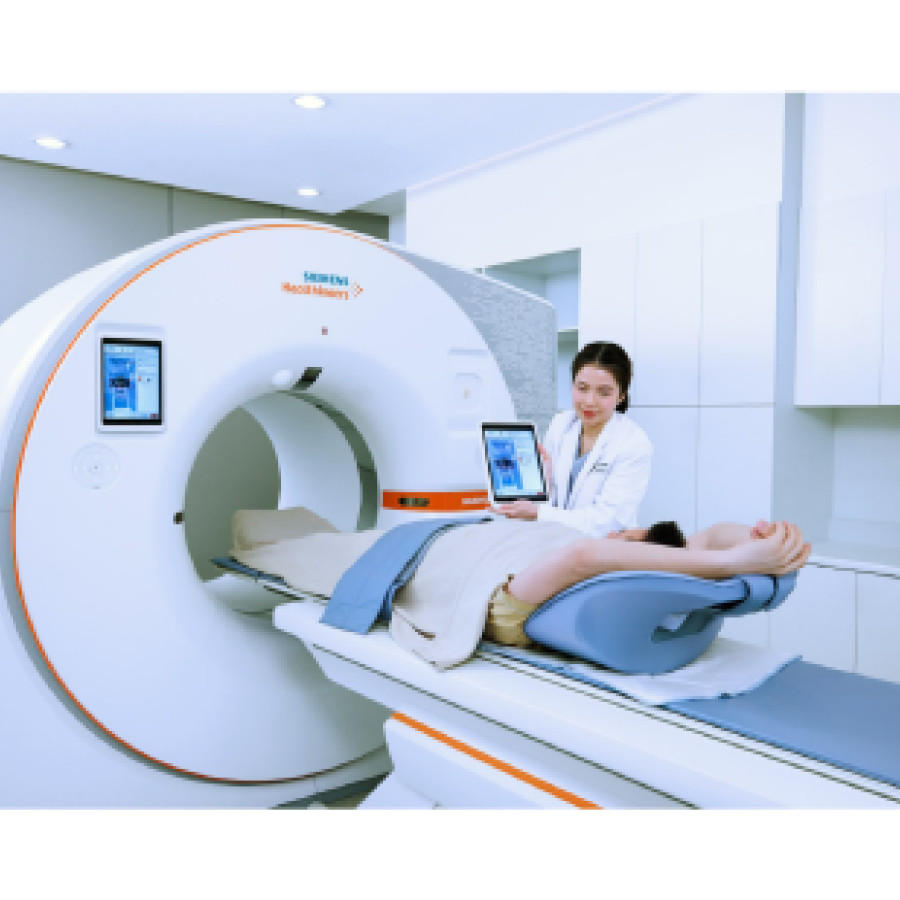
Bumrungrad International Hospital
Bumrungrad International Hospital earns its place on a national list less for ophthalmology alone than for what surrounds it. The vision and eye surgery center covers cataract, retina, glaucoma, cornea transplantation and refractive procedures, while the hospital separately publishes visa extension assistance, an airport reception desk and Cultural Support Officers. For someone flying into Thailand specifically for eye surgery, that arrival and paperwork layer often decides the choice. Before leaving home, ask that team which documents your particular case requires.
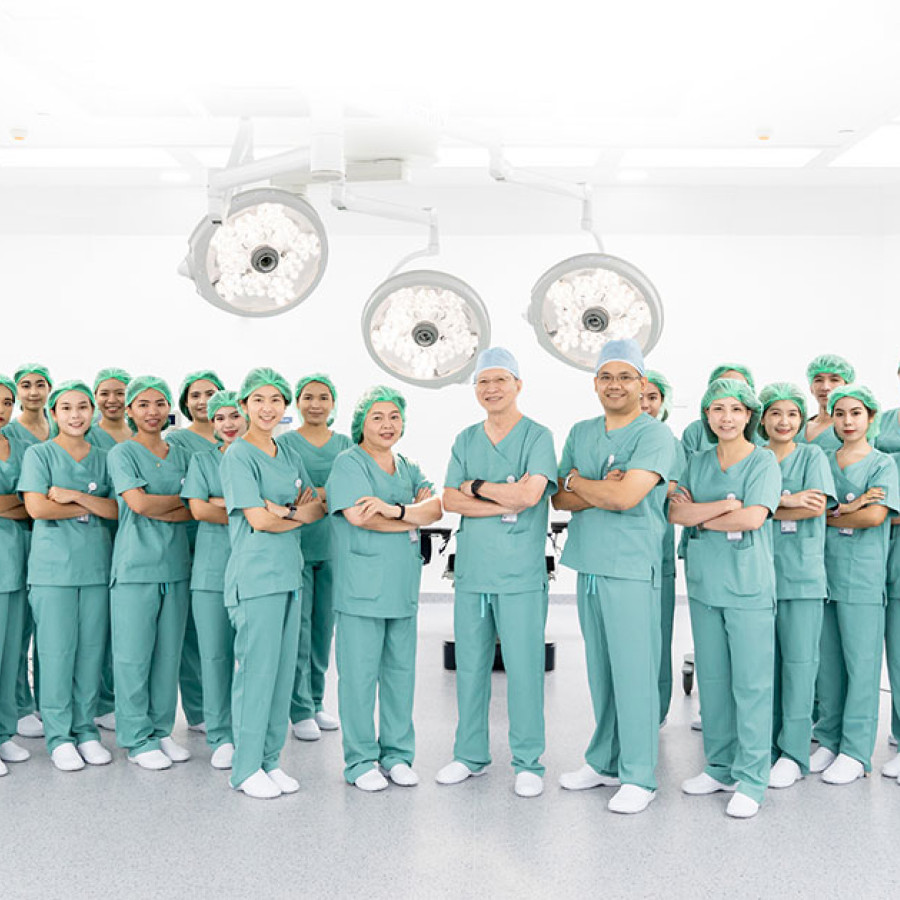
MedPark Hospital
MedPark Hospital brings a broad eye service into a hospital opened recently on Rama IV Road: its eye care center publishes refractive cataract surgery, glaucoma, retina and macular degeneration, cornea, oculoplastics and SMILE Pro. For patients traveling from other provinces the practical point is that the same campus holds a 24-hour emergency department and more than forty other centers, so complications are handled on site. Nothing is published about interpreters, so if English matters, settle that during the booking call.

St. Peter Eye Hospital
St. Peter Eye Hospital has worked exclusively on eyes in Chiang Mai since 1993 and describes itself as the first eye specialist hospital in northern Thailand. Its published services cover cataract surgery, presbyopic lens exchange, ICL implantation, pediatric and senior eye examinations and dry eye care, with clinics Monday to Saturday and Sunday mornings. Retina, glaucoma and laser refractive pages are not published, so the scope has limits. The site runs mainly in Thai; northern residents without Thai should arrange language help before the appointment.

Maharaj Nakorn Chiang Mai Hospital
Maharaj Nakorn Chiang Mai Hospital houses the ophthalmology department belonging to the medical faculty of Chiang Mai University, and the department's pages list cornea and refractive surgery, glaucoma, retina and vitreous, uveitis, oculoplastics and orbit, pediatric ophthalmology and neuro-ophthalmology. That is teaching-hospital range, delivered through the public system rather than a private campus. Waiting times and Thai-language administration are the counterweight. If your case has been referred here, ask what documentation the outpatient eye clinic expects and which day your particular subspecialty holds clinic.

Bangkok Hospital Chiang Mai
Bangkok Hospital Chiang Mai keeps its ophthalmology clinic open daily from 08.00 to 20.00, covering comprehensive eye examinations and the diagnosis and treatment of eye disease rather than a set of named subspecialties. Read that scope plainly: a general ophthalmology clinic inside a private tertiary hospital, not a dedicated eye center. Its draw for foreign residents lies in the hospital's interpreter and coordinator services. Ask directly whether your condition would be treated here or referred on to a Bangkok campus.
Bangkok Hospital Phuket
Bangkok Hospital Phuket runs its eye center on the second floor of its Phuket Town campus, publishing cataract surgery with its own clinical outcome figures alongside general eye care. Publishing outcomes at all is uncommon among the providers here, though the figures remain the hospital's own. For island residents this is the principal private route to cataract work without flying to Bangkok. Interpreter services are published as complimentary; ask for one to be booked for the consent conversation specifically, not only registration.

Bangkok Hospital Siriroj
Bangkok Hospital Siriroj lists glaucoma surgery using PreserFlo and other minimally invasive techniques at its eye center, together with cataract surgery, comprehensive examinations and pterygium treatment, the last of which matters in a province where outdoor work and sun exposure are constant. Within the BDMS network it counts as the island's second hospital, on Chalermprakiat Ror 9 Road in Wichit. No dedicated international patient office is currently published here, unlike its sister campus, so ask what language help exists before choosing between the two.
How to decide where to have your eyes treated
Ask for an appointment with the ophthalmology service relevant to your condition. Confirm whether the specialist assessment and required imaging or tests are available at the same location.
Bring earlier eye records and prescriptions. Discuss alternatives, costs and follow-up for any proposed procedure, and arrange how records will reach your usual eye-care clinician if you return home between visits.
Rutnin Eye Hospital has worked on eyes and nothing else since the 1960s, from Sukhumvit 21 in central Bangkok, and its hospital site lists ocular oncology, neuro-ophthalmology and oculoplasty among its subspecialties, alongside the cataract, retina and glaucoma services most eye providers publish. Those narrower subspecialties are why patients get referred here from other provinces. The inpatient department runs 24 hours. If you are traveling in from elsewhere in Thailand, ask how many days the workup takes before any procedure gets scheduled.