Animal bites and scratches are common reasons for travellers and residents in Thailand to seek medical advice. The main concern is not only the wound itself. Thailand is listed by the World Health Organization as a country where rabies is endemic, so a bite, scratch or certain types of saliva exposure can require prompt assessment for rabies post-exposure prophylaxis.
Rabies can be prevented after exposure when appropriate care is given before symptoms develop. Once clinical symptoms appear, the disease is virtually always fatal. This guide explains what to do immediately, which exposures may need rabies vaccination or rabies immunoglobulin, and how to find appropriate care in Thailand.
If there is heavy bleeding, serious trauma, loss of consciousness, breathing difficulty or another immediate emergency, seek urgent medical help. Thailand's National Institute for Emergency Medicine lists 1669 as the emergency medical number.
What to do immediately after an animal bite or scratch
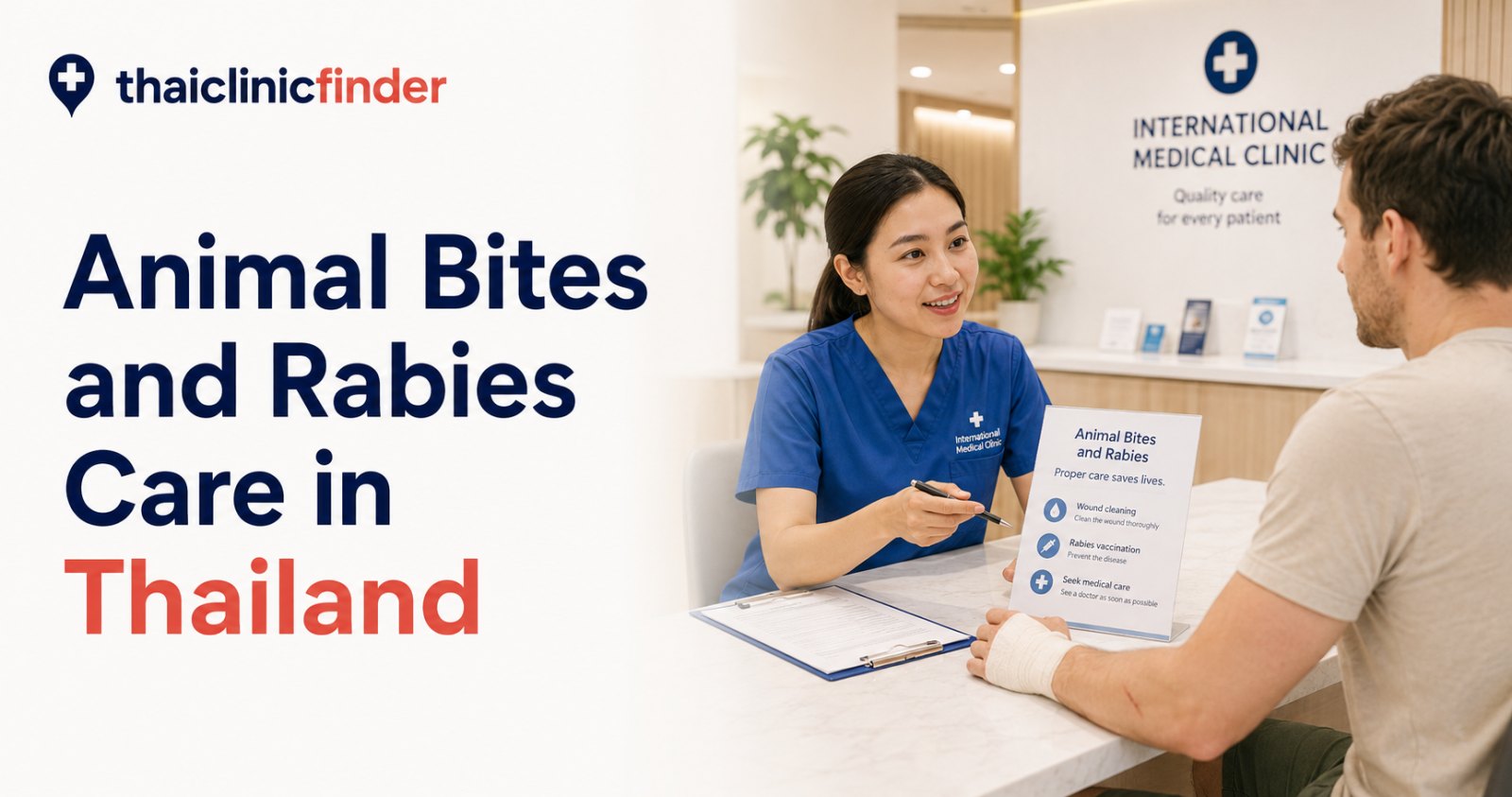
The first step is thorough wound cleaning. WHO recommends washing and flushing a possible rabies exposure with soap and water for at least 15 minutes. If soap is not available, wash the area thoroughly with water. An iodine-containing or other appropriate virucidal antiseptic may be used when available.
Do not wait to see whether symptoms develop before seeking medical care. Rabies post-exposure prophylaxis is intended to prevent the disease before symptoms begin.
After initial washing, arrange medical assessment as soon as possible. A clinician can assess the wound, the type of animal contact, whether rabies vaccination is indicated, whether rabies immunoglobulin is required and whether other care such as tetanus protection or antibiotics should be considered.
Which exposures can require rabies treatment?
WHO groups contact with a potentially rabid animal into three exposure categories. These categories help clinicians decide what post-exposure prophylaxis is appropriate.
Category I exposure
Examples include touching or feeding an animal, or an animal licking intact skin.
WHO classifies these contacts as no exposure when the history is reliable. Washing the exposed skin is advised, but rabies post-exposure prophylaxis is not normally required for Category I contact.
Category II exposure
Examples include nibbling of uncovered skin and minor scratches or abrasions without bleeding.
WHO recommends wound washing and immediate rabies vaccination for Category II exposure. This means that a scratch does not have to bleed to justify medical assessment.
Category III exposure
Examples include one or more bites or scratches that penetrate the skin, saliva contaminating broken skin or a mucous membrane, and direct contact with bats.
WHO recommends wound washing, immediate rabies vaccination and rabies immunoglobulin or an appropriate monoclonal antibody product when indicated for Category III exposure.
The exact treatment plan depends on the exposure and the person's previous rabies vaccination history. Do not try to assign your own exposure category or vaccination schedule from an online guide.
Dog and cat bites in Thailand
Dogs are the main source of human rabies transmission globally, and WHO lists Thailand among the rabies-endemic countries in its South-East Asia Region. A bite from a pet should therefore still be assessed rather than dismissed because the animal appears healthy or has an owner.
If the animal has an owner, obtain reliable contact details and information about its rabies vaccination history if this can be done safely. This information can help the clinician and local animal-health authorities.
Thai Department of Disease Control advice says to confine a dog or cat involved in a bite or scratch and observe it for 10 days when this can be done safely. Arrange medical assessment for the exposed person straight away. Do not handle an aggressive or unknown animal.
Monkey bites and scratches
Monkey bites and scratches can occur around tourist sites and other places where people and animals come into close contact. Any bite or scratch that breaks the skin should be washed immediately and assessed by a healthcare professional.
Even a minor scratch without bleeding can meet the WHO definition of a Category II rabies exposure. The clinician should assess whether vaccination is required based on the actual contact and your previous vaccination history.
Avoid trying to handle, feed or restrain the animal after the incident. If possible, note where the exposure happened and the type of animal without putting yourself at further risk.
What about bats?
Direct contact with a bat needs particular caution. WHO includes direct bat exposure in Category III.
If you have been bitten, scratched or had another relevant direct contact with a bat, wash the area and seek medical assessment promptly. Bat injuries can be small and may be difficult to see, so the absence of a large visible wound does not rule out a meaningful exposure.
Rabies vaccine and rabies immunoglobulin
Rabies post-exposure prophylaxis can include wound care, a course of rabies vaccine and rabies immunoglobulin or a recognised monoclonal antibody product when indicated.
Not every exposure requires the same treatment. WHO recommends vaccination for Category II and Category III exposures. Category III exposures generally also require rabies immunoglobulin or an appropriate monoclonal antibody product when indicated, unless previous vaccination or another clinical factor changes management.
If you have already received rabies vaccination in the past, tell the clinician. Bring a vaccination record if you have one. Previous vaccination changes post-exposure management.
Different recognised vaccination regimens can be used. The route, schedule and number of doses should be determined and documented by the healthcare provider treating you. Do not start, stop or modify a rabies vaccination course without professional advice.
Other issues a clinician may check
An animal bite can cause problems beyond rabies. Depending on the wound, the clinician may assess:
- wound depth and contamination
- risk of bacterial infection
- tetanus vaccination status
- damage to tendons, nerves, joints or other structures
- whether antibiotics or other wound treatment are appropriate
Deep wounds, bites to the hand or face, injuries near joints, crush injuries and wounds with increasing pain, swelling, redness, discharge or fever need medical attention. Serious bleeding or major trauma should be treated as an emergency.
Where to get rabies care in Thailand
Rabies post-exposure care is available through healthcare facilities in Thailand, but vaccine, rabies immunoglobulin, opening hours and appointment procedures can vary. Contact the exact hospital or clinic before travelling there when practical, particularly if you have been told that immunoglobulin is required.
In Bangkok, the Queen Saovabha Memorial Institute of the Thai Red Cross Society operates a Rabies Immunization Clinic at 1871 Rama 4 Road, Pathumwan, Bangkok 10330. Its official website lists rabies immunization services. Confirm current clinic hours, appointment requirements and availability directly before attending.
Outside Bangkok, hospitals and clinics may also provide assessment and rabies post-exposure treatment. Thai Clinic Finder should list a facility only when the exact branch, location and relevant service have been confirmed from a current first-party source.
Do not assume that English is available at a particular hospital, clinic or department unless the provider states this. International patients should confirm the language available for the exact appointment.
Costs, insurance and documentation
Fees for consultation, wound treatment, rabies vaccine and rabies immunoglobulin can vary by facility and by the treatment required. Ask the provider for an estimate when possible, but do not delay urgent care solely to compare prices.
If you have travel or private health insurance, keep receipts, medical notes and vaccination records. Some insurers may require notification within a particular period or may direct you to a specific facility, but emergency care should not be delayed while waiting for insurance approval.
Ask the provider to document the vaccine product, administration dates, route and any rabies immunoglobulin or other post-exposure product given. This is particularly important if you will continue the vaccination course in another city or country.
If you are leaving Thailand during treatment
Tell the treating clinician if you are due to travel before the vaccination course is complete. Ask for written documentation of the treatment already given and the dates of any remaining doses.
Arrange continuation of care with a suitable healthcare provider at your destination. Do not simply skip a scheduled dose because you are travelling.
If the bite or scratch happened several hours or days ago and you have not yet been assessed, seek medical advice now rather than assuming that the opportunity for preventive treatment has passed.
What not to do after a possible rabies exposure
Do not rely on the appearance of the animal to decide that treatment is unnecessary. Do not wait for rabies symptoms in yourself. Do not try to catch or restrain an aggressive or unknown animal.
Avoid home remedies that can damage the wound. Proper washing and professional assessment are more important than trying to treat the exposure yourself.
Before attending a clinic or hospital
If the situation is stable enough to call ahead, ask the facility whether it can assess an animal bite and provide rabies post-exposure treatment. If a clinician has already told you that rabies immunoglobulin is required, ask specifically whether it is available.
Take any relevant vaccination record, identification and insurance information. If you know the animal's vaccination history or have contact details for its owner, bring that information as well.
For international residents and visitors, also confirm the language available for the appointment. Availability, fees, services and staffing can change, so information from a directory should always be checked directly with the provider.
Conclusion
After an animal bite, scratch or possible saliva exposure in Thailand, wash the area thoroughly with soap and water for at least 15 minutes and arrange prompt medical assessment. The need for rabies vaccine or rabies immunoglobulin depends on the type of exposure and your previous vaccination history.
Do not wait for symptoms and do not rely on the animal appearing healthy. If the injury is severe, seek emergency care. For non-life-threatening exposures, contact a hospital or clinic that can assess animal bites and confirm whether rabies post-exposure treatment is available.
Frequently Asked Questions
Do I need a rabies vaccine if a scratch did not bleed?
Possibly. WHO classifies minor scratches or abrasions without bleeding as Category II exposure and recommends wound washing and immediate vaccination. A healthcare professional should assess the actual contact and your vaccination history.
What should I do first after a dog or monkey bite in Thailand?
Wash and flush the wound with soap and water for at least 15 minutes, then seek medical assessment promptly. Do not wait for symptoms or for the animal to become ill before arranging care.
Do I need rabies treatment if the dog looked healthy?
A healthy appearance does not by itself rule out rabies risk. Thailand is listed by WHO as rabies-endemic, so the exposure should be assessed by a healthcare professional rather than judged only by the animal's appearance.
What if I was vaccinated against rabies before?
Tell the treating clinician and bring your vaccination record if available. Previous rabies vaccination changes post-exposure management, so the clinician should determine the appropriate schedule.
Can I continue rabies vaccination outside Thailand?
If you need to travel during a vaccination course, ask the treating provider for written details of the vaccine, dates and treatment already given. Arrange continuation with a healthcare provider at your destination rather than missing scheduled care.
What is the emergency medical number in Thailand?
Thailand's National Institute for Emergency Medicine lists 1669 for emergency medical services. Use emergency services for severe bleeding, major trauma, loss of consciousness, breathing difficulty or another immediate emergency.
Sources

Writer
Thai Clinic Finder Editorial Team
The editorial team checks public healthcare information against official provider and institutional sources. It does not provide medical advice.