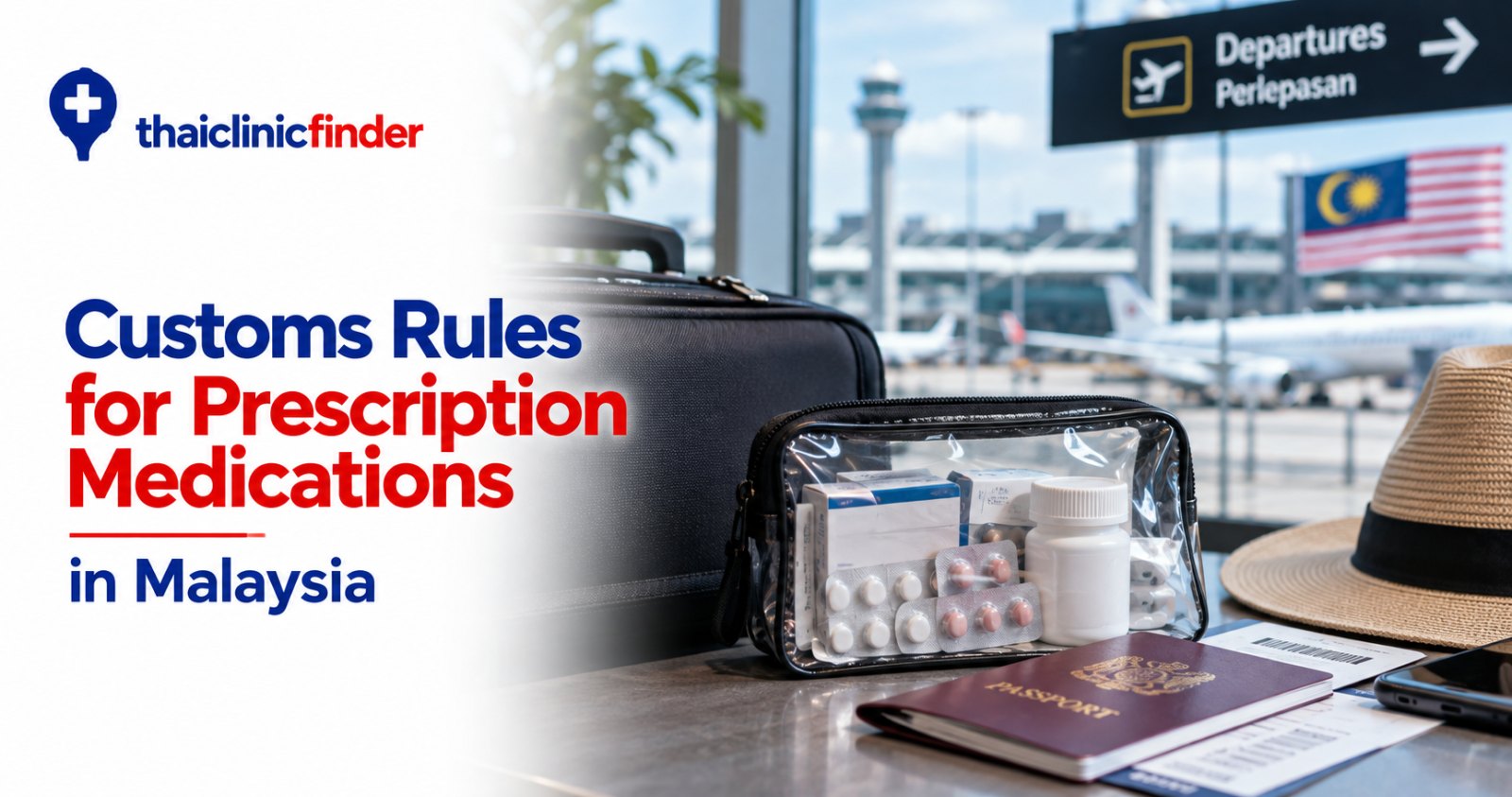
Malaysia has relatively clear official rules for travelers carrying medicines. The Ministry of Health allows a traveler arriving in Malaysia to carry medication in personal luggage for their own use, or for a family member traveling with them, in a quantity that generally does not exceed one month's use for one person.
That personal-use exemption does not mean every medicine can be carried without additional conditions. Dangerous drugs, narcotics and psychotropic substances are subject to stricter legislation and should be accompanied by proper medical documentation. Some must be declared on arrival.
Malaysia's published rules are more specific than those of several neighboring countries, which makes preparation easier when you know the active ingredient and quantity.
The general personal-use limit is one month
Malaysia's National Pharmaceutical Regulatory Agency states that the usual medicine-registration requirements do not apply to a person arriving in Malaysia with a product in personal luggage for their own or accompanying family's use when the quantity does not exceed one month's use by one person.
The Ministry of Health traveler guide explains that the quantity is determined according to the labeled dose of the product.
This applies to medicines, vitamins and health supplements carried for personal use under the relevant rules.
One month is a quantity rule, not permission for every substance
A one-month supply does not mean all controlled drugs are automatically permitted without documentation.
Malaysia separately regulates:
- scheduled poisons
- psychotropic substances
- dangerous drugs
- narcotic preparations
The exact active ingredient remains important.
Controlled medicine should be carried with medical documentation
Malaysia's official submission to the International Narcotics Control Board states a 30-day limit for narcotic drugs and psychotropic substances carried by travelers for treatment.
The documentation described includes:
- a valid medical prescription from the treating physician in the country of departure
- presentation of the original prescription at customs
- a doctor's letter stating the patient's name, medicine, active substance, dosage and total quantity
This gives Malaysia one of the clearer controlled-medication frameworks in the region.
Dangerous drugs should be declared
Malaysia's Ministry of Health traveler guide states that prescription medicines containing dangerous drugs, such as narcotics or other drugs with abuse or dependence potential, should be declared when arriving at the Malaysian border entry point.
The Dangerous Drugs Act also provides an exemption for a reasonable quantity of a medicinal preparation genuinely supplied to the traveler on a prescription, provided that possession is declared as soon as possible on arrival.
Do not hide a controlled medicine in checked baggage to avoid questions.
Carry the original prescription
For controlled medicines, bring the original prescription if possible.
A doctor's letter should include:
- your name
- medicine name
- generic active ingredient
- dose
- prescribed quantity
- treatment period
Keep all documents accessible during arrival rather than buried in checked luggage.
Keep medication in labeled packaging
Original packaging helps show what the product is and how much medicine you are carrying.
This is particularly important for controlled substances.
Avoid arriving with loose tablets in an unmarked container.
How Malaysia identifies registered medicines
Medicines marketed in Malaysia normally carry a registration number beginning with MAL.
The NPRA explains that registered pharmaceutical products have a MAL registration number, and legitimate products can be checked through Malaysian regulatory systems.
This is useful if you need to buy a replacement medicine during your stay.
Bringing an unregistered medicine for personal treatment
Malaysia specifically provides a personal-luggage exemption from normal product-registration requirements for quantities up to one month's use.
This means a medicine does not necessarily need to be commercially registered in Malaysia merely because a traveler is carrying an appropriate personal amount.
The exemption does not override controlled-drug restrictions.
ADHD medication needs ingredient-specific checking
Some ADHD medicines can contain psychotropic or dangerous substances.
Before travel, determine whether your medicine contains:
- methylphenidate
- amphetamine
- dexamphetamine
- another controlled stimulant
Then check the current Malaysian classification and traveler requirements.
Carry no more than the permitted treatment supply without specific authorization.
Opioid pain medicines require care
A traveler taking opioid pain relief should prepare documentation before entering Malaysia.
The Dangerous Drugs Act regulates multiple opioid substances.
Keep the medicine with the prescription and doctor's letter and declare it when required.
Do not assume that a strong painkiller prescribed after surgery abroad is treated like an ordinary tablet at Malaysian customs.
Psychotropic medicines have a 30-day traveler framework
Malaysia's INCB submission states a 30-day limit for psychotropic substances for travelers under medical treatment.
This can apply to selected medicines used for:
- anxiety
- insomnia
- psychiatric disorders
- ADHD
The active substance, not the diagnosis, determines the legal category.
Cannabis and cannabis-derived prescription products
Medical use in another country does not automatically allow unrestricted import into Malaysia.
Cannabis and substances controlled under the Dangerous Drugs Act require specific legal consideration.
Do not enter Malaysia with cannabis flower, THC products or a foreign medical-cannabis preparation without confirming that the exact product is legally permitted.
A foreign prescription is not by itself a guarantee of permission.
Supplements also fall under Malaysia's import framework
Malaysia's personal traveler guidance includes vitamins and health supplements in the one-month personal-use framework.
However, products marketed as supplements elsewhere may contain ingredients regulated as medicines in Malaysia.
The label supplement does not determine legal status.
Do not mail extra medicine without checking
The one-month exemption specifically relates to medicine carried as part of a traveler's personal luggage.
It should not be assumed to apply in the same way to postal or courier shipments.
Imported medicine sent separately can trigger formal import requirements.
If you need more than a month's supply, contact Malaysia's Pharmaceutical Services Programme before travel.
Buying medicine in Malaysia
Malaysia has a well-developed pharmacy sector, but controlled medicines require legitimate medical channels.
Registered drugs normally carry a MAL number.
The Ministry of Health also operates campaigns warning against unregistered, counterfeit and illegally imported medicines.
Avoid purchasing controlled medicine from social media or informal sellers.
Traveling between Malaysia and Thailand
A regional itinerary requires separate compliance at every border.
Thailand does not use Malaysia's one-month rule for every category of medicine, and Thai controlled-drug permit requirements are different.
If traveling north after Malaysia, review Customs Rules for Prescription Medications in Thailand separately.
A practical checklist for Malaysia
Before travel:
- Identify every active ingredient.
- Limit ordinary personal medication to no more than one month's use unless you have obtained specific guidance.
- Keep original packaging.
- Carry the prescription.
- Obtain a doctor's letter for controlled medication.
- Check whether the medicine is a dangerous drug or psychotropic substance.
- Declare controlled dangerous drugs when required on arrival.
- Keep documents in hand luggage.
- Contact Malaysia's Pharmaceutical Services Programme if you need more than the ordinary traveler allowance.
- Do not assume that mailed medicine follows the same exemption.
The practical answer
Malaysia generally allows travelers to carry a one-month personal supply of medicines in their luggage for themselves or an accompanying family member.
For narcotic and psychotropic medicines, Malaysia's official INCB submission also uses a 30-day limit and requires medical documentation. Dangerous drugs should be declared on arrival where applicable.
Malaysia's rules are comparatively well documented, but the exact ingredient still matters. Travelers taking stimulants, opioids, sedatives or cannabis-derived medicines should verify classification before departure rather than relying only on the general one-month allowance.
Frequently Asked Questions
How much prescription medicine can I bring into Malaysia?
Malaysia generally allows a quantity not exceeding one month's use for one person when carried in personal luggage for the traveler or an accompanying family member.
Can I bring controlled medication into Malaysia?
Potentially yes for legitimate treatment, but narcotic and psychotropic medicines have additional requirements. Carry a valid prescription and doctor's letter and declare dangerous drugs when required.
What is the limit for narcotic or psychotropic medicine?
Malaysia's official INCB submission states a 30-day limit for narcotic drugs and psychotropic substances carried by travelers for medical treatment.
Do I need to declare prescription medicine in Malaysia?
Ordinary medication does not automatically require the same process as dangerous drugs. Malaysia's traveler guide states that prescription medicines containing dangerous drugs should be declared at the border.
Can I bring an unregistered foreign medicine to Malaysia?
Malaysia provides a personal-use exemption from normal product registration for medicines carried in personal luggage up to the permitted quantity. Controlled-drug rules still apply.
Can I mail medication to Malaysia?
Do not assume the personal-luggage exemption applies to postal shipments. Separate import requirements can apply.
Sources

Writer
Niran Chaiyasit
Niran Chaiyasit is a Thai health writer with a background in public health and a focus on travel health, disease prevention and healthcare access in Thailand. His work covers topics such as common illnesses, vaccinations, mosquito-borne diseases, food safety and practical health information for travelers and expatriates.

Medical review
Justin Brooks
Daniel Brooks is an American health writer with a background in health sciences and a focus on rehabilitation, musculoskeletal health and patient education. He writes about physiotherapy, injury recovery, pain management, preventive health and practical healthcare guidance for international patients and travelers.