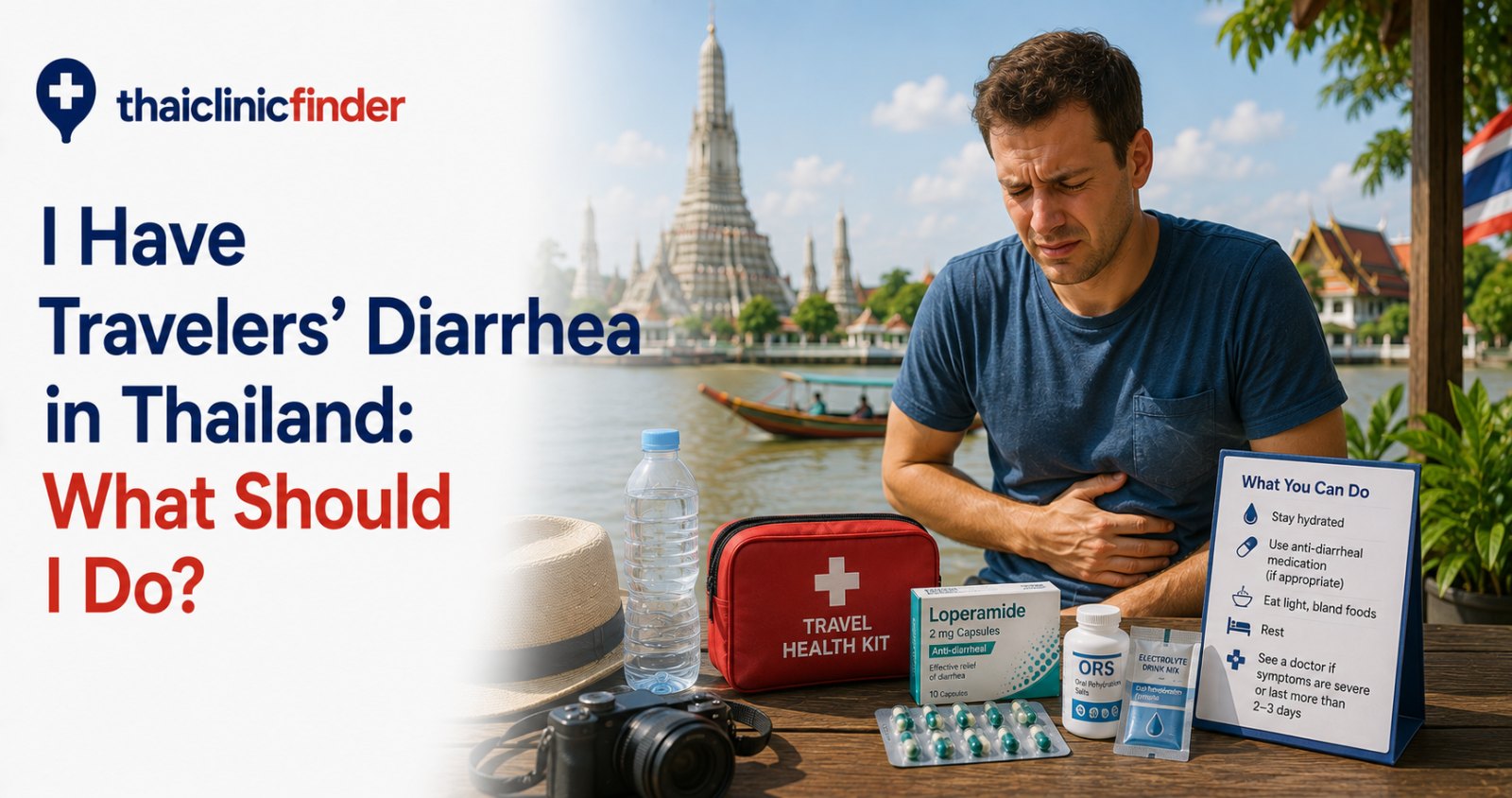
Travelers' diarrhea can turn a normal day in Thailand into a search for the nearest bathroom very quickly. In many otherwise healthy adults, the illness is short-lived and can be managed with fluids, rest and temporary symptom relief. The important part is knowing when it is no longer a simple stomach upset.
Asia is among the higher-risk regions for travelers' diarrhea, according to CDC travel guidance. The illness can be caused by bacteria, viruses or parasites, and the exact cause is often impossible to identify from symptoms alone.
If you have uncomplicated watery diarrhea and otherwise feel reasonably well, focus first on hydration. Loperamide can sometimes make symptoms easier to manage, particularly when you need to take a bus or flight. Blood in the stool, significant fever, severe abdominal pain, repeated vomiting or dehydration change the situation and should lower the threshold for medical care.
First priority: replace what you are losing
Diarrhea removes water and electrolytes from the body. Replacing those losses matters more than trying to stop every bowel movement immediately.
Drink regularly, even if you do not feel particularly thirsty. For more substantial diarrhea, oral rehydration solution is especially useful because it contains glucose and electrolytes in proportions designed to improve fluid absorption.
Oral rehydration salts can be mixed with water according to the packet instructions. Do not deliberately make the solution stronger by adding less water, as this changes its intended concentration.
Watch for possible dehydration, including:
- very dry mouth
- dizziness when standing
- marked weakness
- very dark or infrequent urine
- inability to keep fluids down
- fainting or confusion
If you are struggling to stay hydrated, seek medical care rather than relying only on over-the-counter treatment.
Loperamide can help, but only in the right situation
Loperamide slows intestinal movement and reduces the frequency and urgency of bowel movements. It does not kill the organism causing diarrhea.
CDC includes loperamide as an option for symptomatic treatment of mild and moderate travelers' diarrhea. It can be especially practical when diarrhea is interfering with a long journey.
For adults, loperamide commonly comes as a 2 mg tablet or capsule. A commonly used acute-diarrhea regimen starts with 4 mg, followed by 2 mg after subsequent loose stools. CDC treatment regimens use a maximum of 16 mg in 24 hours, although you should follow the instructions for the exact product you purchase.
Do not exceed the recommended dose. Very high doses of loperamide can cause serious toxicity, including dangerous heart rhythm problems.
For a more detailed medication guide, see Loperamide: Uses, Dosage, Side Effects and When Not to Take It.
Loperamide Thailand 7-Eleven: can you buy it there?
Travellers frequently search for terms such as loperamide Thailand 7-Eleven when diarrhea starts late at night or while they are away from a pharmacy.
Loperamide itself is clearly available in Thailand. The Thai FDA's medicine database lists multiple registered 2 mg loperamide hydrochloride products, including Imodium and several Thai generic brands.
What is less clear is whether a particular 7-Eleven branch stocks loperamide at a given time. Thailand's convenience stores sell some basic health products, but medicine availability varies and we could not verify an official nationwide 7-Eleven listing showing loperamide as a standard product.
If you specifically need loperamide, a pharmacy is the more reliable place to look. Ask for loperamide or loperamide hydrochloride 2 mg rather than relying only on the brand name Imodium.
Do not confuse a herbal digestive product or another antidiarrhoeal medicine with loperamide. Check the active ingredient on the package.
What loperamide products exist in Thailand?
Thailand's FDA National Drug Information database lists numerous registered medicines containing loperamide hydrochloride 2 mg.
Examples currently appearing in the database include:
- Imodium 2 mg
- Lopedium 2 mg
- Lorapil 2 mg
- Lomedil 2 mg
- Loramide 2 mg
- several additional locally registered generic products
The existence of a Thai FDA registration does not mean every pharmacy will stock every brand.
If a pharmacist offers a product you do not recognise, look at the active ingredient and strength. A generic 2 mg loperamide product does not need to carry the Imodium brand name to contain the same active ingredient.
Do not use loperamide alone if there is blood or fever
This is one of the most important distinctions in travelers' diarrhea treatment.
CDC advises against using antimotility medicines such as loperamide as the only treatment when diarrhea is bloody or accompanied by fever.
Visible blood in the stool is considered dysentery and falls into the severe category of travelers' diarrhea.
Seek medical assessment if you have:
- blood in the stool
- significant fever
- severe abdominal pain
- persistent vomiting
- marked weakness
- substantial dehydration
- rapidly worsening symptoms
Simply suppressing bowel movements can be inappropriate when an invasive intestinal infection is possible.
Do I need antibiotics?
Not necessarily.
CDC does not recommend antibiotics for mild travelers' diarrhea. Many episodes improve without them.
For moderate illness, antibiotics may sometimes be considered. Severe travelers' diarrhea, particularly dysentery, can warrant antibiotic treatment depending on the clinical picture.
Do not buy an antibiotic simply because you have had diarrhea for several hours. The appropriate choice depends on illness severity, likely organisms, allergies and antimicrobial resistance.
Southeast Asia is also a region where antibiotic resistance influences the choice of treatment, making random self-treatment with leftover antibiotics particularly unhelpful.
Can you take loperamide and an antibiotic together?
Sometimes, yes.
CDC states that loperamide may be used alongside an appropriate antibiotic for travelers' diarrhea. The combination can reduce the duration of troublesome symptoms in selected cases.
That does not mean every traveler should combine loperamide with whatever antibiotic a pharmacy has available.
If your illness is serious enough that you think antibiotics are needed, getting medical or pharmacist advice is more sensible than constructing your own treatment combination.
What should you eat while you have diarrhea?
You do not necessarily need to stop eating completely.
If you are hungry and able to tolerate food, choose relatively simple meals and smaller portions while symptoms are active.
Practical options may include:
- plain rice
- soup or broth
- toast or crackers
- bananas
- other simple foods you tolerate well
Avoid making the digestive system work harder with very large meals, heavy alcohol consumption or foods that clearly worsen your symptoms.
The priority remains fluid replacement.
Be careful with very sugary drinks
Soft drinks, fruit juices and sweetened energy drinks may seem useful because they provide fluid, but large amounts of highly sugary liquid can sometimes worsen diarrhea.
For substantial losses, oral rehydration solution is preferable because the balance of glucose and electrolytes is designed for rehydration.
If the diarrhea is mild and you are drinking normally, a wider variety of fluids may be sufficient.
Vomiting makes dehydration more likely
Diarrhea combined with repeated vomiting is more concerning because it becomes difficult to replace what is being lost.
Try taking small amounts of fluid frequently rather than drinking a very large amount at once.
Seek medical assessment if you repeatedly vomit everything you drink or develop dizziness, extreme weakness or markedly reduced urination.
Intravenous fluids may be required in more severe cases.
What if you are supposed to fly today?
Loperamide can be particularly useful when uncomplicated diarrhea occurs before a flight or long bus journey. CDC specifically notes the practical benefit of antimotility medicines during long-distance travel.
But getting onto a plane is not the priority if you have:
- significant fever
- bloody diarrhea
- severe abdominal pain
- repeated vomiting
- substantial dehydration
- fainting or severe weakness
In those situations, get assessed before travelling if possible.
If symptoms are mild and you do travel, stay hydrated and keep medication, fluids and access to toilets in mind when planning the journey.
Diarrhea after street food does not automatically tell you the cause
It is natural to blame the last meal you ate, but the timing can be misleading.
Different foodborne illnesses have very different incubation periods. Some toxins can cause symptoms within hours, while bacterial or parasitic infections may take longer.
The source may therefore be a meal eaten earlier rather than the most recent dish.
For treatment decisions, symptoms such as blood, fever, dehydration and duration matter more than identifying which restaurant caused the illness yourself.
When should you go to a clinic in Thailand?
A clinic visit becomes more appropriate when diarrhea is more than a minor, short-lived inconvenience.
Seek medical care if:
- there is blood in the stool
- you have substantial fever
- abdominal pain is severe or localised
- you cannot keep fluids down
- you appear dehydrated
- symptoms are worsening
- diarrhea continues without improvement for around 48 hours
- symptoms keep returning
Persistent diarrhea lasting much longer can require testing for parasites or other causes.
If English communication is important, see how to choose an English-speaking clinic in Thailand.
A pharmacy or a clinic?
For mild watery diarrhea without warning signs, a legitimate pharmacy can help you identify oral rehydration salts and common symptom-relief medicines.
A medical clinic is more appropriate when symptoms suggest something more serious or the diagnosis is uncertain.
Choose a clinic rather than continuing pharmacy self-treatment if you have severe illness, blood in the stool, substantial fever, persistent vomiting or dehydration.
For severe weakness, collapse or another medical emergency, Thailand's emergency medical services number is 1669.
Children need a lower threshold for medical advice
Children can become dehydrated more quickly than healthy adults.
Do not automatically give a child the adult loperamide regimen. Age recommendations and appropriate treatment differ, and younger children should be managed more cautiously.
Seek medical advice if a child has significant diarrhea, particularly with vomiting, fever, blood in the stool, unusual sleepiness or difficulty drinking.
Oral rehydration is especially important.
What about diarrhea that lasts a week?
Diarrhea persisting for many days is no longer the same clinical situation as a short episode of travelers' diarrhea.
The longer symptoms continue, the more important it becomes to consider causes that may require specific diagnosis or treatment.
Persistent diarrhea can sometimes involve parasitic infection, bacterial infection or a non-infectious gastrointestinal problem.
Do not keep taking loperamide for days simply to suppress symptoms without medical reassessment.
If you recently took antibiotics, mention it
Recent antibiotic use changes the differential diagnosis of diarrhea.
Tell the clinician if you have taken antibiotics during the current trip or in the preceding weeks, even if they were for a completely different illness.
Do not automatically add another antibiotic to treat the diarrhea without advice.
A simple 24-hour plan for mild travelers' diarrhea
If you have watery diarrhea but no blood, significant fever, severe pain or dehydration:
- Start drinking regularly.
- Use oral rehydration salts if losses are significant.
- Eat small, simple meals if you feel able to eat.
- Consider loperamide if urgency or frequency is disrupting your plans.
- Rest and avoid heavy alcohol consumption.
- Monitor for blood, fever, worsening pain, vomiting or dehydration.
- Seek medical advice if the illness is not clearly improving or warning signs appear.
This is more useful than automatically taking several different medicines at once.
How to reduce the chance of another episode
CDC recommends paying attention to food, water and hand hygiene while travelling.
Practical measures include:
- eating food that is thoroughly cooked and served hot
- being cautious with food that has been sitting at room temperature
- washing or peeling raw fruit yourself where appropriate
- using drinks from sealed containers
- washing hands before eating
No strategy eliminates the risk completely, and travelers' diarrhea can occur even when someone has been careful.
The practical takeaway
If you develop travelers' diarrhea in Thailand, start with hydration and assess how ill you actually feel.
Loperamide can be useful for uncomplicated watery diarrhea and is available in registered products in Thailand. If you are searching for loperamide Thailand 7-Eleven, do not assume every 7-Eleven stocks it. A pharmacy is a more reliable place to ask for loperamide hydrochloride 2 mg.
Do not rely on loperamide alone if you have bloody diarrhea or significant fever. Severe pain, repeated vomiting, dehydration or worsening symptoms are also reasons to seek medical care rather than trying to keep the trip going with additional medication.
Frequently Asked Questions
What should I do if I have travelers' diarrhea in Thailand?
Start by replacing fluids and electrolytes. For uncomplicated watery diarrhea, loperamide may help reduce urgency and frequency. Seek medical care for blood in the stool, significant fever, severe pain, persistent vomiting or dehydration.
Can I buy loperamide in Thailand?
Yes. The Thai FDA database lists multiple registered medicines containing loperamide hydrochloride 2 mg, including Imodium and several generic products.
Can I buy loperamide at 7-Eleven in Thailand?
Availability at individual 7-Eleven stores cannot be assumed, and there is no verified nationwide listing showing loperamide as a standard 7-Eleven product. A pharmacy is a more reliable place to ask for loperamide or loperamide hydrochloride 2 mg.
Can I take loperamide for travelers' diarrhea?
It can be used for symptom relief in uncomplicated mild or moderate watery travelers' diarrhea. CDC advises against using loperamide alone when diarrhea is bloody or accompanied by fever.
Do I need antibiotics for travelers' diarrhea in Thailand?
Not usually for mild illness. Antibiotics may be considered for selected moderate cases and are generally more relevant in severe travelers' diarrhea. A clinician should determine whether they are appropriate.
How long does travelers' diarrhea usually last?
Many uncomplicated cases improve within a few days. Seek medical advice if symptoms are severe, worsening or not clearly improving after around 48 hours of self-care.
What should I drink when I have diarrhea in Thailand?
Drink regularly to replace fluid losses. Oral rehydration solution is particularly useful when diarrhea is frequent or dehydration is developing because it replaces both water and electrolytes.
When should I go to a hospital for diarrhea in Thailand?
Seek prompt medical care for bloody diarrhea, high or significant fever, severe abdominal pain, repeated vomiting, inability to drink, fainting, confusion or significant dehydration.
Sources

Writer
Thai Clinic Finder Editorial Team
The editorial team checks public healthcare information against official provider and institutional sources. It does not provide medical advice.