
Bangkok offers two quite different routes into eye care. The city has hospitals that treat nothing but eyes, staffed by subspecialists in retina, glaucoma and cornea, and it has large general hospitals where ophthalmology is one department among dozens. Which route suits you depends less on reputation than on whether your eye problem stands alone or belongs inside a wider condition such as diabetes. This comparison lines up nine Bangkok providers, drawing only on what each of them publishes officially: department scope, clinic hours, accreditation statements and the language support actually listed.
How the Bangkok shortlist was drawn
Every provider here operates within Bangkok and publishes a dedicated ophthalmology page naming what it treats. Optical shops, contact lens retailers and optometry counters were excluded, since they neither carry out surgery nor manage eye disease. Where a hospital publishes clinic hours, a floor location or an accreditation, we report it. Where it publishes no interpreter service we say that too, rather than inferring English-speaking staff from the existence of an English website.
Nine eye providers across the city

TRSC International Eye and Vision Center
TRSC International Eye and Vision Center occupies the sixth floor of the U Chu Liang Building on Rama IV Road and works almost entirely on vision correction: LASIK, FemtoLASIK, ReLEx SMILE and SMILE Pro, PRK, ICL, refractive lens exchange and cataract surgery, as its site sets out. There is no emergency department and no general eye service behind it. Handy for Silom and Sathorn workers since it opens Monday to Saturday until 20.00; if you have an eye disease rather than a refractive error, start elsewhere.
Bangkok Eye Hospital
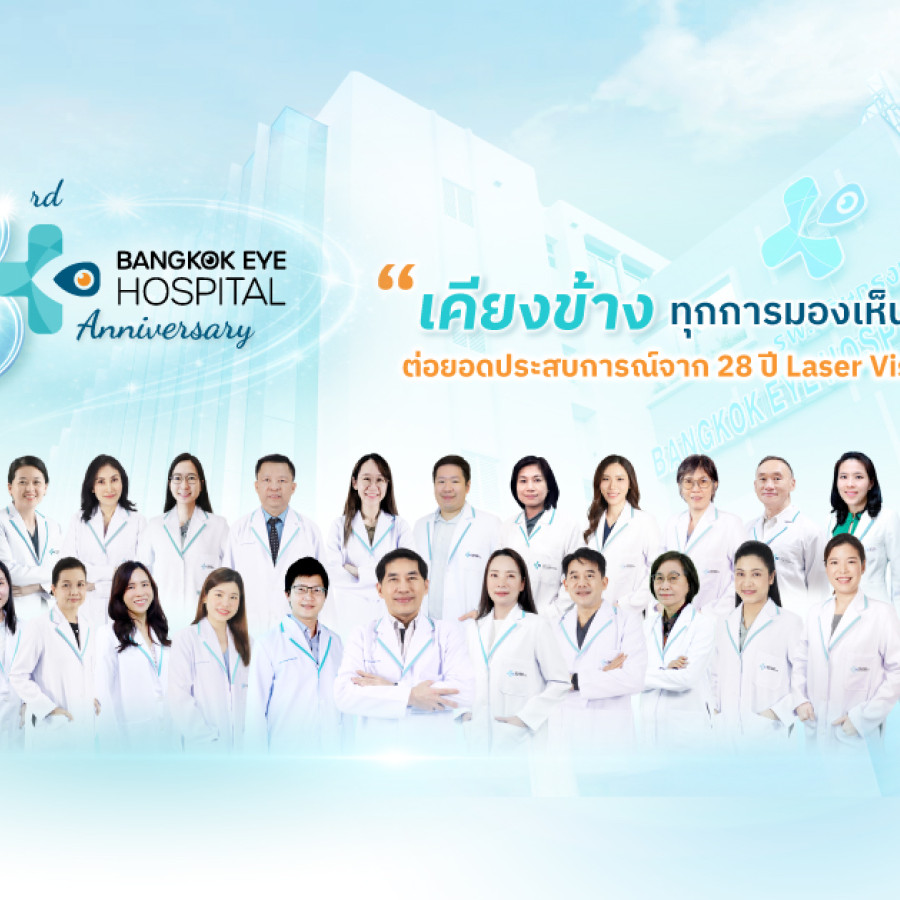
Bangkok Eye Hospital is a standalone eye hospital in Bueng Kum, on the northeastern edge of the city, and publishes AACI accreditation on its own site. Its centers cover cataract, retina, glaucoma, cornea, presbyopia and refractive surgery, neuro-ophthalmology, oculoplastics and children's eyes, and the hospital says that expatriate and fly-in patients are part of who it treats. Location is the trade-off: subspecialty depth in exchange for a long trip from the center. Check which center your referral belongs to, since several run as separate services in the building.
Bumrungrad International Hospital
Bumrungrad International Hospital houses eye care in a vision and eye surgery center whose published scope reaches cornea transplantation, oculoplastics and pediatric strabismus as well as routine cataract and glaucoma work. What it adds over a dedicated eye hospital is not the eyes themselves but everything around them: diabetic retinopathy, thyroid eye disease and autoimmune uveitis all need other specialists in the same building. If your eye problem is a symptom of a systemic condition, that co-location is the argument for coming here.

Samitivej Sukhumvit Hospital
Samitivej Sukhumvit Hospital runs its eye clinic from Building 2, fourth floor, with published work covering phacoemulsification cataract surgery, glaucoma surgery, diabetic eye disease, strabismus correction and pterygium. That is a general ophthalmology remit rather than a subspecialty referral center, which matches the hospital's role for households around Soi 49. One quirk to watch: the same clinic page also describes the group's Srinakarin campus, so confirm which site your ophthalmologist actually sees patients at before traveling.
MedPark Hospital
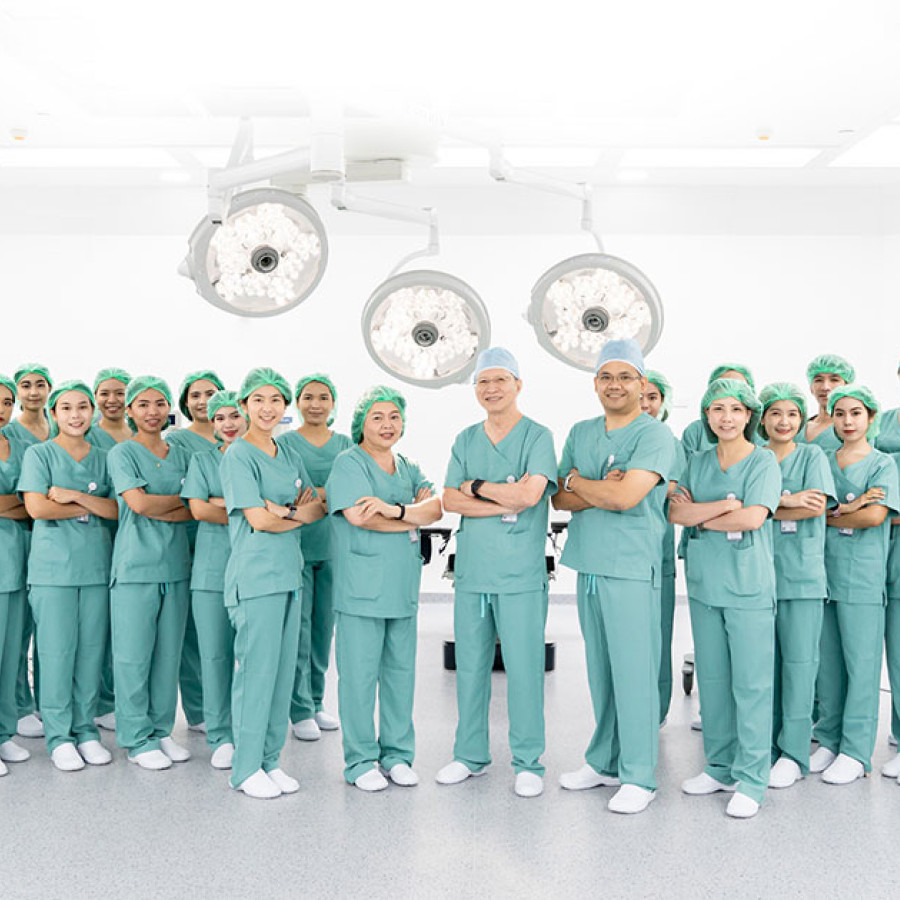
MedPark Hospital publishes a wide eye list at its eye care center on Rama IV Road: cataract work including the refractive kind, glaucoma, macular degeneration and other retinal disease, corneal treatment, oculoplastics and SMILE Pro. For a general hospital that is a fairly complete ophthalmology offer rather than a token eye clinic. The hospital records no interpreter service despite running its site in five languages, so if a retinal consultation needs precise history-taking, settle in advance how the appointment will work in English.
BNH Hospital
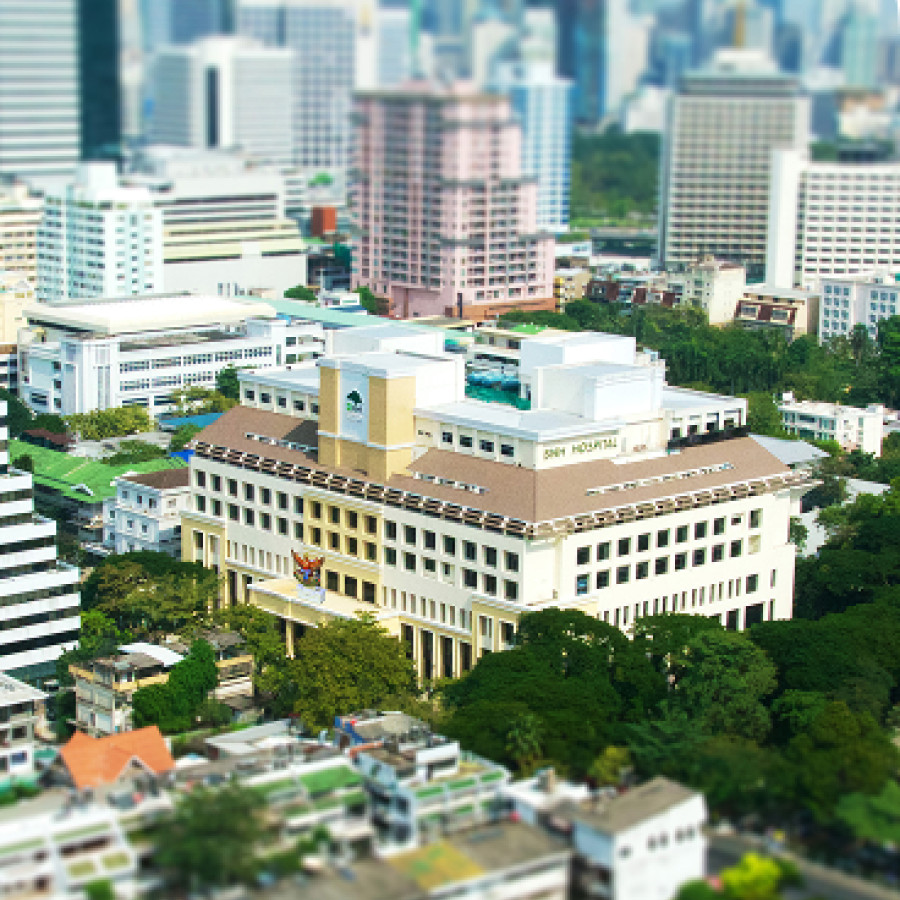
BNH Hospital publishes clear opening hours for its eye department on the second floor: weekdays 8.00 to 20.00 and weekends 8.00 to 17.00, broader weekend access than several larger campuses offer. Listed work covers cataract surgery, retina and vitreous, glaucoma, corneal and refractive disorders, pediatric strabismus, neuro-ophthalmology and ocular plastic surgery, and a separate pediatric eye center page exists. Convenient from Silom and Sathorn; with no interpreter service published, confirm the consulting ophthalmologist's working language when you book.

Vejthani Hospital
Vejthani Hospital covers cataract surgery with intraocular lenses, diabetic retinal screening, laser and surgical glaucoma treatment, refractive error management and pediatric strabismus at its eye center out where Lat Phrao meets Bang Kapi. For eastern Bangkok residents that removes a long cross-city journey for appointments that repeat, and diabetic screening in particular is an annual commitment. Interpreters in eight languages are published by its international service center; ask whether one can sit in on a dilated examination, when you will be reading nothing yourself.

Bangkok Hospital (Headquarters)
Bangkok Hospital's Soonvijai campus keeps eyes and ENT in one grouping, and its eye center publishes phacoemulsification cataract surgery, diabetic eye care, glaucoma, LASIK, cornea and oculoplastic work. Sitting inside the flagship BDMS campus means retinal complications of diabetes or hypertension can be handled next to the underlying disease without a referral elsewhere. The grounds hold several separate hospitals, so when booking, ask which of them houses the eye center and allow extra time to find it on a first visit.
How to choose eye care in Bangkok
Choosing the right eye hospital or clinic in Bangkok ultimately comes down to matching your specific condition to the right expertise, not just picking a well known name. Before you commit to an appointment, it is worth confirming that the ophthalmologist you will actually see has a sub-specialty aligned with your situation, whether that is cataracts, retina, glaucoma, cornea, pediatric eye care, or refractive surgery.
It also helps to ask what diagnostic equipment is available on-site rather than assuming every clinic offers the same imaging and testing capabilities. If a clinic needs to refer you elsewhere for certain scans, that is not necessarily a problem, but it is useful to know upfront so you can plan your visit.
Finally, take time to discuss realistic timelines with your doctor for any procedure that gets recommended, including how many visits are typically needed, what recovery generally looks like, and when follow-up checks would happen.
If you are weighing options beyond the capital, you may also want to look at this nationwide listing of eye clinics, since it covers eye care providers across Thailand and can be a useful reference if your travel plans or scheduling needs extend past Bangkok.
Rutnin Eye Hospital does nothing but ophthalmology, and has done so for more than sixty years from Sukhumvit 21 near Asoke. Its eye care services run across cataract, retina and vitreous, glaucoma, cornea, neuro-ophthalmology, oculoplasty, ocular oncology and a children's eye center. The inpatient department stays open around the clock, with outpatient clinics running into the evening six days a week and on Sunday. Well suited to a diagnosed condition that needs a subspecialist; no interpreter service is published, so ask which doctors hold consultations in English.