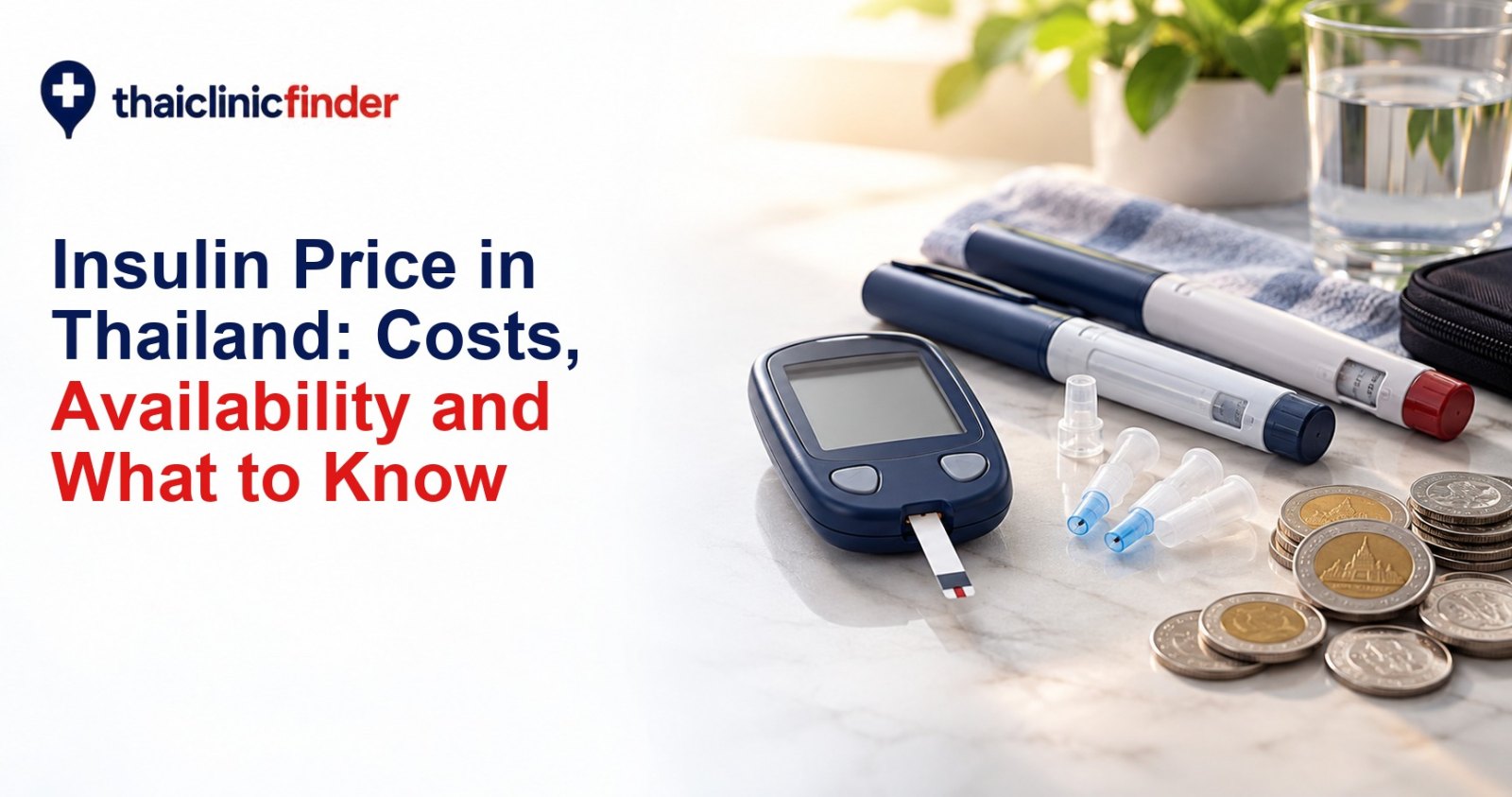
Insulin is available in Thailand through hospitals and pharmacies, but there is no single national retail price. The amount a patient pays depends on the insulin type, brand, delivery device, pharmacy and whether treatment is obtained through a hospital.
Thailand's official drug reference-price system provides a useful baseline. These figures are not guaranteed retail shelf prices, but they show how different insulin products compare.
For travelers and residents with diabetes, continuity matters more than finding the lowest price. Changing insulin type, concentration or device without medical guidance can cause serious problems.
Official reference prices vary widely
Current Thai official reference prices include examples such as:
- NPH insulin 100 IU/ml, 3 ml cartridge: around THB 78.11
- NPH insulin 100 IU/ml, 10 ml vial: around THB 125
- insulin lispro 100 IU/ml, 3 ml cartridge: around THB 176.55
- insulin glulisine 100 IU/ml prefilled pen: around THB 181.69
- insulin glargine 100 IU/ml, 3 ml cartridge: around THB 362.30
- insulin glargine 100 IU/ml prefilled pen: around THB 481.50
- insulin glargine 300 IU/ml, 1.5 ml prefilled pen: around THB 722.25
These are central reference prices rather than fixed retail prices.
Why the pharmacy price can be higher
Retail prices can include:
- manufacturer and distributor pricing
- brand differences
- pharmacy margin
- packaging
- storage and cold-chain costs
- hospital dispensing charges
A private hospital pharmacy may charge more than a community pharmacy for the same active ingredient and device.
Ask for the exact insulin name and presentation when comparing prices.
Insulin is not interchangeable just because the name is similar
Different insulin products can have very different action profiles.
Examples include:
- rapid-acting insulin
- short-acting insulin
- intermediate-acting NPH insulin
- long-acting basal insulin
- concentrated insulin
- premixed insulin
Do not substitute one for another based on price alone.
Even when two products both say insulin glargine, the concentration or device may differ.
Pens, cartridges and vials have different costs
A prefilled pen usually has a different price from a cartridge or vial.
The best option depends on:
- the device you already use
- dose requirements
- storage
- travel
- dexterity and vision
- availability
Someone who uses a pen at home should not assume a cheaper vial is a practical replacement unless they have the correct syringes and know how to use them.
Bring the exact details of your current insulin
Carry a written list showing:
- generic insulin name
- brand
- concentration
- device
- usual dose
- timing
- other diabetes medicines
A photo of the label can also help.
Do not rely on the color of the pen because manufacturers use different designs.
Storage matters in Thailand's climate
Insulin can be damaged by excessive heat.
Thailand's climate makes storage particularly important.
Follow the manufacturer's instructions for unopened and in-use insulin. Do not freeze insulin and do not leave it in a parked car, direct sunlight or an uncooled bag for long periods.
For travel, use an appropriate insulated solution without placing the insulin directly against ice.
Flying with insulin
Keep insulin in hand luggage rather than checked baggage.
Carry more than you expect to need when possible, along with:
- needles or pen tips
- glucose monitoring supplies
- prescription or medical letter
- snacks or glucose treatment
If crossing borders, check medicine and sharps rules for the destination country.
Can a tourist buy insulin in Thailand?
Insulin is available in Thailand, but a traveler should not wait until the last dose to look for a replacement.
Stock varies between pharmacies.
Hospital diabetes clinics and larger pharmacies are more likely to have a wider selection.
If your exact brand is unavailable, seek medical advice before changing to another product.
Hospital care may be useful for a forced switch
A clinician can help determine whether an available Thai product is equivalent to your usual insulin.
This is especially important if:
- concentration differs
- you use a pump
- you use a premix
- you are pregnant
- you have type 1 diabetes
- you have recurrent hypoglycemia
Type 1 diabetes requires continuous insulin. Running out is a medical risk, not an inconvenience.
What if you lose your insulin while traveling?
Contact a pharmacy, clinic or hospital promptly.
Bring any evidence of your normal regimen.
If blood glucose is very high and you develop vomiting, abdominal pain, rapid breathing, severe thirst or confusion, seek urgent medical care because diabetic ketoacidosis can be life-threatening.
Hypoglycemia also needs a plan
Insulin can cause low blood glucose.
Carry fast-acting carbohydrate and know the symptoms, which can include:
- sweating
- tremor
- hunger
- confusion
- palpitations
- weakness
Severe hypoglycemia causing unconsciousness or seizure is an emergency.
Private insurance and insulin
Outpatient medicine benefits vary by policy.
Some plans cover prescribed diabetes medication, while others focus mainly on inpatient care.
Pre-existing-condition rules can also matter because diabetes may have been diagnosed before the policy started.
Check outpatient medication benefits rather than assuming a high annual hospitalization limit includes routine insulin.
Compare the same product
When comparing prices, record:
- ingredient
- concentration
- units per ml
- pen or cartridge size
- number of pens
- brand
A box of five pens should not be compared with one cartridge as if they were the same quantity.
Understanding the reference-price figures
The Thai FDA database is a useful starting point because it identifies products by active ingredient, strength and presentation. It is not a consumer price promise. A listed figure may differ from the amount charged by a retail pharmacy or hospital, and stock can change. Treat the database as a way to understand relative pricing, then ask the dispenser for the current price of the exact item.
The unit matters. A 3 ml cartridge, a 10 ml vial, one disposable pen and a box of pens are different quantities. Concentrated products also contain a different number of units per millilitre. Before deciding that one option is cheaper, calculate what the quoted price covers and confirm how many usable units you are receiving.
For a broader sense of medicine pricing, our Thailand pharmacy price list explains why hospital and community pharmacy charges may differ. It should not be used to select or change a diabetes treatment.
Arranging a refill without interrupting treatment
Begin looking for a refill well before the current supply runs out. Show the pharmacist the original box, prescription or a clear photograph of the label. The most useful details are the generic name, concentration, formulation, device, dose and manufacturer. If the exact product is unavailable, contact a diabetes clinic or doctor rather than improvising a substitution.
People using pumps need additional planning. Pump reservoirs, infusion sets and compatible rapid-acting insulin may not be stocked by every facility. Carry backup supplies and a clinician-agreed plan for pump failure. A replacement pen is not automatically an equivalent emergency plan unless a clinician has explained the dose and timing.
Visitors bringing their own supply should review Thai customs requirements before travel. Our guide to prescription medication rules in Thailand provides general preparation points, but travellers should still confirm current rules with the relevant authority and airline.
Heat, transport and day-to-day storage
Insulin should be stored according to the instructions for that specific product. Unopened stock often requires refrigeration, while in-use limits vary. Never freeze insulin, and do not place it directly against an ice pack. Freezing can damage it even if the liquid later thaws and looks normal.
In Thailand, the risky moments are often journeys rather than the hotel room: a bag left in a parked car, luggage waiting in direct sun or a long ferry trip without temperature control. Use an insulated carrier designed for medicines and monitor conditions where practical. Ask the manufacturer or pharmacist what to do if the product may have overheated.
Power cuts or refrigerator problems require judgement based on product-specific limits, not guesswork. Keep the leaflet, note when a pen was first used and avoid storing insulin in a refrigerator door where temperatures fluctuate. Dispose of needles in an appropriate sharps container rather than ordinary loose rubbish.
Budgeting for diabetes care in Thailand
The insulin itself may be only part of the cost. Glucose strips, continuous glucose monitor supplies, pen needles, syringes, consultations and laboratory monitoring can be substantial recurring expenses. Hospital dispensing can also include service fees. Ask for an itemised bill if you are comparing long-term care options.
Insurance policies vary sharply. Check whether outpatient medicines and diabetes supplies are included, whether diabetes is treated as a pre-existing condition and whether a network pharmacy must be used. A plan with a high inpatient limit may still provide little help with routine monthly supplies.
Newer diabetes medicines discussed in guides such as Ozempic in Thailand do not replace insulin for everyone, and no one with type 1 diabetes should stop insulin. Treatment changes require a clinician who can review the full medical picture.
A safe way to compare insulin prices in Thailand
Use the Thai FDA figures as reference points, then request a current quote for the same ingredient, concentration, device and pack size. Published examples range from about THB 78 for a selected NPH cartridge to more than THB 700 for a selected concentrated long-acting pen, but retail prices may differ.
Keep continuity ahead of bargain hunting. Bring an adequate supply, begin refill arrangements early and obtain medical help before switching product or device. Budget for the consultation and dispensing costs described in our medical costs in Thailand guide. If insulin is running out, this is time-sensitive, especially for a person with type 1 diabetes.
If high glucose is accompanied by vomiting, abdominal pain, deep or rapid breathing, marked drowsiness or confusion, seek urgent medical care. For ordinary refills, prepare the product details and compare legitimate pharmacies or hospital dispensaries calmly rather than waiting for an emergency.
Frequently Asked Questions
How much does insulin cost in Thailand?
Official reference prices vary widely by insulin type and device. Current examples range from around THB 78 for some NPH cartridges to more than THB 700 for selected concentrated long-acting pens.
Can tourists buy insulin in Thailand?
Insulin is available, but exact brands and devices may not be stocked everywhere. Bring your current product details and seek medical advice before switching.
Is insulin cheaper at pharmacies than hospitals?
It can be, but pricing varies. Compare the exact brand, concentration and device.
Can I change insulin brands if mine is unavailable?
Do not switch on your own. Concentration, action profile and device can differ even when products appear similar.
How should insulin be stored in Thailand?
Follow the manufacturer's storage instructions, protect insulin from excessive heat and never freeze it.
Sources

Writer
Niran Chaiyasit
Niran Chaiyasit is a Thai health writer with a background in public health and a focus on travel health, disease prevention and healthcare access in Thailand. His work covers topics such as common illnesses, vaccinations, mosquito-borne diseases, food safety and practical health information for travelers and expatriates.

Medical review
Justin Brooks
Daniel Brooks is an American health writer with a background in health sciences and a focus on rehabilitation, musculoskeletal health and patient education. He writes about physiotherapy, injury recovery, pain management, preventive health and practical healthcare guidance for international patients and travelers.