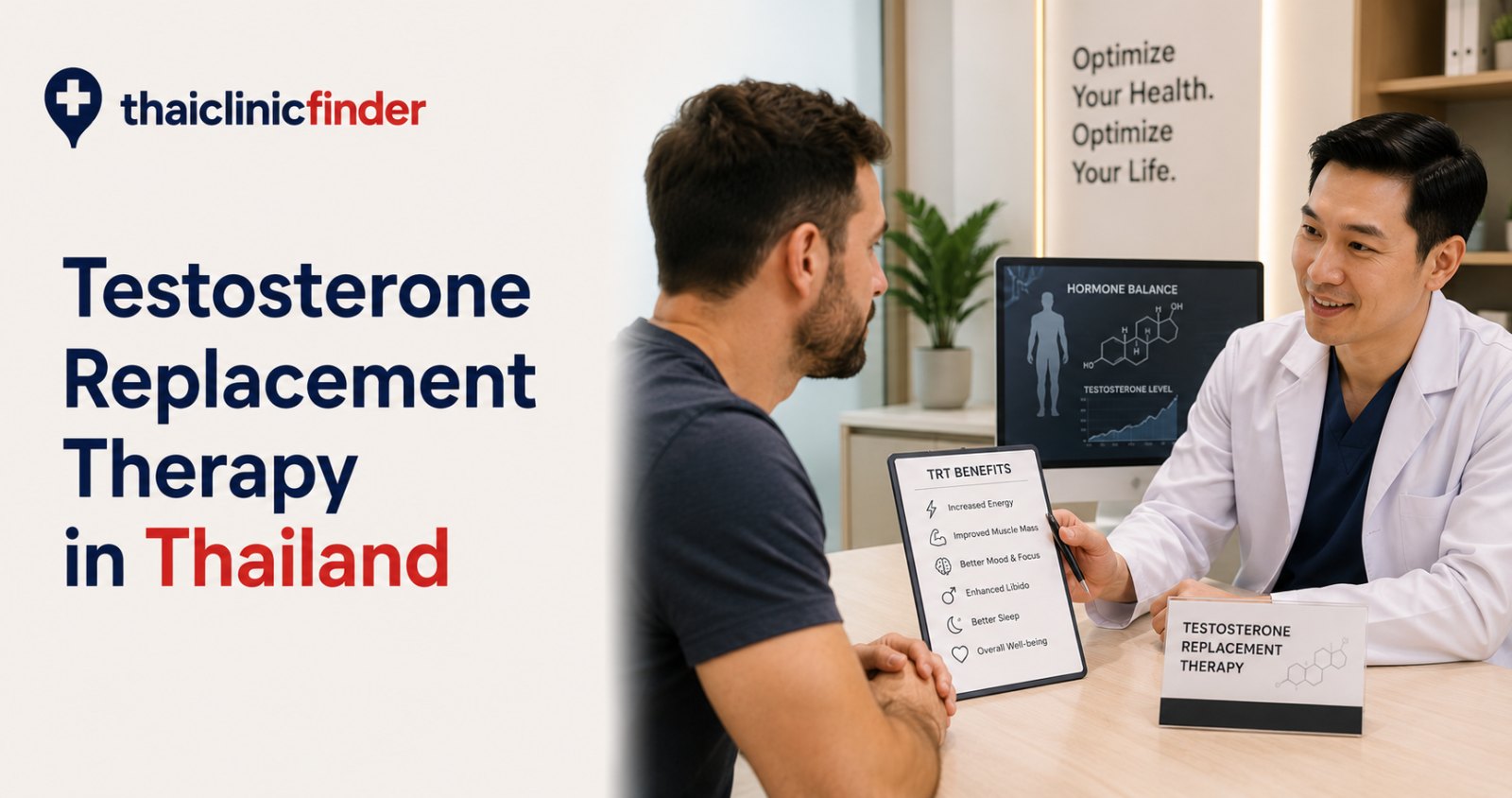
Testosterone replacement therapy in Thailand is available through hospitals and private clinics, particularly in larger cities such as Bangkok, Pattaya and Phuket. Costs vary because TRT is not one standard treatment. The price depends on the testosterone formulation, dose, medical consultation, laboratory testing and frequency of follow-up.
For men considering TRT because of fatigue, reduced libido, sexual symptoms or other possible signs of testosterone deficiency, the first step should be a medical assessment rather than simply buying testosterone. Current endocrine guidance recommends diagnosing hypogonadism only when compatible symptoms or signs occur together with consistently low testosterone levels confirmed by appropriate testing.
This guide focuses on testosterone replacement therapy for adult men with suspected or confirmed testosterone deficiency. Gender-affirming testosterone treatment follows a different clinical pathway and is not the focus here.
How much does testosterone replacement therapy cost in Thailand?
There is no official national price for TRT in Thailand, and many hospitals do not publish the cost of testosterone medication online because treatment is individualized.
Current private-clinic pricing gives some indication of what patients may encounter. TRT Bangkok currently advertises monthly doctor-led TRT programs starting from THB 6,900. A 2026 Menscape Clinic guide gives an indicative Bangkok range of approximately THB 4,000 to THB 12,000 per month for TRT, depending on the protocol.
These figures are provider-specific and should not be treated as an average price for Thailand. They may also cover different services. One clinic may include medical supervision and routine blood tests while another may charge separately for consultation, laboratory work and medication.
A practical working estimate for privately provided TRT in Thailand is therefore several thousand baht per month, with some current clinic examples falling around THB 4,000 to THB 12,000 per month. The actual cost can be lower or higher depending on the formulation and monitoring required.
Ask for a written breakdown before comparing two providers.
Initial blood tests can add to the cost
TRT should not normally begin from symptoms alone. The Endocrine Society recommends diagnosing hypogonadism only in men who have relevant symptoms or signs and unequivocally and consistently low testosterone concentrations. It recommends confirming a low result with a repeat morning fasting total testosterone measurement.
The Endocrine Society reiterated in 2026 that diagnosis should generally be based on at least two early-morning fasting testosterone tests interpreted by a healthcare professional. Laboratory reference ranges and the clinical situation also matter, so a single number from one blood test should not be used in isolation.
Some Thai hospitals sell broader hormone assessment packages separately from treatment. Current examples include:
- Bangkok Hospital Phuket's Classic Hormone Program for men at THB 6,200.
- Bangkok Hospital Phuket's Royal Hormone Program for men at THB 16,500.
- Bangkok Hospital Samui's Male Hormone Test package at THB 10,700.
These are specific hospital screening packages, not standard TRT fees and not necessarily the exact tests required for every patient. Their contents should be checked directly before booking.
If you are unfamiliar with appointments and payment in the country, how healthcare access works in Thailand explains the broader system for visitors and residents.
What does a TRT assessment involve?
The purpose of the assessment is not simply to establish whether testosterone is below a laboratory reference range. The clinician should consider whether symptoms are compatible with testosterone deficiency and investigate why testosterone may be low.
Bangkok Hospital Headquarter states that patients undergo a health assessment and blood testing before hormone replacement therapy is started. Bangkok Hospital Hua Hin similarly advises confirming low testosterone on at least two separate morning tests.
Depending on the individual situation, further testing may be appropriate. A clinician may investigate pituitary or testicular causes, medication effects, obesity, sleep disorders or other medical conditions that can affect testosterone levels or produce similar symptoms.
Ask the provider which tests are being ordered and why. A large generic hormone panel is not automatically better than a focused investigation based on your history and examination.
What types of TRT are available in Thailand?
Thai hospital and clinic websites describe several forms of testosterone treatment, although availability can differ between providers and may change.
Options may include:
- testosterone injections;
- topical testosterone gel;
- patches;
- oral formulations in selected circumstances.
Bangkok Hospital Headquarter describes oral treatment, injections and transdermal treatment among its options for testosterone deficiency. Bumrungrad International Hospital also describes several methods of testosterone replacement.
The most appropriate option depends on factors such as diagnosis, response, convenience, side effects, cost and how stable testosterone levels need to be. The dose and interval should be determined by the treating clinician rather than copied from another patient's protocol.
Why injectable TRT prices differ
Even when two clinics both offer injections, their prices may not be directly comparable.
Differences can include:
- the testosterone compound used;
- dose per injection;
- how frequently injections are given;
- whether injections are administered at the clinic or medication is supplied for home use where clinically appropriate;
- consultation fees;
- blood testing;
- follow-up appointments;
- additional medicines or services bundled into a program.
Longer-acting injections may have a higher cost per administration but require fewer visits. Shorter-acting formulations may be cheaper per injection but need more frequent dosing.
Ask for the exact generic name, brand, dose and planned frequency before comparing costs.
TRT is not simply an anti-ageing treatment
Testosterone levels can decline with age, but ageing alone does not establish a diagnosis requiring TRT. Symptoms such as low energy, reduced libido, sleep problems, mood changes and reduced exercise performance can have many causes.
The Endocrine Society recommends against diagnosing testosterone deficiency from symptoms alone. It also emphasizes the need for consistently low laboratory results.
This matters when evaluating clinics that use terms such as hormone optimization, anti-ageing or testosterone boosting. Ask whether the provider is diagnosing and treating hypogonadism according to a defined medical process rather than targeting an arbitrary high testosterone level.
What are the potential benefits?
For appropriately selected men with confirmed hypogonadism, testosterone treatment can improve some symptoms associated with testosterone deficiency. Depending on the individual, these may include sexual symptoms, body composition, bone health or anaemia.
Benefits are not guaranteed, and TRT should not be presented as a universal solution for fatigue, erectile dysfunction, weight gain or reduced athletic performance.
If erectile dysfunction is the main concern, low testosterone is only one possible cause. Cardiovascular disease, diabetes, medications, psychological factors and other conditions may also contribute.
What risks and side effects should you know about?
TRT requires monitoring because testosterone can produce clinically important effects beyond the symptoms being treated.
Potential concerns include increased red blood cell concentration, acne or oily skin, changes in fertility and testicular function, fluid retention and effects on the prostate in relevant patients. Treatment can also affect blood pressure.
In 2025, the US Food and Drug Administration announced class-wide labelling changes after ambulatory blood pressure studies found increased blood pressure with testosterone products. The same FDA review also removed its previous boxed warning about increased cardiovascular outcomes after data from the TRAVERSE trial did not show an increased risk of major adverse cardiovascular events in the studied population.
These findings do not mean TRT is appropriate for everyone. Your own cardiovascular history, blood pressure and other risk factors still need to be considered by the treating clinician.
TRT can reduce fertility
This is one of the most important issues to discuss before beginning treatment.
Taking external testosterone can suppress the hormonal signals that stimulate sperm production. The American Urological Association recommends a reproductive health evaluation before treatment when a man with testosterone deficiency is interested in preserving fertility.
If you are currently trying to conceive or expect that you may want biological children, tell the clinician before starting TRT. Do not assume that stopping testosterone later will immediately restore fertility.
Who may need additional assessment before TRT?
Testosterone therapy is not suitable for every person with a low laboratory result.
The Endocrine Society identifies several situations in which testosterone should not be started without appropriate assessment or management. These include certain prostate or breast cancers, elevated haematocrit, untreated severe obstructive sleep apnoea, uncontrolled heart failure, recent myocardial infarction or stroke, thrombophilia and some prostate findings.
Men who are planning fertility in the near term should also generally avoid standard testosterone replacement unless managed through an appropriate reproductive specialist pathway.
This is why a short consultation followed immediately by a testosterone injection is not equivalent to a full assessment.
What monitoring is needed after starting TRT?
TRT is usually an ongoing treatment rather than a one-off course. Follow-up is needed to assess whether symptoms improve, whether testosterone levels are appropriate and whether adverse effects develop.
Monitoring may include testosterone measurements and blood counts, particularly haematocrit. Depending on age, history and individual risk, clinicians may also consider prostate assessment and other laboratory markers. Blood pressure is another practical parameter to monitor.
The frequency of testing depends on the formulation, stage of treatment and individual medical situation.
Before starting, ask how often follow-up is expected and whether those appointments and laboratory tests are included in the quoted monthly cost.
How to choose a TRT clinic in Thailand
Look beyond the price of the injection or monthly package.
Useful questions include:
- Which doctor will assess and supervise my treatment?
- What diagnosis is being treated?
- Will low testosterone be confirmed on separate morning blood tests?
- Which additional tests are recommended and why?
- What testosterone product will be prescribed?
- What dose and administration schedule is proposed?
- What is included in the quoted price?
- How frequently will testosterone and haematocrit be checked?
- How will blood pressure and other relevant risks be monitored?
- What happens if my symptoms do not improve?
- How does treatment affect fertility?
- What follow-up is available if I leave Thailand?
If communicating about symptoms, risks and dose adjustments in English is important to you, confirm the language of the exact doctor appointment. Do not rely solely on a clinic having an English-language website. See how to choose an English-speaking clinic in Thailand for practical checks before booking.
Can tourists start TRT in Thailand?
Some private clinics in Thailand market TRT services to international patients, but starting a long-term treatment during a short visit needs additional planning.
Ask how follow-up blood testing will work after you leave Thailand, whether the same testosterone formulation is available in your home country and what medical documentation you will receive.
If you are already taking prescribed testosterone and plan to bring medication into Thailand, check current Thai FDA import rules before travelling. Thai FDA guidance states that travellers may generally bring modern medicines for personal use for up to 30 days when they are kept in the original container and accompanied by the doctor's prescription. Separate rules apply to narcotic and psychotropic medicines, so the exact product should be checked rather than assuming that general rules apply.
What should a TRT quote include?
A useful written estimate should separate the different components of care.
Ask whether the quoted price includes:
- initial medical consultation;
- first testosterone blood test;
- repeat morning testosterone test;
- additional hormone or health tests;
- testosterone medication;
- injection administration if applicable;
- follow-up consultations;
- repeat blood tests;
- supplies for treatment where relevant.
A clinic advertising TRT at THB 6,900 per month and another charging THB 10,000 may not actually differ much if the first price excludes laboratory monitoring or consultations.
Planning the next step
Published private-clinic examples place TRT in Thailand at several thousand baht per month, with cited figures around THB 4,000 to THB 12,000. That range is a starting point, not a national tariff, and it may exclude the consultation, repeat morning tests or ongoing monitoring.
Price should come after confirming whether treatment is medically appropriate. Ask a qualified clinician to explain the diagnosis, exact medicine, dose, monitoring schedule, fertility implications and every charge in writing before you commit to a monthly program.
If the clinical assessment supports treatment, our guide to getting a testosterone prescription in Thailand explains the practical prescription route. Keep copies of your results and treatment plan so that follow-up remains coherent if you change clinic or leave Thailand.
Frequently Asked Questions
How much does TRT cost per month in Thailand?
Current private-clinic examples suggest approximately THB 4,000 to THB 12,000 per month, with one provider advertising doctor-led TRT from THB 6,900 monthly. These are provider-specific figures rather than a national average, and laboratory tests or consultations may be charged separately.
Do I need a blood test before starting testosterone in Thailand?
A proper evaluation should include testosterone testing rather than treatment based only on symptoms. Current endocrine guidance recommends confirming suspected hypogonadism with at least two appropriately timed early-morning testosterone measurements alongside compatible symptoms or signs.
What types of testosterone replacement are available in Thailand?
Thai hospitals and private clinics describe options including injections, topical gel, patches and some oral formulations. Availability, brands and dosing vary, so confirm the exact medicine and treatment schedule with the provider.
Can TRT affect fertility?
Yes. External testosterone can suppress sperm production, so fertility plans should be discussed before treatment. Men who want to preserve fertility may need a reproductive health assessment and a different management approach.
Is TRT safe for older men?
Age alone does not determine whether TRT is appropriate. Treatment should be based on symptoms, confirmed testosterone deficiency and an assessment of individual risks and contraindications, with appropriate follow-up after treatment begins.
Sources
- Endocrine Society - Testosterone Therapy for Hypogonadism Guideline
- American Urological Association - Testosterone Deficiency Guideline
- Bangkok Hospital Headquarter - Testosterone Deficiency
- TRT Bangkok - Testosterone Replacement Therapy
- Menscape Clinic - TRT vs Peptide Therapy
- Thai Food and Drug Administration - Medicines FAQ

Writer
Thai Clinic Finder Editorial Team
The editorial team checks public healthcare information against official provider and institutional sources. It does not provide medical advice.
Medical review
Niran Chaiyasit
Niran Chaiyasit is a Thai health writer with a background in public health and a focus on travel health, disease prevention and healthcare access in Thailand. His work covers topics such as common illnesses, vaccinations, mosquito-borne diseases, food safety and practical health information for travelers and expatriates.