
The best nursing homes and long-term elder care facilities in Thailand are concentrated mainly around Chiang Mai and Bangkok, where the elder care sector has grown to serve both Thai families and foreign retirees arranging support for a parent. The term “nursing home” can mean very different things here: some providers are registered hospitals with round-the-clock registered nurses and doctors on call, while others are caregiver-staffed residences that bring in outside medical help when needed.
This comparison looks at what ten facilities publish about nursing coverage, staff availability, stated registration, languages spoken, care model and whether they accept short respite stays or only long-term placements. The aim is not to choose a facility for every family, but to help relatives ask sharper questions before booking a room or committing to ongoing care.
How this list of nursing homes and elder care facilities came together
We compared nursing homes and long-term elder care facilities in Thailand by reviewing official provider information on care model, nursing coverage, staff availability, doctor access, stated registration, languages spoken, room options and whether short respite stays or long-term placements are available. We gave more weight to facilities that clearly explain who provides daily care, what level of medical support is present on site and how families can arrange assessment before admission.
We also separated registered hospital-based care, nurse-led residences and caregiver-staffed homes rather than treating them as the same service. That distinction matters for families managing dementia, mobility loss, post-hospital recovery, medication needs or chronic illness. This comparison is based on what each facility publishes directly, not on testimonials, lifestyle photos or general retirement marketing.

Golden Years Hospital
Golden Years Hospital operates as a licensed hospital in the Huai Khwang district of Bangkok, a structure that already implies Ministry of Public Health oversight beyond what a stand-alone care home requires. Its own homepage states that doctors and nurses provide 24 hour care, describes the facility as staffed by licensed nurses, therapists, nurse aides and dietitians, and lists ventilator management among its services for residents who cannot breathe independently. The hospital also runs a caregiver training school certified by the Ministry of Education, a detail worth noting separately from its nursing credentials. Families should still ask on site for the exact registered nurse headcount per shift and confirm whether English-speaking staff are rostered before a longer stay, since language support is not detailed on the site.

The Senior
The Senior runs an elderly and stroke recovery center in the Chatuchak district of Bangkok, describing itself on its own site as home to more than 20 registered nurses under a head nurse who holds a master's degree in gerontological nursing. The center states that a professional nursing team is on duty around the clock, alongside physiotherapists, occupational therapists and physicians covering internal medicine, cardiology, pulmonology and infectious disease. Its published FAQ draws a line between its transitional recovery unit, aimed at patients moving from hospital back to daily life, and its long-term nursing home wing, aimed at those who need ongoing help with daily activities. That distinction is useful for families trying to work out which service actually matches a relative's needs before signing a contract.

KIN Nursing Home Ladprao 71
KIN Nursing Home runs a dedicated two story nursing building on its two acre Lat Phrao 71 campus in Bangkok, separate from its stroke rehabilitation center on the same site. According to its branch page, registered nurses are on duty 24 hours a day, doctors visit on a set schedule, and every room carries an emergency nurse call system. The same page confirms that short-term respite stays are accepted from as little as seven days, priced separately from its monthly long-term care plans, which is unusual among the facilities in this comparison and worth checking against a family's actual timeline. KIN operates five further branches around greater Bangkok and Pattaya with the same stated staffing model, though each branch should be confirmed individually since equipment such as TMS and hydrotherapy is not available everywhere.
Camillian Home for the Aged, Pattanakan
Camillian Home for the Aged, Pattanakan is a nonprofit residence run by the Catholic Camillian religious order, whose broader ministry in Thailand includes Camillian Hospital in Bangkok. Its organization page describes a campus of 98 single and double cottages across 15 rai in the Suan Luang district, offering medical, physical and psychological care in what it calls a family-like environment, alongside a pool, an exercise area and a spa. The page does not specify a nurse-to-resident ratio, hours of nursing coverage, or whether stays can be short-term, so those details need to be confirmed directly with the home before assuming it matches the round the clock nursing model that some of the hospital-run facilities in this comparison publish. As a religious charitable home, admission criteria and cost structure may also differ from the commercial nursing homes listed here.

Chersery Home Senior Care Rama 2
Chersery Home Senior Care Rama 2 operates in the Bang Bon district of Bangkok as part of the wider Chersery Home International network, which also runs branches elsewhere in the city. Its branch page states that a specialized nursing team is available 24 hours a day and that its medical team designs an individual care plan for each resident, covering stroke rehabilitation, post-surgical recovery, dementia and Alzheimer's care, and bedridden or dependent elderly who need daily assistance. The page does not publish an exact nurse-to-resident ratio or a hospital registration number, so that detail has to be requested directly during a visit. Families comparing branches should also confirm which specific location a quoted price applies to, since Chersery Home operates several sites under the same brand with potentially different staffing levels.
Baan Lalisa Nursing Home, Pa Daet
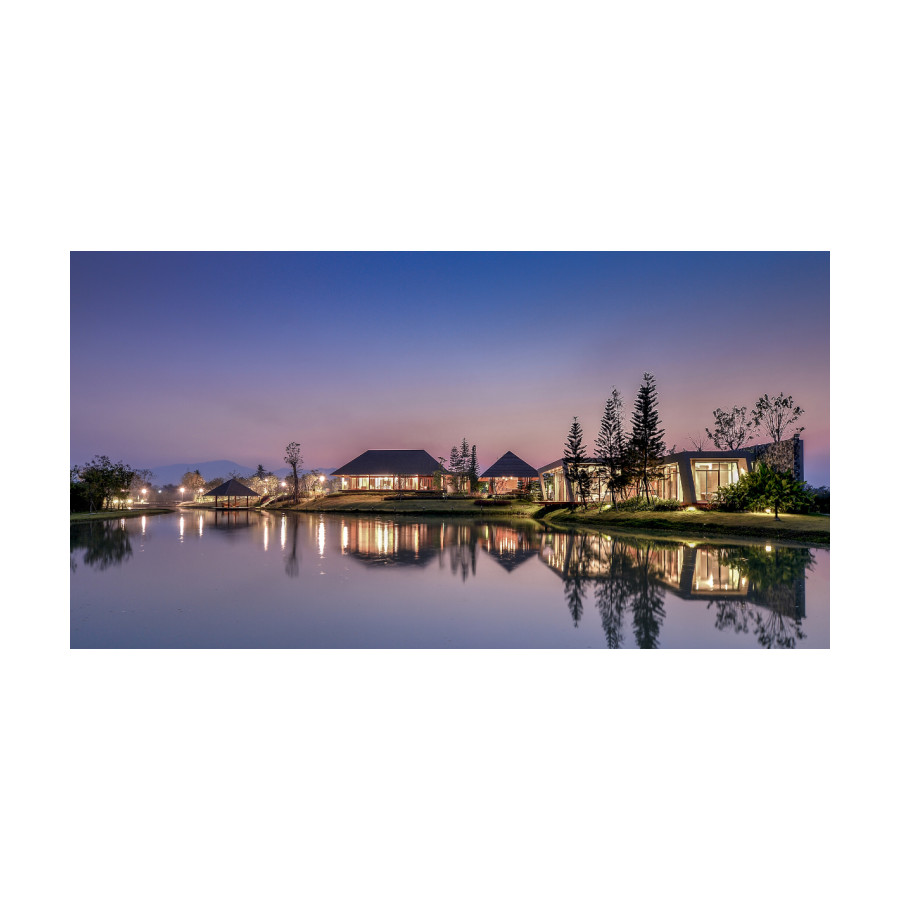
Baan Lalisa runs a nursing home at its Pa Daet location in Chiang Mai, part of a small group of homes the company operates across northern Thailand. Its nursing home page states that residents get access to 24 hour care from nursing teams supervised by doctors, that its medical staff are fluent in English, and that the site runs an on-site TMS clinic for dementia and Parkinson's patients alongside standard physical therapy. The same page lists both long stays and short stays as available options, and a separate respite care programme is advertised for shorter placements. As with other multi-branch operators, the exact staffing and equipment can vary by location, so a family should confirm which Baan Lalisa branch a quote and a facility tour actually refer to.
Care Resort Chiang Mai
Care Resort Chiang Mai is a retirement facility in the Mae Rim district north of Chiang Mai city, built around private villas connected to a central nursing and care station. Its homepage states that the main languages spoken by staff are English and Thai, that the resort provides both independent living with care and closer nursing support, and that it runs a separate boutique memory care unit for residents with Alzheimer's and other forms of dementia. The site describes its staffing levels as high compared with Western facilities but does not publish an exact nurse count, shift pattern, or a Ministry of Public Health registration, so that has to be confirmed directly. Both short stays and long-term stays are accepted, which makes the resort worth considering for a trial visit before committing to permanent relocation.
Ban Sabai Village
Ban Sabai Village is a small senior residence of 21 units near San Pee Sua in Chiang Mai, closer in structure to assisted living than to a hospital-style nursing home. Its own site states that a nurse is based on site and that individual nursing care can be arranged for 8, 16 or 24 hours a day depending on what a resident needs, rather than round the clock registered nurse coverage being the default for every guest. The property also states that emergency medical services are five to ten minutes away at a nearby hospital rather than provided in house. This model can suit residents who are largely independent and just want support nearby, but it is not the right fit for someone who needs guaranteed continuous nursing supervision, and families should ask exactly which care tier a quoted price includes before booking.

Baan Kamlangchay
Baan Kamlangchay is a dementia-specific care home spread across private houses in Faham Village near Chiang Mai, founded by a Swiss psychologist and still under Swiss management. Its official site states that each resident is supported by three personal caregivers who rotate across 24 hours, including during any hospital stays, and that this individual attention often allows some medication doses to be reduced over time. The page does not describe an on-site doctor or a registered nurse anywhere in its facility description, unlike the hospital-style operators covered elsewhere in this comparison. That makes Baan Kamlangchay a useful reference point for the most expensive mistake families make in this category: assuming a caregiver-staffed elder-care home offers the same clinical nursing coverage as a licensed nursing home, when the two are structured very differently. Anyone considering it for a relative with active medical needs beyond dementia should ask in writing exactly how hospital transfers and medical emergencies are handled.
Points to weigh before choosing a nursing home or elder care facility
Before settling on any facility from this list, it helps to look past star ratings and photos and ask the practical questions that shape daily life for a resident. Staffing is the place to start: ask each facility directly about their staff-to-resident ratios during the day and, just as importantly, overnight, since many families only think to ask about daytime coverage. Find out whether a qualified nurse is on-site around the clock or only reachable by call, and clarify how quickly staff can respond if a resident's condition changes suddenly.
You should also get a clear picture of where a facility's medical capabilities end and a hospital's begin. Long-term care facilities are generally set up for daily support, mobility assistance, and routine health monitoring, not acute medical treatment, so ask plainly what happens if a resident needs urgent care. Is there a doctor who visits on a schedule, and does the facility have a formal transfer arrangement with a nearby hospital.
Beyond medical logistics, take time to ask about visiting policies and how the facility keeps families informed. Cost deserves the same scrutiny: ask for an itemized breakdown of what the base rate actually includes, such as meals, laundry, or basic nursing care, versus what gets billed separately.
Because many elder care facilities in Thailand lean on a nearby hospital for anything beyond routine care, it is also worth understanding the broader hospital landscape in the areas you are considering. If a facility you are weighing sits in or near the capital, our guide to Bangkok's leading hospitals offers useful context on the acute care options nearby, which can inform how comfortable you feel with a facility's transfer arrangements.
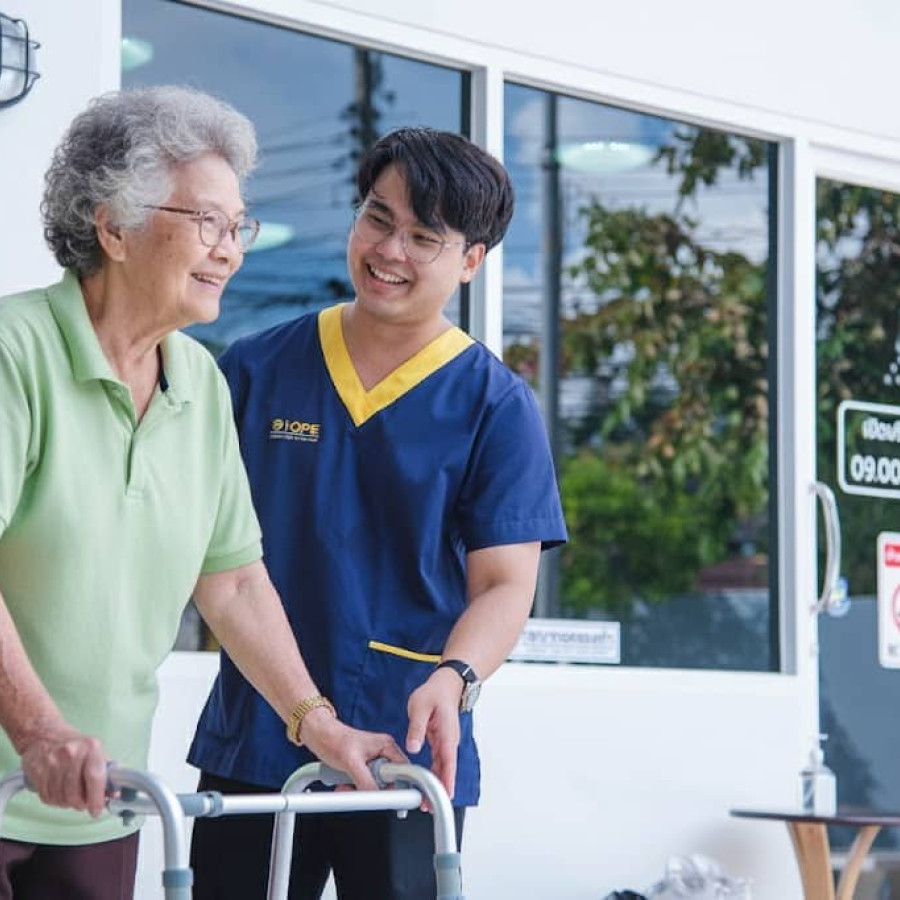
The Hope Rehabilitation and Elderly Care Center operates a small nursing home in Chalong, Phuket, alongside its physical therapy clinic. Its nursing home service page states 24 hour elderly care, help with bathing and personal hygiene, and support for bedridden, post-operative, dementia and end-stage patients. The page does not state a specific nurse-to-resident ratio or a Ministry of Public Health license number, so families should ask for both documents before booking, along with confirmation of which staff hold a nursing qualification rather than a general caregiver role. The center accepts both short recovery stays after surgery and longer placements, which suits Phuket-based expats needing rehabilitation close to the island's hospitals rather than a permanent residential move.