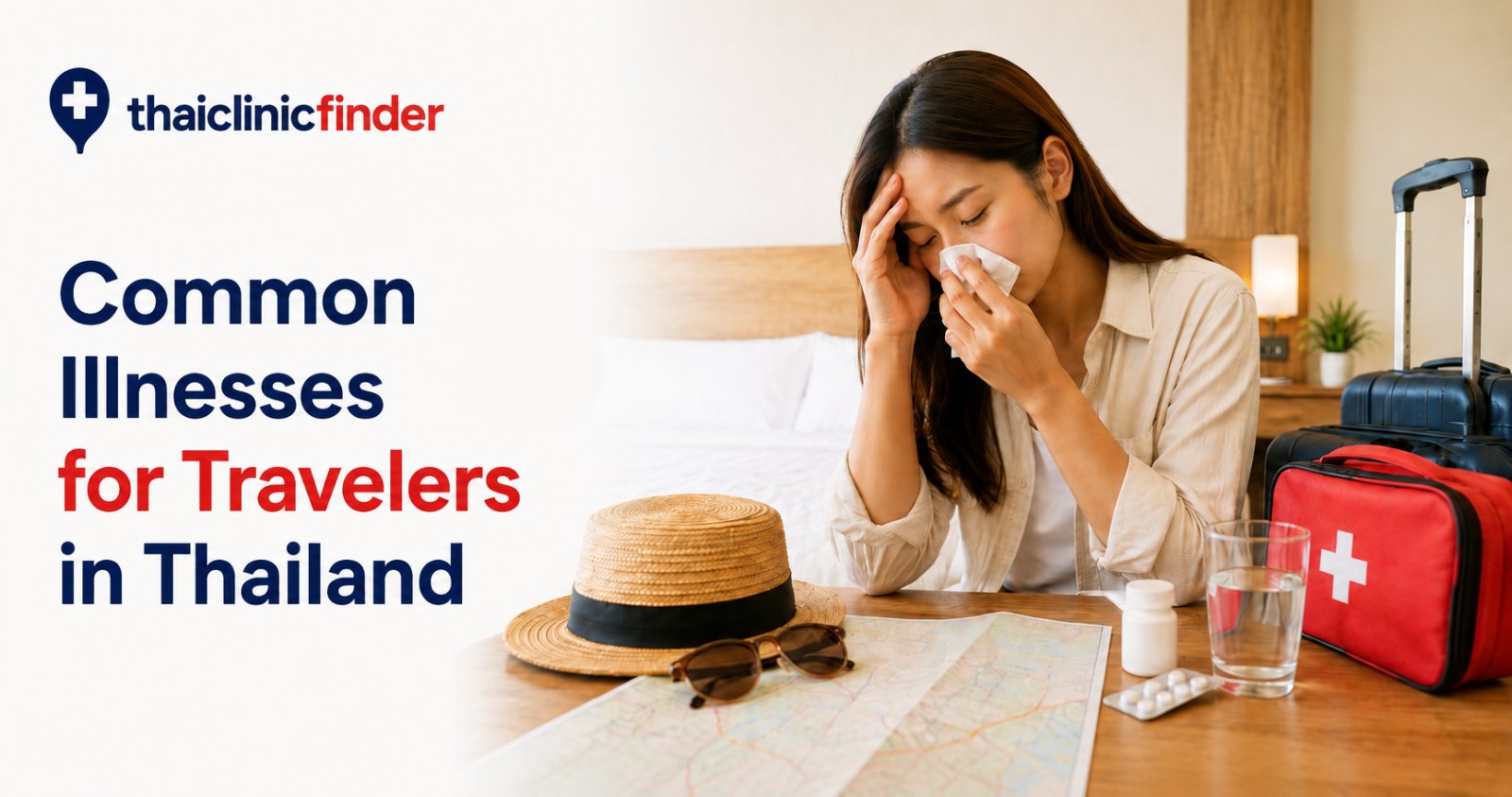
Most trips to Thailand do not result in serious illness, but travelers can encounter health problems related to food and water, mosquitoes, heat, respiratory infections and animal contact. The risks vary considerably depending on where you go, how long you stay and what you do during the trip.
A visitor spending a week in Bangkok or Phuket does not have the same exposure profile as someone trekking in forested border areas, staying for several months or travelling during periods of heavy rain. Some conditions in this guide are relatively familiar travel illnesses, while others are less common but important because they can become serious without appropriate care.
This is not a statistical ranking of the ten most frequently diagnosed illnesses among tourists in Thailand. There is no single current national dataset that supports such a ranking. Instead, these are illnesses and health risks that current travel-health guidance identifies as relevant to people visiting Thailand.
1. Travelers' diarrhea and foodborne illness
Travelers' diarrhea is one of the most predictable health problems associated with international travel. The CDC Yellow Book notes that the risk varies according to destination and season and that contaminated food and water can transmit several bacterial, viral and parasitic infections.
Symptoms may include loose stools, abdominal cramps, nausea, vomiting and sometimes fever. Most cases are short-lived, but the severity and cause can vary considerably.
The main immediate concern is often dehydration, particularly in Thailand's hot climate. Drink appropriate fluids and pay attention to signs that you are becoming dehydrated.
Food and water precautions can reduce risk. Wash your hands regularly, choose food that appears to have been handled and cooked appropriately and be cautious with water when its safety is uncertain.
Seek medical care if you have blood in the stool, severe abdominal pain, persistent vomiting, significant dehydration, high fever or symptoms that are severe or not improving as expected. Do not start prescription antibiotics without appropriate medical advice simply because diarrhea developed while travelling.
2. Dengue
Dengue is one of the most important mosquito-borne diseases for travelers to understand in Thailand. WHO identifies Thailand as one of the highly endemic countries for dengue in its South-East Asia Region.
Dengue is spread by infected Aedes mosquitoes. These mosquitoes can bite during the day, so mosquito precautions should not be limited to nighttime.
Symptoms may include fever, headache, pain behind the eyes, muscle and joint pain, nausea and rash. Some infections progress to severe dengue and require hospital treatment.
Reduce mosquito exposure by using an appropriate insect repellent, covering exposed skin when practical and staying in accommodation with suitable screens or air conditioning where possible.
A fever during a trip to Thailand should not automatically be assumed to be dengue. Several infections can cause similar symptoms. Seek medical assessment if you develop a significant fever, particularly if you feel seriously unwell or symptoms are worsening.
3. Influenza and other respiratory infections
Respiratory infections are easy to encounter while travelling because airports, aircraft, public transport, hotels, nightlife venues and tourist attractions can bring large numbers of people into close contact.
Influenza circulates in Thailand, and Thailand's Department of Disease Control publishes specific influenza advice for travelers. WHO notes that influenza viruses can circulate throughout the year in tropical climates, although activity can vary by season.
Typical influenza symptoms can include fever, cough, sore throat, headache, muscle aches and fatigue. Other respiratory infections can produce a similar clinical picture, so symptoms alone do not reliably identify which virus is responsible.
Regular hand hygiene and avoiding close contact with people who are visibly ill can reduce exposure. Before travelling, check whether your routine vaccinations, including influenza vaccination when appropriate, are current.
Seek medical assessment for breathing difficulty, severe or worsening symptoms, persistent high fever or if you are at increased risk of complications because of age, pregnancy or an underlying medical condition.
4. Heat exhaustion and heat-related illness
Thailand's heat and humidity can affect travelers who are not acclimatized, particularly during prolonged outdoor activity.
WHO identifies heat as an important health hazard. Heat exposure can cause heat exhaustion and, in severe cases, heatstroke. Heat can also worsen existing cardiovascular, respiratory and other medical conditions.
Early heat-related symptoms can include heavy sweating, weakness, headache, dizziness, nausea and feeling faint. Moving to a cooler environment and addressing overheating early is important.
Travelers can reduce risk by allowing time to acclimatize, drinking regularly, wearing lightweight clothing and reducing strenuous activity during periods of intense heat. Alcohol can also make it easier to become dehydrated or underestimate heat exposure.
Heatstroke is a medical emergency. Confusion, collapse, altered consciousness or other signs of severe heat illness require immediate medical attention.
5. Chikungunya
Chikungunya is another mosquito-borne viral infection relevant to travel in Thailand. Current CDC destination guidance identifies elevated chikungunya risk in Thailand.
The infection is transmitted through mosquito bites and can cause fever and significant joint pain. Headache, muscle pain, joint swelling or rash may also occur.
Because dengue and chikungunya can produce overlapping symptoms, travelers should not try to distinguish them without medical assessment when they are significantly unwell.
Mosquito-bite prevention remains important. Use repellent and take precautions against mosquitoes during both daytime and evening activities.
If you develop fever with severe joint pain during or after travel, tell the healthcare professional that you have recently been in Thailand.
6. Hepatitis A
Hepatitis A is a viral infection of the liver that can be transmitted through contaminated food and water or close contact with an infected person.
CDC currently recommends hepatitis A vaccination for unvaccinated travelers aged one year or older going to Thailand, with specific guidance for younger infants and travelers with particular medical circumstances.
Symptoms can include fatigue, nausea, abdominal discomfort, loss of appetite, fever, dark urine and jaundice. Not everyone develops the same symptoms.
Food and water hygiene can reduce exposure, but vaccination is an important preventive measure for eligible travelers. Discuss travel vaccinations with an appropriate healthcare professional before departure, particularly if you have chronic medical conditions or are travelling at short notice.
Seek medical care if you develop jaundice, dark urine or a significant illness during or after your trip.
7. Typhoid fever
Typhoid fever is caused by Salmonella Typhi and is usually transmitted through contaminated food or water. WHO describes it as a potentially life-threatening infection.
Current CDC guidance recommends typhoid vaccination for most travelers to Thailand, particularly those staying with friends or relatives or visiting smaller cities and rural areas.
Symptoms can include prolonged fever, headache, fatigue, nausea, abdominal pain and either constipation or diarrhea. These symptoms overlap with several other infections, so laboratory and clinical assessment may be required.
Vaccination reduces risk but does not replace food and water precautions. Travelers should continue to pay attention to hygiene even if vaccinated.
A persistent fever during or after travel deserves medical assessment. Tell the clinician where in Thailand you travelled and when you returned.
8. Leptospirosis
Leptospirosis is a bacterial infection associated with exposure to water or soil contaminated with urine from infected animals.
CDC specifically lists leptospirosis as a health risk in Thailand. Exposure can occur through swimming or wading in contaminated fresh water, contact with mud or soil, or contaminated food and water.
The risk can become more relevant during flooding or activities that involve freshwater, mud or wet rural environments. Travelers with cuts or broken skin should be particularly careful about contact with potentially contaminated water.
Symptoms can vary but may include fever, headache, muscle pain, nausea and other non-specific signs of infection. Because these symptoms overlap with dengue, influenza and several other diseases, diagnosis should not be attempted from symptoms alone.
Tell the healthcare professional about any recent freshwater, floodwater or mud exposure if you become ill.
9. Malaria
Malaria occurs in parts of Thailand, but the risk is highly geographical. It should not be described as a uniform risk across the country.
Current CDC guidance identifies the main transmission areas as provinces bordering Myanmar, Cambodia and Malaysia, particularly rural forest and forest-fringe areas. Risk is much lower or absent in many major tourist destinations.
CDC reports rare to few cases in places including Bangkok, Chiang Mai, Chiang Rai, Koh Pha Ngan, Koh Samui and Phuket, and states that there is no malaria transmission in Pattaya City or on the islands of Krabi Province listed in its current guidance.
Whether preventive malaria medication is recommended depends on the exact itinerary. A traveler visiting a forested border area may receive different advice from someone staying only in Bangkok and Phuket.
Mosquito protection remains important regardless because dengue and other mosquito-borne infections occur in areas where malaria medication is not recommended.
Malaria can be serious. If you develop a fever during travel in a malaria-risk area or after returning, seek medical attention promptly and tell the clinician exactly where you travelled.
10. Rabies exposure
Rabies itself is not a common illness among tourists, but animal exposure is important enough to include because prevention after a bite or scratch can be life-saving.
WHO identifies Thailand as a rabies-endemic country. Dogs are an important source of rabies transmission, but other mammals can also present a risk.
Travelers should avoid touching or feeding unfamiliar dogs, cats, monkeys and other mammals. Tourist areas where monkeys have regular contact with visitors deserve particular caution.
If an animal bites or scratches you, immediately wash and flush the wound thoroughly with soap and water and obtain medical assessment promptly. Do not wait to see whether symptoms develop.
Whether rabies vaccination or rabies immunoglobulin is required depends on the exposure and previous vaccination history. Thai Clinic Finder's guide to animal bites and rabies care in Thailand explains the steps in more detail.
Which health risks depend most on your itinerary?
Not every traveler needs to worry equally about every condition in this list.
Dengue prevention is relevant across much of Thailand because mosquito exposure is not restricted to remote rural locations. Malaria, by contrast, is concentrated in particular areas and requires itinerary-specific advice.
Leptospirosis becomes more relevant when there is contact with floodwater, freshwater or muddy environments. Rabies risk changes with animal exposure. Typhoid and hepatitis A prevention involves food and water safety as well as vaccination considerations.
Length of stay matters too. A person living in Thailand for six months has more cumulative exposure than someone visiting for five days and may need a different pre-travel health assessment.
Vaccines to discuss before travelling to Thailand
Travel vaccination decisions depend on age, previous vaccination history, health conditions, destination and planned activities.
Current CDC guidance for Thailand advises travelers to be up to date with routine vaccines and recommends hepatitis A vaccination for unvaccinated travelers. It also recommends typhoid vaccination for most travelers and provides specific recommendations for hepatitis B, Japanese encephalitis and rabies vaccination according to individual circumstances.
Do not use a generic list to decide which vaccines you personally require. Review your itinerary with a travel-health professional before departure when possible.
WHO also recommends checking routine and travel vaccinations before international travel.
How to reduce your risk of getting sick in Thailand
A few precautions address several of the health problems in this guide at the same time.
Use mosquito repellent consistently rather than only when mosquitoes are visibly abundant. Pay attention to food and water hygiene. Wash your hands regularly and avoid close contact with people who are clearly unwell when practical.
Thailand's heat also deserves preparation. Drink regularly, avoid pushing through symptoms of overheating and adapt outdoor activity to the conditions.
Avoid unnecessary contact with animals, including apparently friendly dogs and monkeys. An animal does not need to appear aggressive or sick for a bite or scratch to require medical assessment.
Before departure, make sure you know how your travel or health insurance works and where you could obtain medical care if needed.
When should a traveler see a doctor in Thailand?
Many mild illnesses resolve without hospital care, but some symptoms should prompt medical assessment.
Seek appropriate care if you develop persistent or high fever, breathing difficulty, severe dehydration, blood in the stool, significant abdominal pain, confusion, jaundice, rapidly worsening symptoms or another condition that concerns you.
Animal bites and scratches require prompt assessment because of rabies risk even if you otherwise feel well.
For severe breathing difficulty, loss of consciousness, major trauma or another potentially life-threatening emergency, seek emergency medical help. Thailand's emergency medical services number is 1669. See medical emergencies in Thailand for the main emergency numbers and practical steps.
If you need non-emergency medical care and communication in English is important, see how to choose an English-speaking clinic in Thailand.
What if you become ill after returning home?
Some travel-related infections can develop after you leave Thailand. Tell your doctor about your recent travel if you become ill after returning home, especially if you have a fever.
Include the places you visited, dates of travel, rural or forest exposure, animal bites, freshwater activities and any significant illness you experienced during the trip.
This information can change which diagnoses and tests a clinician considers. It is particularly important after travel to a malaria-risk area.
Conclusion
Travelers in Thailand are more likely to encounter some health problems than others, and risk depends strongly on itinerary and activities. Travelers' diarrhea, respiratory illness, mosquito-borne infections and heat-related problems are useful to understand before departure, while conditions such as malaria, leptospirosis and rabies become particularly important after specific exposures.
Before travelling, check your routine and travel vaccinations, prepare mosquito and heat protection and understand where you would seek healthcare if needed. If you develop a significant fever, severe symptoms or an animal bite or scratch, obtain appropriate medical assessment rather than trying to diagnose the problem yourself.
Frequently Asked Questions
What are common illnesses for travelers in Thailand?
Travelers may encounter gastrointestinal illness, respiratory infections, dengue and heat-related illness, while risks such as malaria, leptospirosis, typhoid and rabies depend more heavily on location and exposure. There is no single current national dataset that reliably ranks the ten most common diagnoses among tourists.
Is travelers' diarrhea common in Thailand?
Travelers' diarrhea is a common international travel-related illness and can occur in Thailand. Food and water precautions can reduce the risk, while severe dehydration, bloody diarrhea, persistent vomiting or significant fever should prompt medical assessment.
Is dengue common in Thailand?
Dengue is endemic in Thailand and is an important mosquito-borne health risk. Travelers should use mosquito-bite precautions during the day as well as at other times.
Is malaria common in Bangkok or Phuket?
Malaria risk is not uniform across Thailand. Current CDC guidance reports rare to few cases in Bangkok and Phuket, while the main transmission areas are rural forest and forest-fringe locations near borders with Myanmar, Cambodia and Malaysia.
What vaccines should I consider before travelling to Thailand?
Travel vaccination depends on your age, health, previous vaccination history and itinerary. Current CDC guidance includes routine vaccines and recommendations or considerations for vaccines such as hepatitis A, typhoid, hepatitis B, Japanese encephalitis and rabies depending on the traveler.
What should I do if a monkey or dog bites me in Thailand?
Wash and flush the wound thoroughly with soap and water and seek medical assessment promptly. Thailand is rabies-endemic, so do not wait for symptoms before asking a healthcare professional whether post-exposure treatment is required.
When should I seek medical care for a fever in Thailand?
Seek medical assessment for a significant, persistent or worsening fever, particularly when accompanied by severe symptoms. Tell the clinician where you have travelled because dengue, malaria, typhoid and other infections can initially produce similar symptoms.
Sources

Writer
Thai Clinic Finder Editorial Team
The editorial team checks public healthcare information against official provider and institutional sources. It does not provide medical advice.