A jellyfish sting can turn an ordinary swim into a frightening moment, especially when you do not know what touched you. Around Thailand, many stings cause pain and a local skin reaction, but some box jellyfish stings can be life-threatening within minutes. The safest response is to leave the water, assess breathing and consciousness, call for help when symptoms are severe, and follow locally appropriate first aid.
Species can be difficult to identify, and first-aid advice is not identical for every jellyfish worldwide. This guide focuses on practical decisions for Thailand: how to recognise an emergency, what not to do, how to handle visible tentacles and when a seemingly minor sting still deserves medical care.
The first minute: get out and look at the whole person
Help the person leave the water without putting another swimmer at unnecessary risk. A painful sting can trigger panic, and even a mild reaction creates a drowning hazard. On shore, ask someone to alert a lifeguard, beach staff or nearby boat crew. Keep the person still and discourage rubbing the area.
Check whether they are responsive and breathing normally. Call Thailand's medical emergency number, 1669, immediately for collapse, breathing difficulty, chest pain, confusion, severe widespread pain, repeated vomiting or a rapidly worsening reaction. If the person is unresponsive and not breathing normally, begin CPR and use an automated external defibrillator if one is available. Follow the dispatcher or trained rescuer's instructions.
Do not delay resuscitation while searching for vinegar, taking photographs or trying to identify the animal. With suspected severe box jellyfish envenomation, cardiac arrest can occur quickly. One person can fetch first-aid supplies while another calls and starts lifesaving care.
If symptoms are limited to the skin and the person is otherwise well, move calmly through the remaining steps. Keep watching for deterioration because systemic symptoms can emerge after the initial contact. Children, older adults and people with heart disease, severe allergies or a large sting area deserve a particularly cautious approach.
Avoid the common first-aid mistakes
Do not rinse attached tentacles with fresh water. Fresh water may trigger unfired stinging cells, called nematocysts, to release more venom. Use seawater for gentle rinsing when this is the local recommended approach. Do not scrub with a towel, sand, a bare hand or a stiff brush. Mechanical pressure can also cause further discharge.
Do not apply urine, alcohol, ammonia, petrol or improvised chemical mixtures. These remedies are unsupported, can injure skin and may make the sting worse. Do not cut the skin, attempt to suck out venom or apply a pressure immobilisation bandage unless trained local guidance specifically directs it for the situation. Tight bandaging over jellyfish stings is not routine first aid and can complicate care.
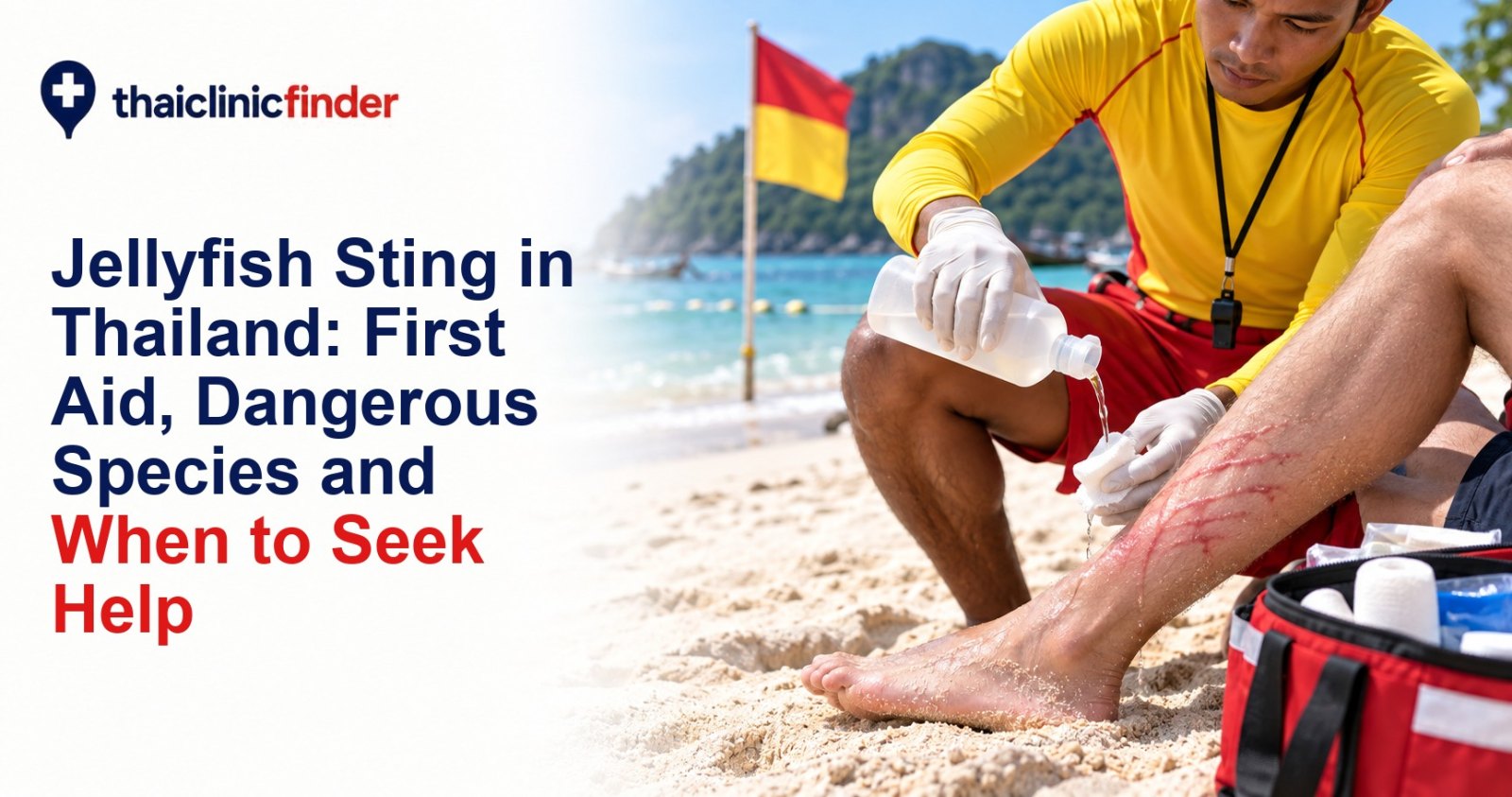
Vinegar requires context. Thai beach safety programmes commonly provide vinegar for suspected box jellyfish stings, and official Thai guidance commonly advises flooding the affected area with vinegar for at least 30 seconds. Its effect differs among species, so use the official beach station or follow a trained lifeguard's directions. If the reaction is severe, vinegar is an adjunct, not a substitute for CPR and emergency services. Do not delay CPR while somebody searches for vinegar.
After vinegar has been applied, a rescuer wearing gloves can carefully remove remaining tentacles. Avoid bare-hand contact, scraping and rubbing. Tell the ambulance team what was applied and when, because that is more useful than guessing the species from memory.
Do not use pain relief to persuade someone with systemic symptoms to remain at the beach. A reduction in skin pain does not prove that a dangerous reaction has passed. When in doubt, describe the symptoms to 1669 or a clinician rather than debating the species.
Removing tentacles without adding more stings
Visible tentacles can continue to sting. Avoid touching them with bare skin. After following local vinegar guidance where appropriate, use tweezers, forceps or the edge of a rigid card to lift tentacles away carefully. A rescuer should wear gloves if available. Dispose of material where nobody else can touch it.
If no tools are available, copious seawater may help float away loose material, but do not blast the skin at high pressure. Keep the affected person from rubbing. Tentacles can be nearly transparent and difficult to see, so assume residue may remain until the area has been managed.
A sting involving the eye needs urgent professional advice. Do not put vinegar into the eye. Rinse according to emergency or poison-centre instructions and arrange medical evaluation. Stings inside the mouth or around the face can threaten the airway and should be treated cautiously.
Pain relief methods vary with the suspected species and local protocol. Hot-water immersion is used for some marine envenomations and may reduce pain, but water must not be hot enough to burn. Follow trained local guidance, especially for children or people with reduced sensation. If heating water would delay transport after a severe sting, leave for medical care.
Recognising a dangerous reaction
Skin appearance alone does not reliably measure severity. Box jellyfish contact may leave linear, ladder-like or whip-like marks, yet a dangerous reaction is defined by the person's condition, not an online photo comparison. Severe pain over a large area, collapse, abnormal breathing, chest tightness, agitation, drowsiness or loss of consciousness are emergency signs.
Anaphylaxis is another possibility after any sting. Warning signs include swelling of the tongue or throat, wheezing, difficulty breathing, a widespread raised rash, dizziness or collapse. Use a prescribed adrenaline auto-injector if the person has one and you know how, then call 1669. Improvement after adrenaline still requires emergency assessment because symptoms can recur.
Some syndromes produce severe generalized pain, sweating, nausea, restlessness, headache or blood-pressure changes after the skin contact. Do not assume that symptoms away from the sting are merely anxiety. Obtain urgent medical evaluation and explain that a marine sting preceded them.
If you are on an island or boat, evacuation takes planning. Contact the operator and emergency services early. Our overview of medical emergencies in Thailand is worth saving offline before a beach or diving trip, when signal and transport may be limited.
When a local reaction can still need care
A small painful welt that steadily improves may be managed with appropriate first aid and observation. Keep the area clean and avoid further rubbing. Ask a pharmacist or clinician about suitable pain relief if you have allergies, pregnancy, kidney disease, stomach ulcers, anticoagulant treatment or other reasons common medicines may not be safe.
Seek medical advice if pain remains severe, the affected area is extensive, blisters or skin damage are significant, or the sting involves the face, eye, mouth or genitals. A child with a large reaction should be assessed even if they initially appear calm. Persistent nausea, weakness, dizziness or palpitations also justify review.
Over the following days, watch for increasing redness, warmth, swelling, pus, worsening tenderness or fever. These may suggest secondary infection, though inflammation from venom can also persist. Do not apply unlabelled creams or puncture blisters. A clinician can distinguish expected healing from a complication and advise wound care.
Take a photograph of the skin once urgent first aid is complete, not before. Record the beach, time, water conditions, symptoms and treatment used. This information may help clinicians, but there is no need to capture or handle the jellyfish. A detached tentacle can still sting.
Beach choices that reduce the chance of a sting
Swim at managed beaches where warnings, lifeguards and first-aid stations are available. Read signs on arrival and ask local staff about current conditions. A beach can change from one day to the next, so an uneventful swim yesterday does not override today's closure or warning.
Do not enter the water when red flags, jellyfish warnings or temporary closures are in place. Avoid touching jellyfish washed onto shore; they may still contain active stinging cells. Teach children to recognise them as something to observe from a distance, not collect. Protective swimwear that covers more skin may reduce contact, although it cannot guarantee protection.
Be cautious after storms and in areas where jellyfish have recently been reported. Night swimming makes hazards harder to see and may occur when lifeguards are absent. Tour or boat operators should provide a safety briefing and suitable first-aid supplies, but ask rather than assume.
Travel insurance should include the water activities you plan. Some policies exclude diving, jet skiing or trips beyond specified depths or distances. Medical costs in Thailand explains why outpatient treatment and emergency transport can lead to very different bills; confirm island evacuation cover before departure.
Preparing a simple beach first-aid plan
Save 1669 in every travel companion's phone and note the name of your beach or pier, as similar place names can cause confusion. Identify the lifeguard station and exit route before swimming. If staying somewhere remote, ask how an ambulance or boat evacuation would be arranged and where the nearest emergency department is located.
Carry basic wound supplies and any prescribed adrenaline auto-injector. Do not decant chemicals into unlabelled bottles or improvise a vinegar station without local guidance. Purpose-built beach stations should be kept visible and stocked by responsible operators. Someone in the group should know CPR; a short recognised course is more valuable than memorising a list of folk remedies.
If you take regular medicines, keep an accurate list and emergency contact details with you. Visitors carrying prescription drugs should also check Thailand's medication customs rules before departure, particularly when rescue medication involves needles or controlled substances.
What to do if a sting happens today
Leave the water, stop rubbing and assess breathing and consciousness. Call 1669 for any severe or systemic reaction, start CPR if the person is not breathing normally, and follow a trained rescuer's instructions. Use Thailand-specific beach first aid for tentacles and vinegar rather than applying advice remembered from a different country or species.
For a local reaction, remove remaining tentacles without bare-hand contact, manage pain using appropriate guidance and observe for worsening symptoms. Arrange medical care for a large sting, persistent severe pain, eye or facial involvement, symptoms beyond the skin, or any concern involving a young child.
The most useful preparation is straightforward: choose supervised swimming areas, obey current warnings and know how to summon help. If symptoms develop after you leave the beach, tell the clinician that a jellyfish sting occurred and describe the first aid already used; our guide to getting medical help when sick in Thailand can help with the practical steps.
Frequently Asked Questions
Should I put urine on a jellyfish sting?
No. Urine is not a recommended treatment and may worsen nematocyst discharge. Follow local beach instructions, use seawater rather than fresh water for attached tentacles, and obtain medical help when symptoms are severe.
Can I use vinegar on every jellyfish sting in Thailand?
Vinegar is commonly included in Thai first-aid guidance for suspected box jellyfish, but advice can vary by species. Follow trained lifeguards and local warning signs; in a severe reaction, emergency resuscitation and calling 1669 matter more than identifying the species.
How long does jellyfish sting pain last?
Duration varies with the species, contact area and individual reaction. Pain that is severe, spreading, returning after initial improvement or accompanied by systemic symptoms should be medically assessed.
Should I go to hospital after a minor sting?
A small local reaction that improves with appropriate first aid may not require hospital care. Seek advice if pain persists, the affected area is large, the sting involves the face or eyes, or infection or allergic symptoms develop.
Are children at greater risk from jellyfish stings?
A similar venom dose affects a smaller body more significantly, so children deserve a lower threshold for medical evaluation. Supervise them closely, use guarded swimming areas and call emergency services for breathing difficulty, collapse, severe pain or altered behaviour.
Sources
- Thailand Department of Marine and Coastal Resources - Marine safety information
- US Centers for Disease Control and Prevention Yellow Book - Poisonings, envenomations and toxic exposures
- Australian Resuscitation Council - Guideline 9.4.5 Envenomation: Jellyfish Stings
- NHS - Jellyfish and other sea creature stings

Writer
Niran Chaiyasit
Niran Chaiyasit is a Thai health writer with a background in public health and a focus on travel health, disease prevention and healthcare access in Thailand. His work covers topics such as common illnesses, vaccinations, mosquito-borne diseases, food safety and practical health information for travelers and expatriates.

Medical review
Justin Brooks
Daniel Brooks is an American health writer with a background in health sciences and a focus on rehabilitation, musculoskeletal health and patient education. He writes about physiotherapy, injury recovery, pain management, preventive health and practical healthcare guidance for international patients and travelers.