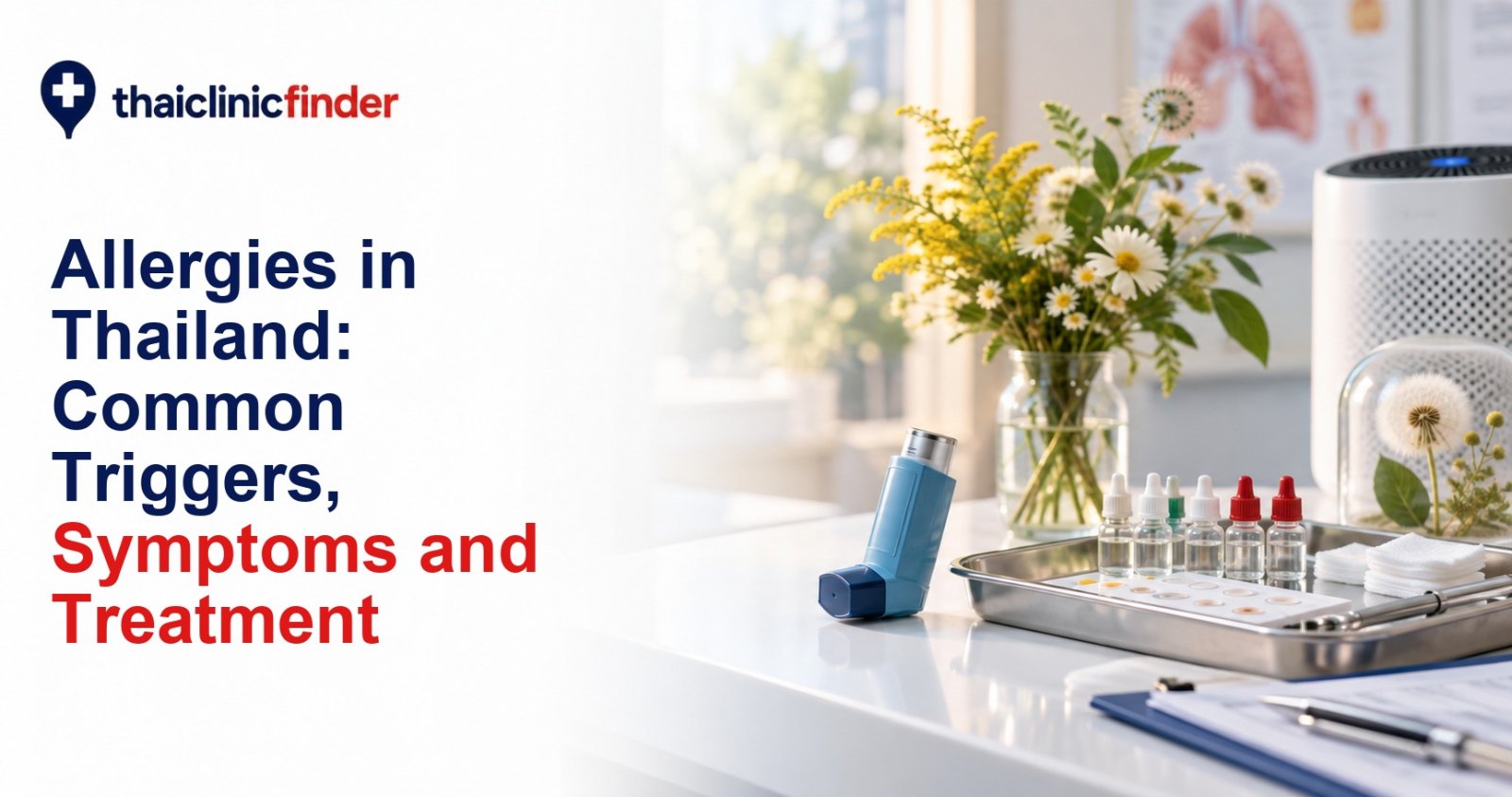
Thailand's tropical climate creates a different allergy environment from many temperate countries. Dust mites, mold, insects, air pollution and familiar food allergens can all contribute to symptoms.
Someone who rarely has seasonal allergies at home may notice nasal or skin symptoms in a humid Thai apartment, while a person with asthma may find that PM2.5 or indoor allergens aggravate breathing.
Most allergy symptoms are manageable, but a severe allergic reaction can be a medical emergency.
Dust mites are an important indoor trigger
Warm, humid conditions can favor house dust mites.
Common symptoms of dust-mite allergy include:
- sneezing
- blocked or runny nose
- itchy eyes
- coughing
- asthma symptoms
People may notice symptoms most strongly in bedrooms or after handling bedding.
Regular washing of bedding and reducing indoor humidity where practical can help.
Mold can be a problem in humid buildings
Visible mold, musty odors and damp walls deserve attention.
Mold exposure can irritate the airways and can worsen symptoms in people with allergic rhinitis or asthma.
Air conditioning can reduce humidity, but poorly maintained systems can also accumulate dust and moisture.
If accommodation has substantial damp or visible mold, changing rooms may be more useful than relying only on antihistamines.
Air pollution can mimic or worsen allergy symptoms
PM2.5 is not an allergen in the same way as pollen or dust mites, but polluted air can irritate the nose, eyes and lungs.
People with allergic rhinitis or asthma may experience worse symptoms on high-pollution days.
Bangkok and northern Thailand can both experience periods of poor air quality.
See Bangkok Air Quality and PM2.5 in Thailand for practical monitoring advice.
Pollen patterns are different from Europe or North America
Thailand has tropical vegetation rather than the same seasonal pollen calendar found in temperate climates.
People with known pollen allergy may therefore find symptoms occur at unfamiliar times or react to different plants.
If symptoms persist, an allergist can help determine whether the trigger is pollen, dust mites, mold or something else.
Food allergy still requires the usual precautions
Thai cuisine frequently uses ingredients such as:
- peanuts
- tree nuts
- shellfish
- fish
- egg
- soy
- sesame
Sauces and pastes can contain ingredients that are not obvious from the menu.
Cross-contact is also possible in busy kitchens.
If you have a serious food allergy, carry a translated allergy card and confirm ingredients rather than relying only on the dish name.
Shellfish is particularly common in Thai food
Shrimp, crab, fish sauce and oyster sauce appear in many dishes.
A dish that does not visibly contain seafood may still include a sauce made from seafood ingredients.
People with severe allergy should explain the specific allergen clearly and ask about sauces and shared cooking equipment.
Insect reactions can occur
Mosquito bites usually cause local itching rather than true dangerous allergy, but bees, wasps and other stinging insects can trigger serious reactions in susceptible people.
Large local swelling is uncomfortable but is different from anaphylaxis.
Seek urgent care for breathing difficulty, throat swelling, faintness or rapidly spreading symptoms.
What anaphylaxis can look like
Anaphylaxis is a severe systemic allergic reaction.
Possible features include:
- difficulty breathing
- wheezing
- swelling of lips or tongue
- throat tightness
- widespread hives
- vomiting
- dizziness or collapse
If you have been prescribed an epinephrine auto-injector, use it according to your emergency plan and seek immediate medical help.
Call 1669 in Thailand for a medical emergency.
Antihistamines are widely available
Thai pharmacies stock multiple antihistamines, including familiar generic ingredients.
Different products can cause different levels of drowsiness.
Do not assume a tablet is non-sedating based only on brand familiarity.
Ask the pharmacist for the active ingredient and check interactions, especially if you drive, drink alcohol or use sedating medicines.
Nasal treatment can be more useful than repeated tablets
People with persistent allergic rhinitis may need more than occasional oral antihistamines.
Clinicians can assess whether treatments such as nasal corticosteroids are appropriate.
Do not use decongestant nasal sprays continuously for long periods without advice because rebound congestion can occur with some products.
Allergy testing is available in Thailand
Large hospitals and allergy clinics can investigate persistent or severe symptoms.
Testing may include skin-prick testing or blood tests depending on the situation.
A positive test does not automatically prove that an allergen is causing every symptom. Results need to be interpreted in the context of the medical history.
Asthma and allergies often overlap
Allergic rhinitis and asthma commonly occur together.
If nasal allergy symptoms are accompanied by wheeze, chest tightness or breathlessness, mention this to the clinician.
See Asthma in Thailand for more detail on pollution and respiratory triggers.
What to bring if you have serious allergies
Carry:
- a list of allergens
- current medicines
- emergency medication
- your diagnosis if relevant
- a written action plan
Keep emergency medicine in hand luggage when flying.
Check expiry dates before travel.
Hotels and rental apartments
If indoor allergy is a major problem, ask about:
- visible mold
- smoking policy
- carpet
- pets
- air-conditioning maintenance
No accommodation can guarantee an allergen-free environment, but obvious damp and heavy dust are worth avoiding.
When to seek medical care
Arrange a medical review if:
- symptoms are persistent
- asthma is worsening
- you repeatedly need antihistamines
- the trigger is unclear
- food reactions are occurring
- skin swelling is frequent
Use emergency care for breathing difficulty, throat swelling, faintness or other signs of anaphylaxis.
The practical approach
Allergies in Thailand are often influenced by indoor humidity, dust mites, mold, pollution and food exposure rather than one simple seasonal trigger.
Identify patterns rather than changing multiple medicines at once.
For mild symptoms, a pharmacist may help with a registered antihistamine. For persistent, respiratory or severe reactions, a medical assessment is more appropriate.
If you have a history of anaphylaxis, travel with your emergency medication and a clear plan rather than assuming a nearby pharmacy can replace it instantly.
Frequently Asked Questions
What allergies are common in Thailand?
Dust mites, mold, food allergens, insect stings and respiratory irritation from pollution are important triggers. Individual patterns vary.
Can PM2.5 make allergies worse?
Yes. PM2.5 can irritate the nose, eyes and lungs and can aggravate allergic rhinitis and asthma symptoms.
Are antihistamines available in Thailand?
Yes. Pharmacies stock multiple antihistamines, but check the active ingredient and whether the product causes drowsiness.
What should I do for anaphylaxis in Thailand?
Use prescribed epinephrine according to your emergency plan and seek immediate medical care. Call 1669 for an emergency.
Can hospitals in Thailand do allergy testing?
Yes. Major hospitals and specialist clinics may offer skin or blood testing, depending on the case.
Sources
Writer
Niran Chaiyasit
Niran Chaiyasit is a Thai health writer with a background in public health and a focus on travel health, disease prevention and healthcare access in Thailand. His work covers topics such as common illnesses, vaccinations, mosquito-borne diseases, food safety and practical health information for travelers and expatriates.

Medical review
Justin Brooks
Daniel Brooks is an American health writer with a background in health sciences and a focus on rehabilitation, musculoskeletal health and patient education. He writes about physiotherapy, injury recovery, pain management, preventive health and practical healthcare guidance for international patients and travelers.