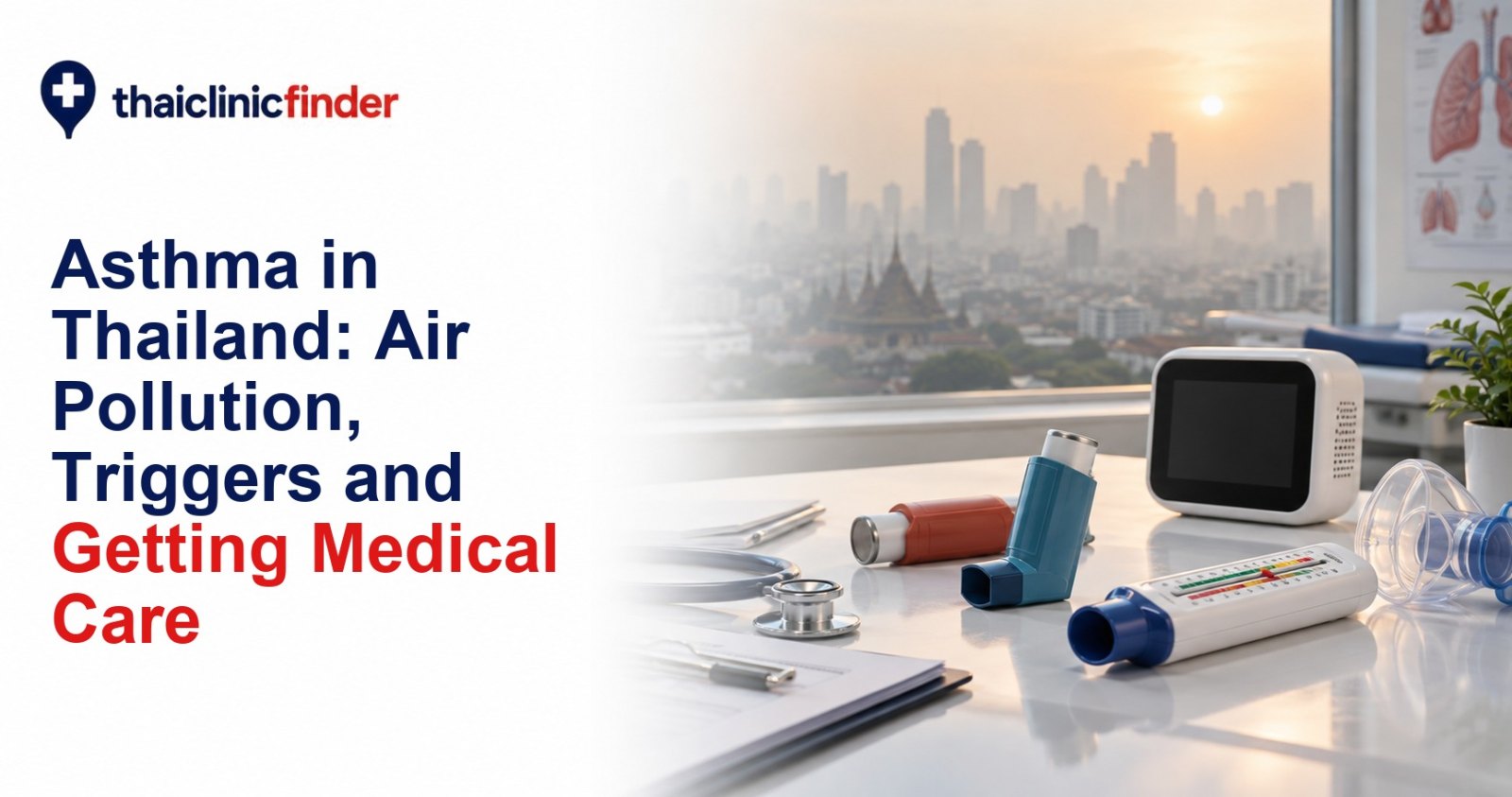
People with asthma can live and travel safely in Thailand, but environmental conditions can change symptoms. Air pollution, seasonal haze, tobacco smoke, respiratory infections and indoor allergens are all relevant.
Bangkok and northern Thailand can experience periods of elevated PM2.5. For someone with asthma, poor air quality may increase cough, wheeze or breathlessness even when symptoms are usually well controlled.
The most useful preparation is to arrive with an established asthma plan, enough prescribed medication and a clear idea of where to seek help if breathing worsens.
Air pollution can worsen asthma
The World Health Organization identifies air pollution as an important factor that can worsen existing asthma.
Fine particulate matter, or PM2.5, can penetrate deep into the respiratory system.
People with asthma may notice more symptoms on days with poor air quality, particularly during exercise or prolonged outdoor exposure.
Check Thailand's official Air4Thai monitoring data during haze periods.
Bangkok and northern Thailand have different pollution patterns
Bangkok can experience traffic-related and seasonal PM2.5 episodes.
Northern provinces, including Chiang Mai and surrounding areas, can experience more pronounced seasonal haze related to regional burning and weather conditions.
The timing and severity vary from year to year.
Do not rely on an old statement such as Chiang Mai is always bad in March. Check current air-quality data.
For more detail, see PM2.5 in Thailand: Practical Health Advice for Haze Days.
Carry your usual inhalers
Bring enough prescribed medicine for your trip or initial period of residence.
Keep inhalers in hand luggage.
Carry:
- the generic medicine name
- inhaler strength
- dosing instructions
- spacer if you use one
- a copy of your prescription or treatment plan
Brand names can differ in Thailand.
Controller and reliever medicines have different jobs
Some inhalers are used regularly to control airway inflammation, while others are used for symptom relief.
Do not stop a controller inhaler because you feel well after arriving in Thailand.
Likewise, needing a reliever more often than usual can be a sign that asthma control has worsened.
Follow the plan given by your treating clinician.
Common triggers in Thailand
Triggers vary between individuals but can include:
- PM2.5
- tobacco smoke
- incense
- traffic pollution
- respiratory infections
- mold
- dust mites
- strong fragrances
- exercise in hot polluted air
Air conditioning can reduce heat exposure but poorly maintained indoor environments can contain dust or mold.
Humidity can affect indoor allergens
Thailand's warm, humid climate can favor dust mites and mold.
People with allergic asthma may notice symptoms in bedrooms, older buildings or poorly ventilated rooms.
Practical steps include:
- keeping bedding clean
- reducing visible damp
- using air conditioning appropriately
- avoiding rooms with obvious mold
- using an air purifier when useful during pollution episodes
Exercise needs adjustment on bad-air days
Exercise is generally beneficial for people with well-controlled asthma, but intense outdoor activity during high PM2.5 can aggravate symptoms.
Move exercise indoors when pollution is high.
A well-fitting respirator can reduce particulate exposure while outdoors, but it does not replace asthma medication or make severe pollution harmless.
Respiratory infections can trigger attacks
Viral respiratory infections are a common asthma trigger.
Frequent handwashing, appropriate vaccination and avoiding close exposure to obviously ill people can reduce some risk.
If a respiratory infection causes increasing wheeze or breathlessness, follow your asthma action plan and seek medical review when symptoms are not responding as expected.
Where to get asthma care in Thailand
Asthma can be managed through:
- general medical clinics
- internal medicine departments
- respiratory medicine or pulmonology clinics
- emergency departments
Major private hospitals usually have respiratory specialists, while large public hospitals also provide specialist care.
English-language availability depends on the exact doctor and facility, so confirm this before a planned appointment.
Pharmacy refills should match the exact medicine
Thai pharmacies may stock inhalers containing familiar active ingredients under different brands.
Check:
- active ingredient
- dose per actuation
- device type
- combination ingredients
Do not assume two inhalers are interchangeable because the packaging looks similar.
If you are changing device type, ask a pharmacist or clinician to show you how to use it correctly.
Technique matters
Poor inhaler technique can make effective medicine appear ineffective.
A clinician or pharmacist can review:
- preparation of the device
- inhalation speed
- breath holding
- spacer use
- mouth rinsing after inhaled corticosteroids
If symptoms worsen after changing brands or devices, technique should be considered.
Warning signs that need urgent help
Seek urgent medical care if:
- speaking becomes difficult because of breathlessness
- symptoms worsen rapidly
- lips or face appear blue or gray
- the reliever is not helping
- you feel faint or exhausted
- breathing is severely restricted
Call 1669 for a medical emergency.
Do not try to manage a severe attack by repeatedly increasing medication without following an emergency plan.
Travel insurance and asthma
If you have a known asthma diagnosis, check how your insurance treats pre-existing conditions.
Emergency treatment may not be covered automatically by every travel policy.
Carry medical documentation if your insurer requires it.
For residents, broader private health insurance may offer more appropriate long-term coverage.
Flying with asthma
Most people with controlled asthma can fly normally.
Keep inhalers in your cabin baggage rather than checked luggage.
If asthma is unstable before travel, seek medical advice before flying.
Severe recent attacks or oxygen requirements need individualized assessment.
A practical pollution plan
When air quality deteriorates:
- check current PM2.5
- reduce prolonged outdoor exertion
- keep windows closed when outdoor air is poor
- use indoor filtration if available
- continue prescribed asthma treatment
- seek review if symptoms increase
Do not wait for severe symptoms if your usual control is clearly deteriorating.
Reading air-quality information usefully
Air4Thai reports measurements from Thailand's Pollution Control Department. Check the station closest to where you actually are and note when the reading was updated. Conditions can differ across a city and can change through the day, so one screenshot from the morning should not determine every activity.
AQI systems are not identical worldwide. Concentrate on the local health message and the pollutant concentration rather than comparing colours from different apps as though they used the same scale. On a poor-air day, reduce prolonged outdoor exertion, move exercise indoors and keep prescribed reliever medication accessible.
Our guides to Bangkok air quality and Chiang Mai air quality explain the different local patterns. Current monitoring is still more useful than a fixed calendar because the severity and timing of haze vary.
Making indoor air easier to manage
Closing windows during a pollution episode can help only if indoor air is reasonably clean. Avoid smoking, incense, aerosol sprays and strong fragrances. If using an air purifier, choose one sized for the room and replace filters as recommended. A purifier cannot compensate for visible mold or a badly maintained air-conditioning system.
Humidity can favour mold and dust mites, but making a room excessively cold is not the solution. Keep bedding clean, address leaks and choose accommodation without a damp smell or visible growth. People who know they have allergic triggers may want to discuss a practical prevention plan with their clinician before a long stay.
Masks can reduce particle exposure when they fit well, but they do not treat airway inflammation or stop an asthma attack. A loose surgical mask and a properly fitted particulate respirator are not equivalent. Anyone who finds a respirator makes breathing harder should move to cleaner air and follow medical advice rather than forcing prolonged use.
Getting a prescription or replacement inhaler
Bring enough medicine for the planned stay, plus a margin for delays. Keep it in cabin baggage with the prescription, generic name, strength and dosing instructions. For customs preparation, review our guide to bringing prescription medicines into Thailand and confirm current official requirements.
If a refill is needed, show the pharmacist or doctor the original inhaler or a photograph of its label. Match the active ingredients, dose per actuation and device. Combination inhalers can look similar while containing different medicines. A device change also requires a fresh technique check.
Thailand has general clinics, hospital outpatient departments and respiratory specialists. Confirm current opening hours and the language of the exact appointment. Someone whose symptoms are worsening should seek clinical review rather than repeatedly purchasing reliever inhalers without assessing control.
What a useful asthma review should cover
A clinician may ask about daytime symptoms, night waking, activity limits, reliever use, recent attacks and exposure to smoke or pollution. Bring the inhalers so technique can be observed. If you use a spacer, bring that too. Poor technique, an empty device or missed controller doses can all resemble treatment failure.
The review should produce a clear plan for ordinary symptoms and emergencies. Written action plans commonly explain which regular medicines to continue, what worsening looks like and when urgent care is needed. Do not create dosing instructions from a general article; the plan needs to match the medicines prescribed to you.
Travel insurance may treat asthma as a pre-existing condition. Check disclosure rules, emergency coverage and any exclusions before the trip. Keep receipts and medical records if you need care, and ask the provider for documents required by the insurer.
When breathing symptoms need urgent care
Severe breathlessness, difficulty speaking, blue or grey lips, faintness, exhaustion or poor response to the prescribed reliever are emergency signs. Call Thailand's emergency medical service on 1669 or go to an emergency department. Do not drive yourself when breathing is severely impaired.
Worsening that is less dramatic still deserves attention. More night waking, reduced ability to exercise or substantially increased reliever use can mean control has deteriorated. Arrange a review instead of accepting symptoms as an unavoidable effect of Thailand's weather.
Visitors should know the route to an appropriate clinic before haze or illness causes trouble. Our guide to medical costs in Thailand can help with general budgeting, but urgent breathing problems should never be delayed while comparing fees.
Living or travelling in Thailand with asthma
Most people with well-controlled asthma can enjoy Thailand without major disruption. Preparation means bringing the right medicines, checking current air quality, reducing personal triggers and knowing where to obtain routine and emergency care.
Continue the treatment prescribed by your clinician and check every replacement inhaler carefully. The Thailand pharmacy price list gives general purchasing context, but environmental measures and pharmacy access do not replace controller treatment or an individual asthma action plan.
If symptoms begin to interfere with sleep, work or ordinary activity, arrange a medical review early. Prompt attention is more useful than waiting until a manageable change becomes a severe attack.
Frequently Asked Questions
Can Thailand's air pollution make asthma worse?
Yes. PM2.5 and other air pollutants can worsen asthma symptoms, particularly during haze episodes.
Should I bring my asthma inhalers to Thailand?
Yes. Carry enough prescribed medicine and keep inhalers in hand luggage. Bring the generic names and strengths.
Can I buy asthma inhalers in Thailand?
Many inhaled medicines are available, but brands and devices may differ. Confirm the active ingredient, dose and device before switching.
When is an asthma attack an emergency?
Severe breathlessness, difficulty speaking, blue or gray lips, faintness or failure to respond to reliever treatment requires urgent medical care.
Where can I check air quality in Thailand?
Air4Thai is Thailand's official air-quality monitoring platform.
Sources

Writer
Niran Chaiyasit
Niran Chaiyasit is a Thai health writer with a background in public health and a focus on travel health, disease prevention and healthcare access in Thailand. His work covers topics such as common illnesses, vaccinations, mosquito-borne diseases, food safety and practical health information for travelers and expatriates.

Medical review
Justin Brooks
Daniel Brooks is an American health writer with a background in health sciences and a focus on rehabilitation, musculoskeletal health and patient education. He writes about physiotherapy, injury recovery, pain management, preventive health and practical healthcare guidance for international patients and travelers.