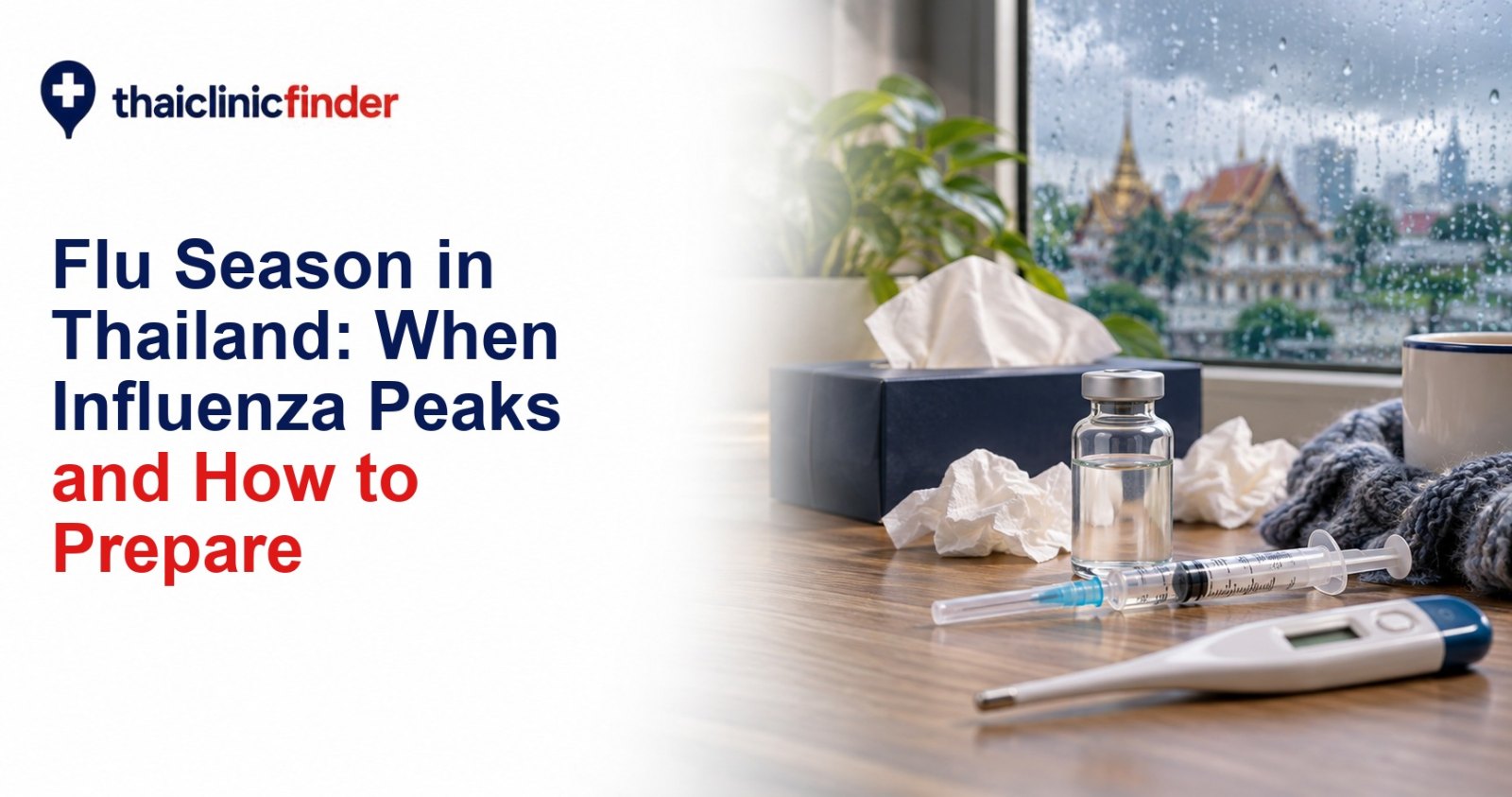
Influenza does not follow one neat winter season in Thailand. The virus can circulate throughout the year, with activity often rising during the rainy season and sometimes showing another increase around cooler months. The timing and size of each wave vary, so a traveler or resident should not treat any month as flu-free.
For most healthy people, flu is unpleasant but self-limiting. For older adults, young children, pregnant people and those with certain medical conditions, it can lead to pneumonia or other serious complications. This guide explains how Thailand's tropical pattern affects vaccine timing, what symptoms to watch and when a respiratory illness needs prompt care.
Why Thailand's flu pattern feels different
In temperate Northern Hemisphere countries, influenza commonly peaks in winter. Thailand's tropical climate produces a less tidy pattern. Virus circulation can continue across the calendar, and changes in rainfall, humidity, school terms, travel and indoor crowding may influence transmission. National surveillance is more useful than relying on a fixed date copied from another country.
This matters for visitors arriving in what they consider summer. They may be several months beyond a vaccination campaign at home while influenza is circulating at their destination. It also matters for residents who travel internationally and encounter different seasons in the same year. The relevant questions are when you last received a vaccine, which formulation was used, where you are going next and whether you have a higher risk of complications.
Crowded transport, conferences, schools, nightlife and shared accommodation give respiratory viruses opportunities to spread regardless of outdoor temperature. Air conditioning does not cause influenza, but people spending long periods together indoors can increase close contact. Masks, ventilation, hand hygiene and staying away from others when ill remain useful during active transmission.
When vaccination fits into travel planning
Health authorities recommend annual influenza vaccination for eligible people, with particular importance for those at higher risk of severe disease. A vaccine needs roughly two weeks for the immune response to develop, so arranging it shortly before boarding a flight is less useful than planning ahead. Even so, a late appointment may still be worthwhile if exposure will continue for months.
Northern and Southern Hemisphere vaccine formulations can differ because surveillance identifies different strains for upcoming seasons. A clinician can advise which current product is appropriate based on where you were vaccinated, where you will spend time and the date of your last dose. Do not repeat a dose simply because you crossed the equator; additional vaccination within one year is an individual decision, not a universal travel rule.
Flu vaccination is available through many Thai hospitals and clinics, but stock and price vary. Ask which formulation is offered, the age groups it is licensed for, whether an appointment is needed and what the total fee includes. Confirm language support for the exact vaccination service. Keep a record showing the product and date, especially if you divide your year between countries.
A flu shot cannot cause influenza because standard injected vaccines do not contain replicating flu virus. Mild soreness, fatigue or a short-lived fever can occur. Tell the clinician about previous severe vaccine reactions, pregnancy, immune conditions and current illness. If you are reviewing protection before travel, typhoid guidance for Thailand shows why vaccines have different indications and why food-and-water precautions still matter.
Who has a higher chance of complications
Risk is not limited to people who look frail. Adults aged 65 or older, children under five, pregnant people and people with chronic lung, heart, kidney, liver, neurological or metabolic conditions can be more vulnerable. Immune suppression and severe obesity may also increase the chance of serious illness. Individual guidance changes with the condition and treatment.
Asthma deserves attention even when usually well controlled, because influenza can trigger a significant exacerbation. Diabetes can become harder to manage during fever and reduced food intake. Pregnancy changes the immune and cardiovascular systems, and flu vaccination is commonly recommended, but the person's own clinician should advise on timing and product.
If you fall into a higher-risk group, plan before symptoms start. Identify a clinic or hospital near your accommodation, save insurance contacts and bring a medicine list. Ask your usual clinician whether you should seek advice quickly if flu-like symptoms appear, because antiviral treatment is most useful when started early and may be considered based on risk and clinical judgement.
Flu, COVID-19 and dengue can overlap
Influenza often causes sudden fever, cough, sore throat, headache, fatigue and muscle aches. A runny or blocked nose can occur, and children may have vomiting or diarrhoea. Not everyone with flu develops a fever. Symptoms alone cannot reliably distinguish influenza from COVID-19 or other respiratory infections.
Dengue can also begin with fever, headache and severe body aches, particularly in Thailand. Cough and sore throat may point more toward a respiratory virus, but overlap exists. Bleeding, intense abdominal pain, repeated vomiting, marked drowsiness or symptoms that worsen as the fever falls need urgent assessment. Do not take aspirin for an undiagnosed febrile illness, and ask a clinician before using an anti-inflammatory medicine when dengue is possible.
Testing may help guide treatment and infection-control decisions, but timing affects accuracy. A clinician will also consider examination findings, local surveillance, exposure and risk factors. Tell them when symptoms began, whether anyone around you was ill, where you travelled and what medicines you have already taken. Our guide to dengue fever in Thailand explains warning signs that should not be dismissed as an ordinary flu.
When home care is reasonable
A generally healthy adult with mild symptoms may be able to rest, drink fluids and monitor at home. Stay away from work, school, tours and social events while acutely unwell. Cover coughs and sneezes, wash hands and improve ventilation. If sharing accommodation, use a well-fitting mask around others and avoid close contact with anyone at higher risk.
Check the active ingredient before combining cold and flu products. Several brands may contain paracetamol, creating a risk of accidental overdose. Decongestants are not suitable for everyone, including some people with high blood pressure or heart conditions. Pharmacists can help with product selection, but significant symptoms or high-risk health conditions warrant clinical advice.
Antibiotics do not treat influenza. They may be prescribed only when a clinician suspects a bacterial complication. Do not buy or use leftover antibiotics in an attempt to shorten a viral illness. Likewise, prescription antivirals are not interchangeable with antibiotics and should be assessed in relation to symptom timing, severity and patient risk.
Keep drinking enough to pass urine regularly. Oral rehydration solution may help when fever, vomiting or diarrhoea causes fluid loss. Alcohol can worsen dehydration and sleep. Returning to strenuous exercise too quickly can prolong recovery; increase activity gradually once fever has resolved and energy is returning.
Symptoms that need medical attention
Seek urgent care for difficulty breathing, chest pain, blue or grey lips, confusion, collapse, a seizure, severe dehydration or inability to wake normally. In Thailand, call 1669 for a medical emergency. Do not travel alone to a clinic if you are faint, confused or struggling to breathe.
Medical advice is also appropriate when fever is persistent or returns after improvement, cough becomes worse, there is blood in sputum, or a chronic condition deteriorates. Children need assessment for fast or laboured breathing, poor fluid intake, reduced urination, unusual sleepiness, bluish colour or a fever pattern that concerns their caregiver. A young infant with fever requires prompt professional advice.
People at higher risk of complications should contact a clinician early rather than waiting until illness becomes severe. Antiviral treatment may be recommended, often with greater benefit when begun soon after symptoms start. Do not delay a call because you lack a positive test; the clinician can decide whether testing is necessary.
If you are unsure where to begin, what to do if you get sick in Thailand covers appointments, identification, insurance and records. Emergency care should never be postponed while waiting for an insurer's approval.
Reducing spread in daily life
Vaccination is the main specific preventive measure, but everyday choices help. Wash hands after coughing, blowing your nose and using shared transport. Alcohol hand rub is useful when soap and water are unavailable. Avoid touching your eyes, nose and mouth with unwashed hands.
Improve airflow by opening windows where safe or using appropriately maintained ventilation. In crowded indoor settings during active respiratory-virus circulation, a well-fitting mask adds protection, especially for people at higher risk. Replace it when damp or soiled and handle it by the straps.
Stay home when sick rather than attempting to complete an itinerary. Airlines, buses and boats are difficult environments for someone with fever and also expose other passengers. Check current carrier rules if you need to change travel. If a companion becomes ill, do not share drinking vessels, towels or cigarettes, and clean frequently touched surfaces.
Sleep and adequate nutrition support general health, but no supplement guarantees protection from flu. Be cautious with products that promise to boost immunity or replace vaccination. Ask a clinician before taking herbal remedies if you are pregnant, use anticoagulants or take medicines with potential interactions.
Practical preparation for residents and visitors
Before travel, review your vaccine record, arrange insurance and pack enough regular medicine. People at higher risk should ask their clinician what symptoms should trigger an early call. Save 1669 and the contact details of a nearby facility, especially if staying on an island or in a rural area.
During the trip, pay attention to current local health information rather than assuming Thailand follows your home country's flu calendar. Make room to rest if symptoms develop, wear a mask around others and obtain prompt advice when risk factors or warning signs are present. Keep receipts and medical records if an insurance claim may be needed.
Influenza is familiar, but it is not always trivial. Annual vaccination, sensible infection control and a clear route to care cover most practical needs. For budgeting beyond routine outpatient care, read our overview of medical costs in Thailand, then confirm current fees directly with the facility you plan to use.
Frequently Asked Questions
What month is flu season in Thailand?
Influenza can circulate all year in tropical Thailand, with activity often increasing during the rainy season and sometimes again around cooler months. Surveillance changes from year to year, so there is no single guaranteed start or finish date.
Should I get a flu vaccine before visiting Thailand?
Travelers should be up to date with routine vaccination, including influenza, especially if they are at higher risk of complications. Ask a clinician about timing and the current vaccine available where you live.
Can I get a flu vaccine in Thailand?
Many hospitals and clinics offer influenza vaccination, but stock, formulation, eligibility and price can change. Contact the exact facility and confirm the product, appointment requirements and language support.
How can I tell flu from dengue?
Symptoms overlap, and neither can be diagnosed reliably from a checklist. Fever, severe aches, bleeding, breathing difficulty, dehydration or worsening illness require medical assessment; tell the clinician about mosquito exposure and respiratory symptoms.
When is flu no longer contagious?
People can spread influenza before symptoms and for several days afterward, with longer periods possible in children and immunocompromised people. Follow clinical advice, stay home while acutely unwell and avoid close contact with high-risk people.
Sources
Writer
Niran Chaiyasit
Niran Chaiyasit is a Thai health writer with a background in public health and a focus on travel health, disease prevention and healthcare access in Thailand. His work covers topics such as common illnesses, vaccinations, mosquito-borne diseases, food safety and practical health information for travelers and expatriates.

Medical review
Justin Brooks
Daniel Brooks is an American health writer with a background in health sciences and a focus on rehabilitation, musculoskeletal health and patient education. He writes about physiotherapy, injury recovery, pain management, preventive health and practical healthcare guidance for international patients and travelers.