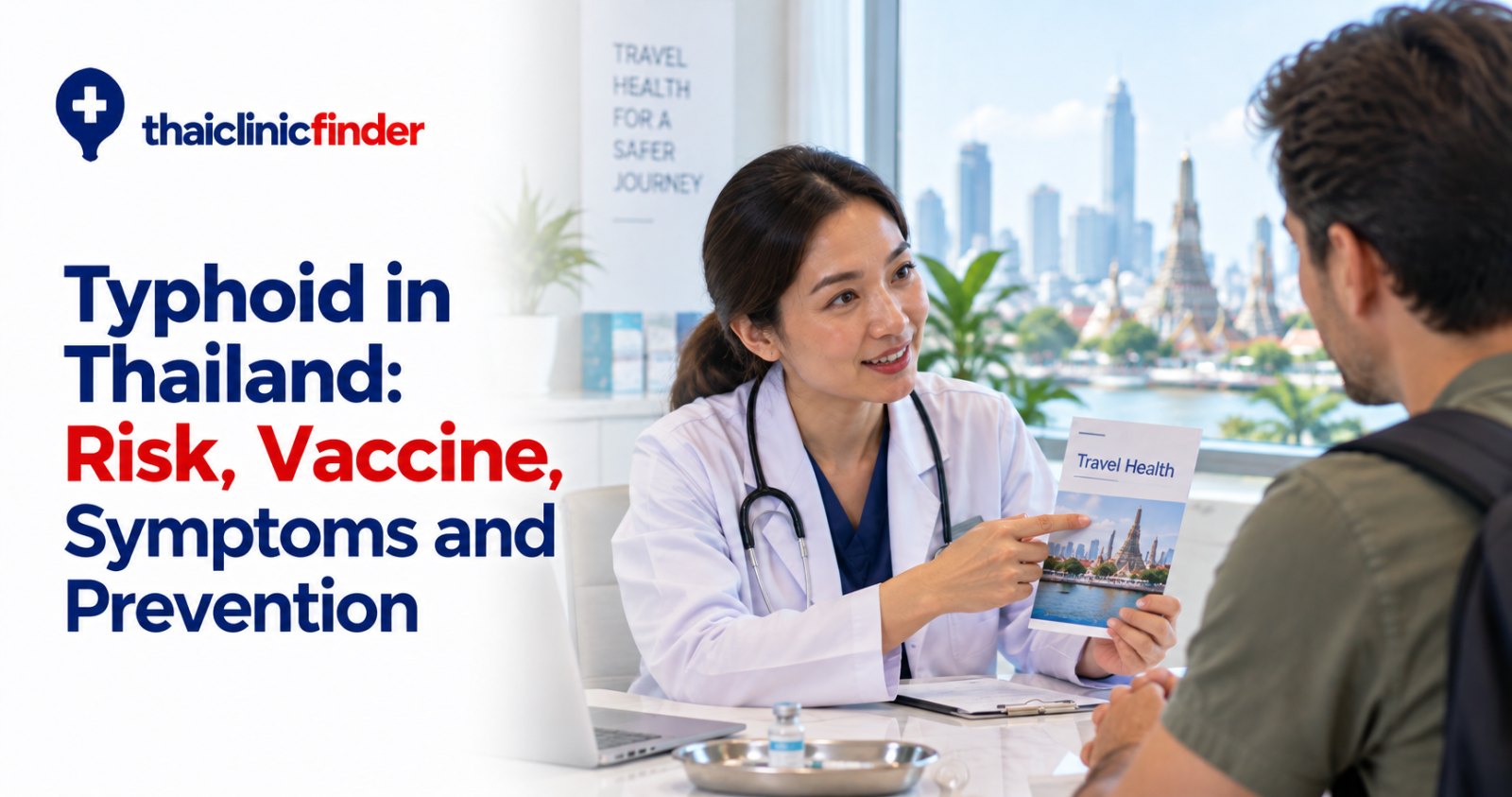
Typhoid fever is a bacterial infection caused by Salmonella Typhi. It spreads mainly through food or water contaminated with human feces and can cause prolonged fever, abdominal symptoms and serious complications if it is not treated.
Thailand is not a destination where every traveler will develop typhoid, and risk is usually lower in places with reliable sanitation and good food hygiene. However, the infection still matters for travelers because contaminated food or water can transmit it, and the U.S. Centers for Disease Control and Prevention currently recommends typhoid vaccination for most travelers to Thailand.
This guide explains the real typhoid risk in Thailand, symptoms to watch for, vaccination, diagnosis, treatment and practical food and water precautions.
Is typhoid present in Thailand?
Typhoid occurs in many parts of Asia and remains associated with unsafe water, inadequate sanitation and contaminated food.
The CDC's current Thailand traveler guidance lists typhoid vaccination as recommended for most travelers. That does not mean Thailand has uniformly high risk everywhere. WHO notes that travelers generally face lower risk in tourist and business centers with good accommodation, sanitation and food hygiene.
Risk is more relevant when a traveler:
- eats frequently from places with uncertain food hygiene;
- drinks untreated or questionable water;
- stays in rural or lower-sanitation settings;
- visits friends or relatives and eats mainly in local household settings;
- stays for an extended period;
- travels away from established tourist infrastructure.
Vaccination reduces risk but does not provide complete protection, so safe food and water habits remain important.
What causes typhoid fever?
Typhoid fever is caused by Salmonella enterica serovar Typhi, usually shortened to S. Typhi.
Humans are the only reservoir. Infection occurs when bacteria from an infected person or carrier contaminate food or water and are then swallowed by another person.
Typhoid should not be confused with common food poisoning caused by other types of Salmonella. The illnesses overlap in some symptoms, but typhoid is a systemic infection that can become much more serious.
For common short-term gastrointestinal illness, see food poisoning in Thailand.
What are the symptoms of typhoid?
WHO lists the typical symptoms as:
- prolonged high fever;
- fatigue;
- headache;
- nausea;
- abdominal pain;
- constipation or diarrhea;
- sometimes a rash.
Symptoms can develop gradually, and early typhoid may resemble many other febrile illnesses.
A person with fever and gastrointestinal symptoms in Thailand could have typhoid, dengue, influenza, COVID-19, another bacterial infection or a noninfectious condition. Symptoms alone cannot reliably diagnose typhoid.
How serious can typhoid become?
Untreated typhoid can cause serious complications.
WHO notes that severe disease can lead to major complications and death. Complications can include intestinal bleeding, intestinal perforation, severe systemic infection and neurological effects.
Modern antibiotics greatly reduce risk when the infection is identified and treated appropriately. However, antimicrobial resistance has made treatment more complicated in many regions.
Because of that resistance, travelers should not try to self-treat prolonged fever with leftover or casually purchased antibiotics.
For a broader guide to antibiotic use and access, see antibiotics in Thailand.
How is typhoid diagnosed in Thailand?
A clinician usually evaluates the combination of:
- fever duration;
- travel and food history;
- gastrointestinal symptoms;
- physical examination;
- laboratory testing.
WHO states that typhoid can be confirmed through blood testing. In practice, blood culture is an important diagnostic method, especially early in illness.
Other tests may be used depending on the clinical situation, but not every rapid test has the same reliability.
If you have persistent fever after possible food or water exposure, seek medical care rather than relying on a home diagnosis.
Is the typhoid vaccine recommended for Thailand?
According to the CDC's Thailand destination page, typhoid vaccination is recommended for most travelers.
The CDC also emphasizes that typhoid vaccines are not 100% effective, so vaccinated travelers still need to follow food and water precautions.
WHO currently recognizes three main typhoid vaccine types:
- typhoid conjugate vaccine;
- injectable unconjugated Vi polysaccharide vaccine;
- oral live attenuated Ty21a vaccine.
The exact product, age eligibility, schedule and booster advice depend on the vaccine available in your country and your medical history.
A travel-medicine clinician can advise which option is appropriate before a trip.
How far in advance should you get vaccinated?
Timing depends on the vaccine product.
CDC travel-vaccine guidance for U.S.-licensed products recommends giving the injectable typhoid vaccine at least two weeks before travel. For the oral vaccine, the multi-dose course should be completed before travel according to the product schedule.
Other countries may use different products, including typhoid conjugate vaccines, so follow the instructions for the vaccine actually being administered.
If your departure is soon, it can still be worth speaking with a travel-health clinician. Do not assume it is automatically too late.
Does Thailand require a typhoid vaccine for entry?
Typhoid vaccination is a health recommendation, not a routine Thailand entry requirement.
This distinction matters. A recommended travel vaccine is not the same thing as a legally required border vaccine.
Travelers should check Thailand's official entry requirements separately because border rules can change and can depend on travel history, particularly for certain diseases such as yellow fever.
Can vaccinated people still get typhoid?
Yes.
No typhoid vaccine provides complete protection. WHO and CDC both emphasize that food and water hygiene remains necessary after vaccination.
Vaccination should be viewed as an additional layer of protection, not permission to ignore obvious food-safety risks.
Food and water precautions in Thailand
Typhoid prevention overlaps with prevention of several gastrointestinal infections.
WHO recommends measures such as:
- eating food that is thoroughly cooked and served hot;
- avoiding raw milk and unpasteurized dairy products;
- avoiding ice when the safety of the water is uncertain;
- using safe drinking water;
- washing hands carefully and regularly;
- washing and, where practical, peeling raw fruits and vegetables.
In Thailand, the risk from a particular meal cannot be judged only by whether it is street food or restaurant food. Hygiene, food temperature, storage, water source and handling practices matter more than the label.
For additional practical guidance, see traveler's diarrhea in Thailand.
Is street food in Thailand a typhoid risk?
Street food is not automatically unsafe, but food-handling conditions vary.
Lower-risk choices generally include food that is cooked thoroughly in front of you and served steaming hot. Risk is higher when food sits for long periods at unsafe temperatures, is handled repeatedly after cooking, or is washed with contaminated water.
Freshly cooked food from a busy vendor with rapid turnover may be safer than a poorly handled dish in a formal venue.
Use practical hygiene cues rather than assuming that all street food is dangerous.
Can you get typhoid from bottled water?
Properly sealed bottled water from a reputable source should greatly reduce the water-related risk.
Check that the cap seal is intact before drinking. If you are in a setting where water safety is uncertain, also consider the water used to make ice, wash raw produce or prepare drinks.
Boiling is an effective way to make microbiologically unsafe water safer when bottled or treated water is not available.
What is the difference between typhoid and traveler's diarrhea?
Traveler's diarrhea is a syndrome that can be caused by many bacteria, viruses and parasites and often causes acute loose stools.
Typhoid is a specific systemic infection caused by S. Typhi. Diarrhea can occur, but prolonged fever is a major warning feature, and some patients have constipation rather than diarrhea.
If symptoms are limited to short-lived diarrhea without fever or systemic illness, typhoid is only one of many possible explanations and may be unlikely.
Persistent fever deserves more careful assessment.
How is typhoid treated?
Typhoid is treated with antibiotics selected by a clinician.
Antimicrobial resistance is now a major global concern. WHO notes resistance to multiple antibiotic classes, which means the best treatment depends on local resistance patterns, disease severity, patient factors and laboratory results.
This is one reason not to self-prescribe antibiotics based only on symptoms.
A clinician may also need to assess hydration, complications and whether hospital care is necessary.
Can people remain contagious after recovering?
Yes.
WHO states that some people continue carrying S. Typhi even after symptoms resolve and can keep shedding bacteria in their feces.
People being treated should:
- complete the full prescribed antibiotic course;
- wash hands carefully after using the toilet;
- avoid preparing food for others while potentially infectious;
- follow medical advice about repeat testing if needed.
This is especially important for people who work in food handling or healthcare.
When should a traveler seek medical care?
Seek medical assessment if you develop:
- persistent or high fever;
- significant abdominal pain;
- fever with diarrhea or constipation that is not resolving;
- marked weakness or dehydration;
- symptoms that worsen after several days;
- illness after a known typhoid exposure.
Seek urgent care for severe abdominal pain, confusion, fainting, blood in stool, signs of shock or other rapidly worsening symptoms.
For practical help finding care, see what to do if you get sick in Thailand.
Should you take antibiotics preventively?
No. Antibiotics are not used routinely as preventive medication for ordinary travelers against typhoid.
Using antibiotics unnecessarily can cause side effects and contributes to antimicrobial resistance.
Vaccination, food and water precautions, hand hygiene and timely medical assessment are the appropriate preventive approach.
What about paratyphoid?
Paratyphoid fever is caused by Salmonella Paratyphi rather than S. Typhi. It can produce a similar systemic febrile illness.
Most conventional typhoid vaccines target typhoid rather than providing broad protection against all paratyphoid infections.
That is another reason food and water precautions remain important even for vaccinated travelers.
Typhoid and long stays in Thailand
People moving to Thailand or staying for months may have more cumulative exposure than short-stay visitors.
Long-term residents should consider:
- vaccination status;
- whether boosters are needed for the specific vaccine used;
- frequent travel to rural areas;
- food and water habits;
- underlying medical conditions.
A one-time pre-travel consultation can be useful, but long-term residents should also periodically review routine and travel vaccines.
The bottom line
Typhoid fever is present in the broader region and remains relevant to travel in Thailand, although risk is not the same in every setting. CDC currently recommends typhoid vaccination for most travelers to Thailand.
Vaccination lowers risk but does not eliminate it. Safe food, safe water and good hand hygiene remain essential.
If you develop persistent fever, abdominal symptoms or significant illness while in Thailand, seek medical assessment rather than trying to diagnose or treat typhoid yourself. Antibiotic resistance makes professional diagnosis and treatment especially important.
Frequently Asked Questions
Is typhoid common in Thailand?
Typhoid risk exists in Thailand but varies by setting. Risk is generally lower in tourist and business areas with good sanitation and higher where food or water hygiene is poor.
Do I need a typhoid vaccine for Thailand?
The CDC currently recommends typhoid vaccination for most travelers to Thailand. It is a travel-health recommendation rather than a routine border-entry requirement.
Can I still get typhoid after vaccination?
Yes. Typhoid vaccines are not 100% effective, so safe food, water and hand hygiene remain important.
What are the first symptoms of typhoid?
Typical symptoms include prolonged fever, fatigue, headache, nausea and abdominal pain. Constipation or diarrhea can also occur, and symptoms overlap with many other infections.
How is typhoid treated?
Typhoid is treated with antibiotics chosen by a clinician. Because antimicrobial resistance is common, self-treatment with random antibiotics is not recommended.
Is street food in Thailand unsafe because of typhoid?
Not automatically. Risk depends on food handling, cooking temperature, storage, water quality and hygiene. Freshly cooked food served hot is generally a safer choice.
Sources

Writer
Niran Chaiyasit
Niran Chaiyasit is a Thai health writer with a background in public health and a focus on travel health, disease prevention and healthcare access in Thailand. His work covers topics such as common illnesses, vaccinations, mosquito-borne diseases, food safety and practical health information for travelers and expatriates.

Medical review
Justin Brooks
Daniel Brooks is an American health writer with a background in health sciences and a focus on rehabilitation, musculoskeletal health and patient education. He writes about physiotherapy, injury recovery, pain management, preventive health and practical healthcare guidance for international patients and travelers.