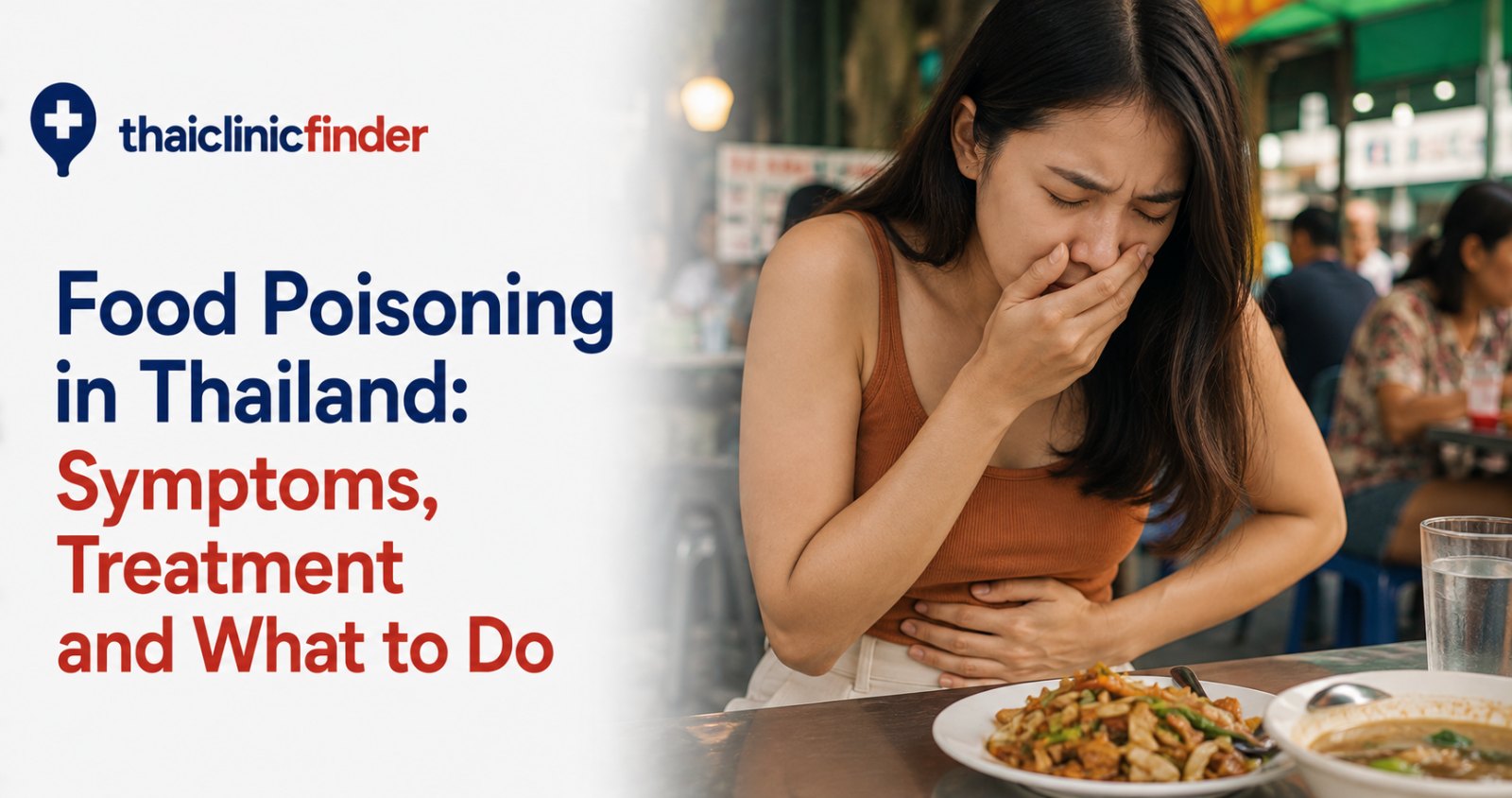
Food poisoning can cause a very abrupt change to a trip in Thailand. You may feel completely normal after lunch and develop vomiting, diarrhoea or stomach cramps later the same day. In other cases, symptoms do not begin until one or several days after the contaminated food was eaten.
The term food poisoning is used broadly. Medically, foodborne illness can result from bacteria, viruses, parasites or toxins present in contaminated food. CDC also uses food poisoning more specifically for illnesses caused by infectious organisms that release toxins or by toxins already present in food.
Most uncomplicated episodes improve without hospital treatment. The main priority is replacing lost fluids. Blood in the stool, significant fever, repeated vomiting, severe abdominal pain or dehydration make medical assessment more important.
The last thing you ate may not be what made you sick
Travellers naturally blame the most recent restaurant when symptoms begin, but incubation periods vary considerably.
CDC notes that toxin-mediated food poisoning can begin within a few hours. Bacterial and viral travellers' diarrhoea more commonly develops after approximately 6 to 96 hours, while many parasitic infections take much longer to become symptomatic.
This means the meal you ate two or three hours ago may be responsible, but so could something eaten the previous day.
The timing becomes especially useful if several people who shared the same meal develop similar symptoms.
What food poisoning usually feels like
Symptoms depend on the organism or toxin involved.
Common features include:
- watery diarrhoea
- nausea
- vomiting
- abdominal cramps
- abdominal pain
- loss of appetite
- weakness
- fever in some infections
WHO notes that contaminated food can cause more than 200 different diseases, so there is no single symptom pattern that identifies every foodborne illness.
Some toxin-mediated illnesses are dominated by vomiting and resolve relatively quickly. Other bacterial infections can cause fever or bloody diarrhoea. Parasites are more likely to become relevant when diarrhoea persists for much longer.
A few violent hours can still be a short-lived illness
Some forms of food poisoning begin dramatically but resolve relatively quickly.
CDC states that illnesses caused by preformed toxins can produce both vomiting and diarrhoea and often resolve spontaneously within approximately 12 to 24 hours.
This does not mean every severe-looking illness will disappear overnight.
Monitor whether you can drink, whether symptoms are improving and whether warning signs appear.
Persistent high fever, blood in the stool, severe pain or progressive weakness does not fit the pattern of a simple brief toxin-mediated illness and deserves medical attention.
Your first treatment is usually fluid, not medication
Diarrhoea and vomiting remove both water and electrolytes from the body.
WHO identifies dehydration as the most important immediate complication of many diarrhoeal illnesses. CDC likewise recommends replacing fluids and electrolytes during travellers' diarrhoea.
For mild illness, frequent drinking may be enough.
For more substantial losses, oral rehydration solution, or ORS, is particularly useful because it contains glucose and electrolytes in proportions designed to support fluid absorption.
If you buy ORS sachets, mix them using the amount of water specified on the packet rather than guessing the concentration.
How to recognise dehydration before it becomes severe
Pay attention to how you feel between trips to the bathroom.
Possible signs that you are becoming dehydrated include:
- dry mouth
- strong thirst
- dizziness, particularly when standing
- unusual weakness
- very dark urine
- urinating much less than usual
More serious dehydration can involve lethargy, inability to drink properly, fainting or altered consciousness.
If you are unable to replace your losses because you keep vomiting, seek medical care. Intravenous fluids may be needed when oral hydration is no longer sufficient.
Oral rehydration salts are more useful than another sugary drink
Sports drinks, juice and soft drinks can provide fluid, but they are not the same as medical oral rehydration solution.
CDC notes that very sugary beverages can actually worsen diarrhoea when consumed in large quantities because of their osmotic effect.
If you are losing substantial fluid through repeated watery stools or vomiting, ORS is generally the more appropriate option.
For mild symptoms, drinking fluids you tolerate is still better than becoming dehydrated because you are waiting to find the perfect beverage.
Should you take loperamide?
Loperamide can reduce intestinal movement and make watery diarrhoea less frequent.
It can be useful when food poisoning produces uncomplicated watery diarrhoea, particularly if urgency is making it difficult to rest or travel.
CDC recommends considering loperamide for mild or moderate travellers' diarrhoea. It can also be helpful before a long bus journey or flight when the illness is otherwise uncomplicated.
Loperamide does not remove bacteria or toxins from the body. It is a symptom-control medicine.
For dosing and contraindications, see Loperamide: Uses, Dosage, Side Effects and When Not to Take It.
Blood or fever changes the loperamide decision
Do not automatically suppress every case of diarrhoea.
CDC advises against using loperamide alone when diarrhoea is bloody or accompanied by fever.
Visible blood in the stool is considered dysentery and is classified as severe travellers' diarrhoea.
Get medical advice if you have:
- bloody diarrhoea
- significant fever
- severe abdominal pain
- rapidly worsening illness
These symptoms can indicate an invasive infection where the correct treatment may differ substantially from ordinary self-care.
Do you need antibiotics for food poisoning?
Usually not for mild illness.
CDC does not recommend antibiotics for mild travellers' diarrhoea. Many episodes of foodborne illness resolve without them, and antibiotics cannot treat viral illness or toxin-mediated food poisoning.
For moderate illness, antibiotics can sometimes be considered. For severe travellers' diarrhoea, particularly dysentery, antibiotic treatment may be indicated after appropriate assessment.
CDC's current guidance identifies azithromycin as the preferred empirical antibiotic for dysentery or febrile diarrhoea and notes its relevance in Southeast Asia where fluoroquinolone resistance can be an issue.
This is not a reason to buy azithromycin and take it after every bad meal. The decision depends on symptoms, severity, medical history and likely cause.
Random antibiotics can create another problem
Thailand has extensive pharmacy access, which can make it tempting to treat gastrointestinal illness yourself with an antibiotic.
That is not always helpful.
CDC warns that unnecessary antibiotic use can cause side effects, contribute to antimicrobial resistance and increase the risk of carrying resistant intestinal bacteria.
If your illness is mild, hydration and symptom management are generally more appropriate than automatically adding an antibiotic.
If symptoms are severe enough that you think antibiotics are needed, medical assessment becomes more useful.
What should you eat while recovering?
You do not need to force yourself to eat a full meal when you are nauseated, but prolonged fasting is usually unnecessary once you can tolerate food.
Start with smaller portions and foods that feel easy to tolerate.
Practical choices can include:
- rice
- soup or broth
- toast or crackers
- bananas
- plain noodles
- other simple foods you tolerate well
There is no need to follow an extremely restrictive diet for several days if appetite and digestion are returning normally.
The more important priority during the acute stage is adequate fluid intake.
Alcohol is a poor recovery strategy
Alcohol can worsen dehydration and irritate the gastrointestinal system while you are recovering.
If you have repeated diarrhoea or vomiting, skip alcohol until you are eating and drinking normally again.
Heavy alcohol consumption can also make it harder to notice worsening dehydration, dizziness or medication side effects.
A night out is easier to postpone than a medical complication in a foreign country.
When vomiting is the main symptom
Some foodborne illnesses cause much more vomiting than diarrhoea.
Try small, frequent amounts of fluid rather than drinking a large bottle quickly and immediately vomiting it again.
Seek medical care if:
- you repeatedly vomit all fluids
- vomiting continues without improvement
- there is blood in the vomit
- abdominal pain is severe
- you become dizzy or faint
- urination becomes very limited
The main practical question is whether you are able to stay hydrated.
Severe abdominal pain is not something to label food poisoning automatically
Not every episode of abdominal pain after eating is food poisoning.
Conditions such as appendicitis, gallbladder disease, pancreatitis and other abdominal emergencies can initially be mistaken for a gastrointestinal infection.
Seek medical assessment if pain is:
- severe
- increasingly intense
- strongly localised to one area
- accompanied by abdominal rigidity
- present without the typical pattern of diarrhoea or vomiting
- associated with fainting or significant weakness
The fact that symptoms appeared after a meal does not prove contaminated food was responsible.
Food poisoning or travellers' diarrhoea?
The terms overlap but are not identical.
Travellers' diarrhoea describes a clinical syndrome of diarrhoea acquired during travel and can be caused by bacteria, viruses or parasites.
Food poisoning usually implies that contaminated food caused the illness and is sometimes used more specifically for toxin-mediated disease.
For someone who is actually ill, the terminology matters less than the severity and pattern of symptoms.
For a broader diarrhoea management guide, see I Have Travelers' Diarrhea in Thailand: What Should I Do?.
What if you are due to fly today?
Mild watery diarrhoea can sometimes be managed well enough to travel, especially with hydration and appropriate use of loperamide.
But consider delaying travel or obtaining medical assessment if you have:
- bloody diarrhoea
- high or significant fever
- repeated vomiting
- severe abdominal pain
- substantial dehydration
- fainting or marked weakness
A long flight can make access to fluids, toilets and medical assessment more difficult.
Do not use loperamide simply to conceal a severe illness long enough to board a plane.
What if this happens on Koh Samui, Phuket or another island?
Foodborne illness does not become more dangerous simply because you are on an island, but access to medical services can influence what you should do next.
For mild symptoms, rest, hydration and appropriate self-care may be sufficient.
If symptoms become severe, seek medical care locally rather than waiting until you return to Bangkok or leave the island.
This is especially important when vomiting prevents hydration or when there is blood in the stool, substantial fever or severe pain.
If you are planning to travel onward to a more remote island while already unwell, consider being assessed before making the journey.
What if symptoms are still there after two days?
Many acute foodborne illnesses improve within a few days, but persistent symptoms deserve reassessment.
CDC advises travellers to seek medical attention when diarrhoea is particularly severe or persists despite self-treatment.
If symptoms are not clearly improving after roughly 48 hours, especially with fever or dehydration, consider seeing a doctor.
The longer diarrhoea continues, the wider the range of possible causes becomes.
Two weeks of diarrhoea is no longer ordinary food poisoning
CDC defines persistent travellers' diarrhoea as diarrhoea lasting 14 days or longer.
At that point, parasitic infections become more important in the differential diagnosis. Giardia is one of the better-known causes, but other parasites can also cause persistent illness.
If you still have diarrhoea after two weeks, medical testing is more useful than continuing loperamide or trying another random antibiotic.
See 10 Common Intestinal Parasites in Thailand: Symptoms, Risks and Prevention for the main parasitic causes relevant to Thailand.
Who should seek help sooner?
The threshold for medical care should be lower for people more vulnerable to dehydration or complications.
This includes:
- infants and young children
- older adults
- pregnant people
- people with significant chronic disease
- people with weakened immune systems
WHO identifies young children and people with impaired immunity among the groups at greater risk from diarrhoeal disease.
If someone in a higher-risk group is deteriorating, do not wait for symptoms to become extreme before obtaining medical advice.
When you should go to a clinic or hospital in Thailand
Seek medical assessment if you have:
- blood in the stool
- significant or persistent fever
- repeated vomiting that prevents hydration
- severe abdominal pain
- major abdominal swelling
- fainting or confusion
- very limited urination
- substantial weakness
- worsening symptoms rather than gradual improvement
- diarrhoea that continues despite several days of self-care
For severe dehydration, shock or another immediately life-threatening condition, Thailand's emergency medical services number is 1669.
See Medical Emergencies in Thailand: Numbers and Practical Steps for additional emergency information.
What information helps the doctor most?
You usually do not need to identify the exact dish that caused the illness yourself.
Tell the clinician:
- when symptoms began
- how often you are having diarrhoea
- whether stool is watery or bloody
- whether you have measured a fever
- how often you are vomiting
- whether you can keep fluids down
- where the abdominal pain is located
- what medicines you have already taken
- whether other people who ate with you are ill
- recent antibiotic use
- recent travel within Thailand or elsewhere
If symptoms have persisted for many days, mention unusual food, water or parasite exposures as well.
The restaurant's appearance cannot guarantee food safety
A polished restaurant can serve contaminated food, while inexpensive food is not automatically unsafe.
Food safety depends on handling, storage, cooking, water and hygiene rather than price alone.
WHO's Five Keys to Safer Food are:
- keep clean
- separate raw and cooked foods
- cook thoroughly
- keep food at safe temperatures
- use safe water and raw materials
Travellers cannot inspect every kitchen, but they can still make choices that reduce exposure.
Street food is not automatically the problem
Thailand's street food is often blamed whenever a traveller develops diarrhoea, but the setting alone does not identify whether food is safe.
Look for food that is:
- cooked thoroughly
- served hot
- prepared with reasonable hygiene
- not left sitting for long periods at unsafe temperatures
CDC advises travellers to be particularly cautious with raw or undercooked meat, seafood, eggs and unpasteurised dairy products.
A busy stall cooking food continuously can present a different exposure pattern from food that has remained at room temperature for hours, but no visual check eliminates risk completely.
Be especially cautious with raw seafood and undercooked animal products
Raw and undercooked foods can carry bacterial, viral and parasitic hazards.
CDC specifically highlights risks from raw or undercooked meat, fish, shellfish and eggs.
WHO also notes that raw vegetables and raw or undercooked seafood have been implicated in serious foodborne disease outbreaks.
If you are trying to reduce gastrointestinal risk during a short trip, eating food that is thoroughly cooked and served hot is one of the simplest precautions.
Water and ice need some context
Unsafe water can transmit organisms that cause gastrointestinal illness.
When water safety is uncertain, CDC recommends beverages that are factory sealed, treated, boiled or otherwise known to be safe.
For ice, the relevant issue is the water used to make it. Commercially produced ice from safe water differs from ice made with untreated water.
Do not become so focused on ice that you ignore higher-risk exposures such as raw seafood, undercooked meat or poor hand hygiene.
Handwashing still matters on holiday
Food is not the only route by which diarrhoeal organisms spread.
Poor hand hygiene can transmit pathogens from contaminated surfaces or other people.
Wash hands with soap, particularly:
- before eating
- after using the bathroom
- after handling potentially contaminated objects
Alcohol-based hand sanitiser can be useful when handwashing facilities are unavailable, although soap and water remain important when hands are visibly dirty.
A practical first 24 hours
For otherwise healthy adults with mild watery diarrhoea or vomiting and no warning signs:
- Start replacing fluids immediately.
- Use oral rehydration solution if losses are substantial.
- Rest.
- Eat small amounts when appetite returns.
- Consider loperamide for uncomplicated watery diarrhoea if urgency is difficult to manage.
- Avoid loperamide alone if there is blood or fever.
- Do not automatically start antibiotics.
- Monitor urination, vomiting, fever and abdominal pain.
- Seek medical help if the illness is worsening rather than improving.
The goal is not to stop every symptom immediately. It is to stay hydrated while watching for signs that the illness needs medical treatment.
Most cases improve, but the red flags matter more than the restaurant name
Food poisoning in Thailand can range from a few unpleasant hours to a more serious gastrointestinal infection.
For uncomplicated illness, hydration, rest and appropriate short-term symptom treatment are often enough. Loperamide can be useful for watery diarrhoea when there is no significant fever or blood in the stool.
Seek medical care for dehydration, bloody diarrhoea, significant fever, severe abdominal pain, persistent vomiting or worsening symptoms. If diarrhoea lasts for weeks rather than days, the problem also needs to be reconsidered rather than continuing to label it simple food poisoning.
Frequently Asked Questions
What are the symptoms of food poisoning in Thailand?
Common symptoms include diarrhoea, nausea, vomiting, abdominal cramps and sometimes fever. Symptoms vary according to whether the illness is caused by bacteria, viruses, parasites or toxins.
How quickly does food poisoning start?
Some toxin-mediated food poisoning can begin within a few hours. Bacterial and viral gastrointestinal infections often take around 6 to 96 hours to become symptomatic, while parasitic infections usually take longer.
How long does food poisoning usually last?
Some toxin-mediated illnesses resolve within 12 to 24 hours. Viral diarrhoea often lasts a few days and bacterial diarrhoea can last longer. Persistent or worsening symptoms should be medically assessed.
What should I drink for food poisoning?
Replace fluids regularly. Oral rehydration solution is especially useful when diarrhoea or vomiting is causing substantial fluid loss because it replaces both water and electrolytes.
Can I take loperamide for food poisoning?
Loperamide can help with uncomplicated watery diarrhoea. CDC advises against using it alone when diarrhoea is bloody or accompanied by fever.
Do I need antibiotics for food poisoning in Thailand?
Not for most mild cases. Antibiotics do not treat toxin-mediated or viral food poisoning and are not recommended for mild travellers' diarrhoea. They may be considered for selected moderate or severe bacterial illness.
When should I go to a doctor for food poisoning in Thailand?
Seek medical care for bloody diarrhoea, significant fever, severe abdominal pain, repeated vomiting, inability to stay hydrated, fainting, confusion, very limited urination or symptoms that are worsening.
What if food poisoning starts before my flight?
Mild uncomplicated diarrhoea may sometimes be managed with hydration and loperamide. If you have blood in the stool, significant fever, severe pain, repeated vomiting or dehydration, seek medical assessment rather than relying on medication simply to board the flight.
Sources

Writer
Niran Chaiyasit
Niran Chaiyasit is a Thai health writer with a background in public health and a focus on travel health, disease prevention and healthcare access in Thailand. His work covers topics such as common illnesses, vaccinations, mosquito-borne diseases, food safety and practical health information for travelers and expatriates.

Medical review
Justin Brooks
Justin Brooks is an American health writer with a background in health sciences and a focus on rehabilitation, musculoskeletal health and patient education. He writes about physiotherapy, injury recovery, pain management, preventive health and practical healthcare guidance for international patients and travelers.