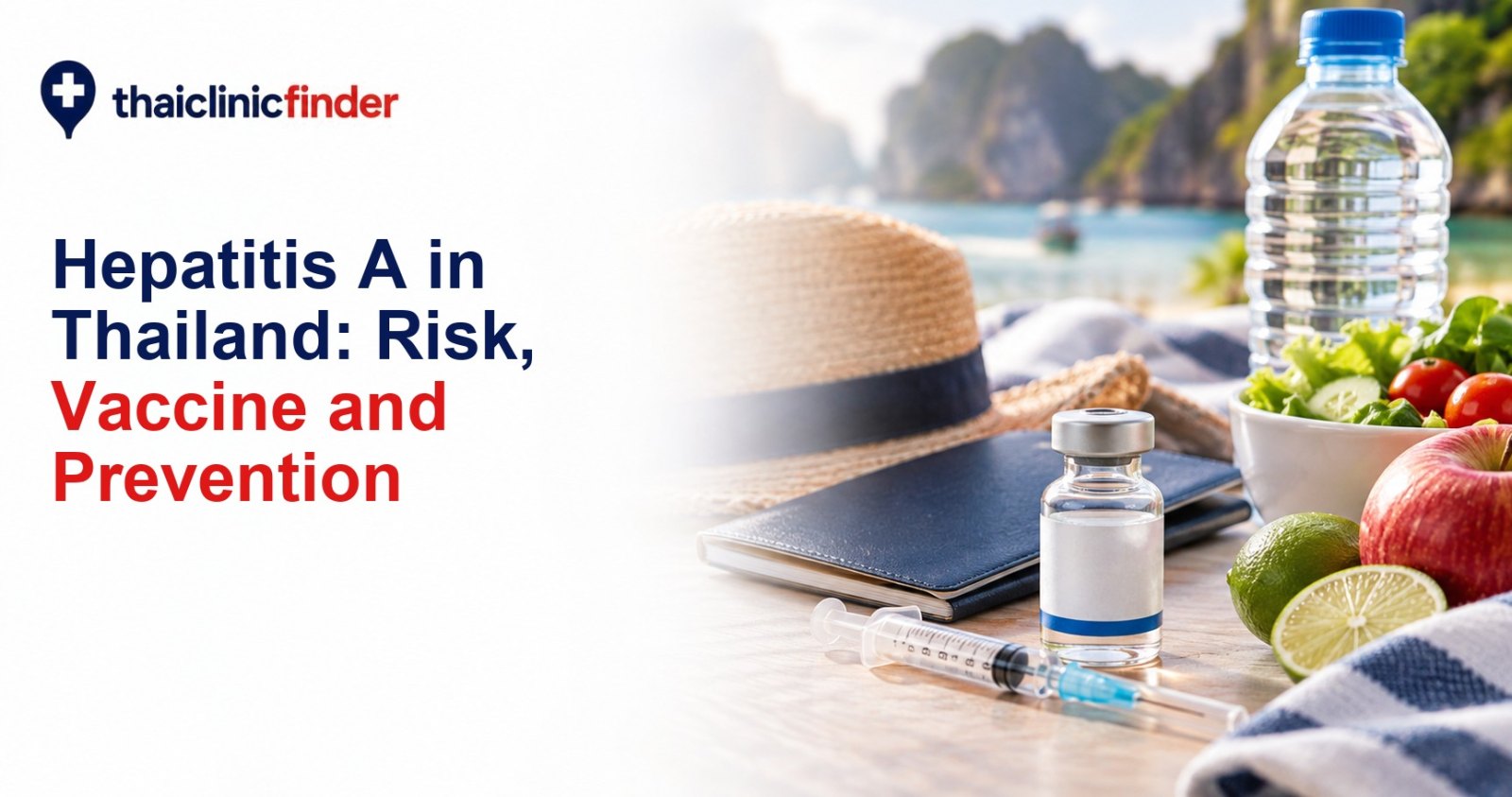
Hepatitis A is a liver infection that can turn an otherwise straightforward trip or move to Thailand into several difficult weeks. It spreads mainly when tiny amounts of infected stool contaminate food, water, hands or surfaces. The risk is not limited to remote travel, and a meal that looks perfectly normal can still be involved if hygiene has broken down somewhere between preparation and serving.
For most visitors and international residents, the useful questions are practical: Am I already protected, is there time to vaccinate, and what should I do if I become unwell? This guide explains the risk without treating every meal as a hazard. It also separates prevention from diagnosis, because symptoms alone cannot confirm hepatitis A.
Why hepatitis A deserves attention in Thailand
TravelHealthPro lists hepatitis A among the vaccine-preventable risks relevant to Thailand. That does not mean every traveller will be exposed. It means the infection circulates and that personal risk depends on immunity, food and water exposure, length of stay, living arrangements and the possibility of close contact with an infected person.
Hepatitis A virus is unusually hardy in the environment. Transmission can occur through contaminated drinking water, ice, uncooked food washed in unsafe water, raw or undercooked shellfish, or food handled by someone who has not washed their hands properly. A person can also spread the virus before they realise they are ill. This is one reason choosing food solely by appearance or venue type is not a reliable safeguard.
Visitors sometimes assume that staying in Bangkok, eating in expensive restaurants or living in a modern condominium removes the risk. Good sanitation lowers exposure, but it cannot guarantee that every ingredient and every stage of food handling was safe. Conversely, street food is not automatically unsafe. Busy turnover, thorough cooking and clean handling matter more than the label attached to the venue. Our guide to street food safety in Thailand explains how to judge a stall or restaurant more realistically.
Check your immunity before arranging another dose
Many adults have already received hepatitis A vaccine through a childhood programme, occupational health service or previous travel appointment. Others may have immunity after an earlier infection. Before paying for vaccination in Thailand, look for your vaccination record and note the product and dates if available. A clinician can decide whether your history is clear enough or whether testing is useful in your situation.
The usual preventive approach uses an inactivated hepatitis A vaccine. Combination products may cover hepatitis A and hepatitis B, or hepatitis A and typhoid, but the timetable and suitability are different from a single-antigen product. Do not assume that one brand, dose or schedule can be substituted for another without checking. Ask the clinic to record the brand, batch, date and planned follow-up dose in a document you can keep.
Vaccination works best when arranged before exposure. If departure is close, it is still worth contacting a travel clinic rather than deciding that it is too late. Age, immune status, chronic liver disease, pregnancy, previous doses and departure date can change the advice. A professional may recommend a vaccine, immune globulin in selected circumstances, or a particular schedule. Those decisions belong in an individual consultation.
Clinics, hospitals and vaccine stock change, so confirm availability before travelling across town. Ask whether the quoted fee includes the consultation, injection fee and any required follow-up. Language support can also vary by branch and appointment. If you need English, request it when booking rather than assuming it will be available on arrival.
Food and water habits that reduce exposure
Vaccination is valuable, but it does not replace everyday hygiene. Wash hands with soap and safe water after using the toilet and before eating or preparing food. Alcohol hand gel is useful when handwashing is temporarily unavailable, although visible dirt should be removed with soap and water as soon as possible.
Choose food that is cooked thoroughly and served hot. Be more cautious with raw shellfish, uncooked garnishes that may have been rinsed in unsafe water, and cut fruit that has been sitting uncovered. For fruit, peeling it yourself gives you more control over handling. Drink sealed bottled water where tap-water safety is uncertain, and check that the cap has not already been opened. Ice in established venues is often commercially produced, but anyone with a specific medical vulnerability may prefer to confirm the source.
These precautions are sensible rather than absolute. Trying to remove every theoretical exposure can make daily life unnecessarily anxious, while ignoring basic hygiene is equally unhelpful. Focus on clean hands, freshly cooked food, safe water and vaccination advice matched to you. Similar food-and-water precautions also reduce other infections, including typhoid; see typhoid risk and vaccination in Thailand for the important differences.
Symptoms and the right time to get help
Hepatitis A does not affect everyone in the same way. Young children may have mild or no obvious symptoms, while adults are more likely to feel noticeably unwell. Symptoms can include fever, fatigue, loss of appetite, nausea, abdominal discomfort, dark urine, pale stools and jaundice, where the skin or whites of the eyes turn yellow.
Those features overlap with other liver, gallbladder and infectious illnesses. Jaundice needs medical assessment, not an online diagnosis. A clinician may take a history, examine you and order blood tests to identify the cause. Tell them about recent travel, food and water exposure, medicines, supplements, alcohol use and any known contact with hepatitis.
Seek urgent care for confusion, extreme drowsiness, repeated vomiting, signs of dehydration, severe abdominal pain, bleeding, rapid deterioration or difficulty waking. If you are in Thailand and symptoms feel life-threatening, use local emergency services or go to an emergency department. Do not wait for jaundice to become severe before seeking help.
People with chronic liver disease, older adults and those with significant medical conditions should ask for care promptly because complications can be more serious. If you need help budgeting for an appointment or tests, medical costs in Thailand provides context, but a price guide should never delay urgent assessment.
What treatment and recovery usually involve
There is no routine antiviral medicine that clears hepatitis A. Care is generally supportive: rest, fluids, nutrition as tolerated and medical monitoring when needed. Most people recover fully, and hepatitis A does not usually become a chronic infection. Recovery can still be slow, and fatigue may outlast the most obvious symptoms.
Avoid alcohol while the liver is inflamed. Do not start or stop prescription medicines on your own, but tell the treating clinician about everything you take, including painkillers, vitamins, herbal products and gym supplements. Some substances are processed by the liver, and the safest choice depends on your test results and overall health.
If vomiting makes it difficult to keep fluids down, or if you become increasingly weak, return for assessment. Hospital care may be needed for dehydration, monitoring or complications. Keep copies of test results and discharge documents, especially if you will continue care in another country. If you have insurance, contact the assistance line when practical, but attend emergency care first when delay could be dangerous.
Exposure, close contacts and work
If a clinician or public health team confirms hepatitis A, ask what close contacts should do. Post-exposure prevention can be time-sensitive, and the suitable option depends on age, immune status, liver disease, pregnancy and the timing of contact. A travel companion should not simply copy another person's treatment or vaccination plan.
Good bathroom and kitchen hygiene becomes particularly important at home. Do not prepare food for other people if a clinician has advised against it. People working with food, children, patients or vulnerable adults may need specific occupational or public health guidance before returning. Follow the instructions from the treating service rather than choosing a return date based only on how energetic you feel.
Tell the clinic if you share accommodation, care for children or have had close household contact with others. These details help professionals judge who may need advice. Casual contact does not carry the same risk as contaminated food, water or close household exposure, so clear guidance can prevent both missed prevention and unnecessary alarm.
Planning vaccination as a resident or frequent visitor
Long-term residents sometimes postpone travel-health appointments because Thailand is now home rather than a destination. In practice, repeated restaurant meals, regional trips, family visits and local work can create continuing exposure opportunities. If your records are incomplete, a routine appointment is a good time to review hepatitis A alongside other vaccines and personal risks.
Parents should seek age-appropriate advice for children rather than using an adult schedule. People who are pregnant, immunocompromised or living with chronic liver disease also need individual assessment. The aim is not to exclude them from vaccination automatically, but to choose timing and products safely.
Insurance treatment of preventive vaccination varies. Some policies exclude routine vaccines, some offer wellness benefits, and others reimburse only after a deductible. Ask for the current benefit wording and claims documents before relying on reimbursement. Keep an itemised receipt and vaccination record even if you expect to pay directly.
A practical plan before you travel or settle in Thailand
Start with your records. Check whether you completed a hepatitis A course, note any medical conditions and arrange a travel-health appointment early enough to discuss timing calmly. If you are already in Thailand, a hospital or travel clinic can review the same questions; confirm stock, total price and language support first.
Once there, use straightforward food and water habits rather than trying to identify risk by price or appearance. Clean hands, freshly cooked food and safe water reduce exposure, while prompt assessment of jaundice or persistent illness helps avoid dangerous delays. Vaccination and sensible hygiene work together; neither makes symptoms safe to ignore.
Finally, keep your vaccine record and know where you would seek care. If you are reviewing several health preparations at once, our guide to what to do if you get sick in Thailand can help you plan the practical side of a clinic visit without replacing personalised medical advice.
Frequently Asked Questions
Is hepatitis A a risk in Thailand?
Yes. Travel health guidance recognizes hepatitis A risk in Thailand, mainly through contaminated food, water and close contact.
Should I get a hepatitis A vaccine before Thailand?
Vaccination is commonly recommended for non-immune travelers. Discuss timing and eligibility with a travel medicine clinician.
Does hepatitis A become chronic?
Usually no. Hepatitis A typically causes an acute infection rather than chronic hepatitis.
Can street food cause hepatitis A?
Any contaminated food can transmit hepatitis A. Risk depends on hygiene, handling and water safety rather than whether food is sold on a street or in a restaurant.
When should I seek care?
Jaundice, dark urine, persistent vomiting, confusion or severe weakness should prompt medical assessment.
Sources

Writer
Niran Chaiyasit
Niran Chaiyasit is a Thai health writer with a background in public health and a focus on travel health, disease prevention and healthcare access in Thailand. His work covers topics such as common illnesses, vaccinations, mosquito-borne diseases, food safety and practical health information for travelers and expatriates.

Medical review
Justin Brooks
Daniel Brooks is an American health writer with a background in health sciences and a focus on rehabilitation, musculoskeletal health and patient education. He writes about physiotherapy, injury recovery, pain management, preventive health and practical healthcare guidance for international patients and travelers.