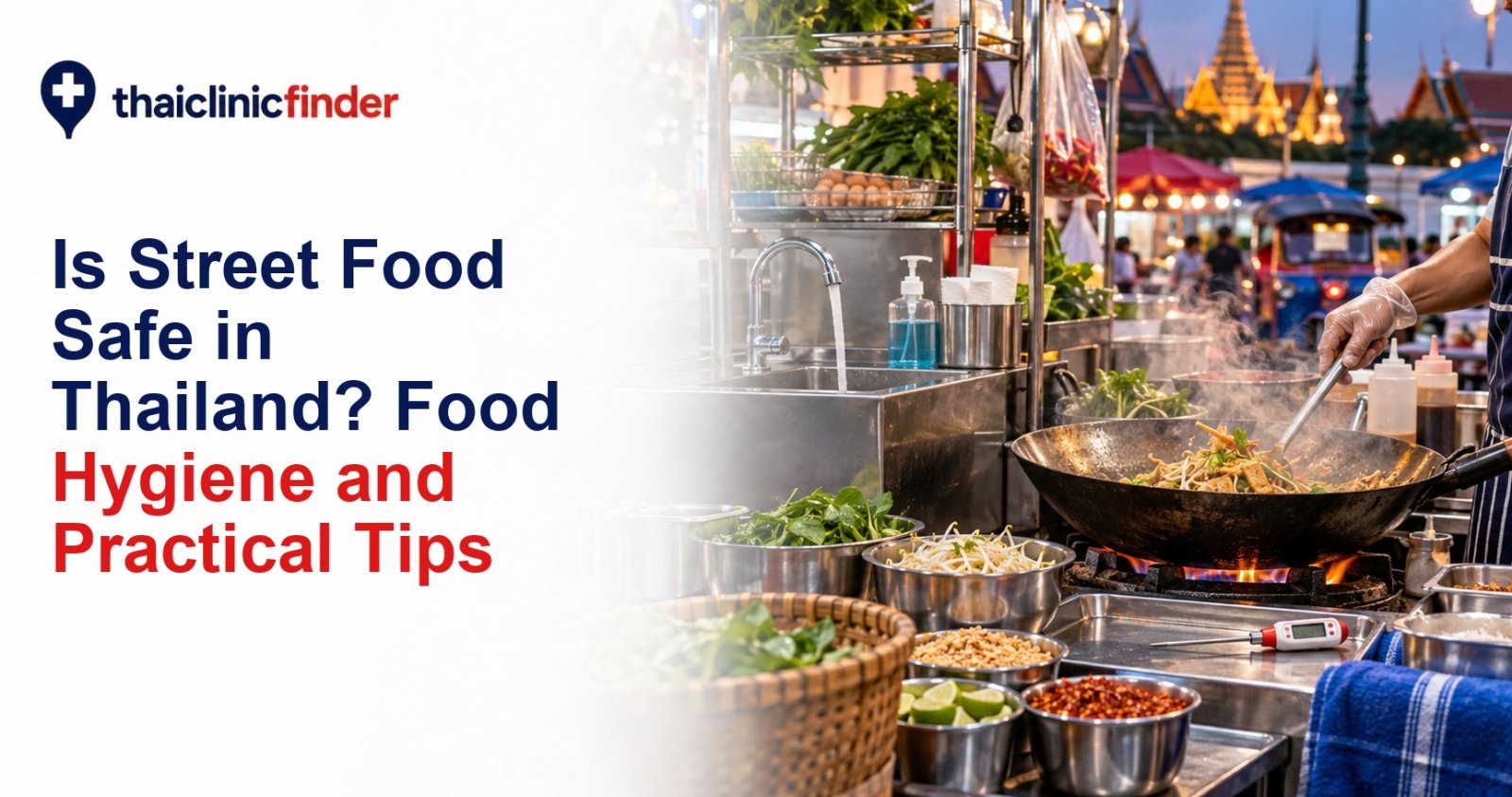
Street food is part of everyday life in Thailand and millions of meals are sold safely from stalls and markets. The fact that food is sold outdoors does not automatically make it unsafe.
Risk depends more on preparation, temperature, water, storage and hygiene than on whether the seller has a restaurant dining room.
Travelers can reduce the chance of foodborne illness by choosing stalls where food is cooked fresh, served hot and handled cleanly.
Choose food cooked to order
Freshly cooked food that reaches a high temperature is generally a safer choice than food that has been sitting warm for a long time.
Good examples include dishes prepared in front of you on a hot wok or grill.
Be more cautious with:
- pre-cooked meat held at room temperature
- lukewarm curries
- seafood that has been sitting in the heat
- cut fruit stored without refrigeration
Busy stalls can be a useful practical signal
High customer turnover means ingredients are more likely to move quickly.
It does not guarantee perfect hygiene, but it can reduce the time cooked food sits around.
Watch how the stall handles:
- raw meat
- cooked food
- money
- utensils
- ice
- handwashing
Hot food should be hot
Food-safety guidance emphasizes keeping cooked food at safe temperatures.
If a dish is supposed to be hot but is merely warm, choose something else.
Reheating does not always fix problems caused by poor storage.
Raw garnishes can add risk
Fresh herbs, bean sprouts and other raw garnishes may not have been cooked.
Travelers with a sensitive stomach or higher medical risk may prefer cooked vegetables.
This is especially relevant when water quality used for washing is uncertain.
Seafood needs careful handling
Thailand has excellent seafood, but shellfish and fish spoil quickly in heat.
Choose vendors where seafood is:
- kept cold
- cooked thoroughly
- prepared freshly
Raw shellfish carries additional risks, including bacterial and viral infections.
Ice is not automatically unsafe
Commercial ice is widely used in Thailand.
The main concern is the water source and handling.
In established restaurants and busy urban vendors, manufactured ice is common.
If you are somewhere with uncertain sanitation, use extra caution.
Bottled water is easy to find
Use sealed bottled or properly treated water when drinking-water quality is uncertain.
Check that the cap is intact.
Avoid untreated natural water.
Hand hygiene matters more than people realize
A traveler can blame a meal when the infection actually came from contaminated hands.
Wash or sanitize hands before eating.
This is particularly important after:
- public transport
- toilets
- handling cash
- markets
Spicy food does not cause infection
Chili can irritate the stomach or trigger symptoms in someone with reflux or irritable bowel syndrome, but spicy food is not itself the cause of bacterial food poisoning.
Do not confuse gastrointestinal irritation with infection.
What causes travelers' diarrhea?
Potential causes include:
- bacteria
- viruses
- parasites
Symptoms can range from mild diarrhea to severe illness with fever, blood or dehydration.
See Travelers' Diarrhea in Thailand for what to do if symptoms begin.
Food poisoning warning signs
Seek medical advice for:
- blood in stool
- high fever
- severe abdominal pain
- repeated vomiting
- dehydration
- symptoms that are not improving
Young children, pregnant people, older adults and immunocompromised travelers may need earlier care.
For more detail, see Food Poisoning in Thailand.
Loperamide is not suitable for every case
Antidiarrheal medicine can be useful in selected situations but should not automatically be used when there is blood in stool, high fever or suspected invasive infection.
See Loperamide in Thailand for pharmacy and safety information.
Antibiotics are not a routine travel-food solution
Do not buy antibiotics every time diarrhea follows street food.
Many episodes are self-limited or viral.
Antibiotic choice also depends on likely pathogen and local resistance.
Seek medical advice when illness is severe.
Markets and night food areas
Night markets can be excellent places to eat, but apply the same principles:
- fresh cooking
- clean utensils
- high turnover
- safe water
- cold storage for raw food
The popularity of a market does not remove basic food-safety considerations.
People with food allergies need a different strategy
Foodborne infection and food allergy are separate risks.
Thai dishes can contain:
- peanuts
- shellfish
- fish sauce
- soy
- egg
- sesame
If you have a severe allergy, use a translated allergy card and ask about sauces and shared cooking equipment.
The practical answer
Thai street food is not inherently unsafe.
Choose stalls with good turnover, freshly cooked food and sensible handling. Favor food served steaming hot and be cautious with raw seafood, lukewarm dishes and questionable water.
No strategy can remove all risk, but basic food and hand hygiene makes a meaningful difference.
Frequently Asked Questions
Is street food safe in Thailand?
It often can be, especially when food is cooked fresh, served hot and handled well. Risk depends on hygiene and storage rather than the fact it is sold on the street.
Should I avoid ice in Thailand?
Commercial manufactured ice is widely used. Use more caution where water source or handling is uncertain.
Is raw seafood risky?
Yes. Raw or undercooked seafood can carry bacterial, viral and parasitic risks.
What should I eat to reduce travelers' diarrhea risk?
Choose freshly cooked food served hot, safe water and foods with good turnover.
When should diarrhea be checked by a doctor?
Blood, high fever, severe pain, dehydration or persistent symptoms need medical assessment.
Sources

Writer
Niran Chaiyasit
Niran Chaiyasit is a Thai health writer with a background in public health and a focus on travel health, disease prevention and healthcare access in Thailand. His work covers topics such as common illnesses, vaccinations, mosquito-borne diseases, food safety and practical health information for travelers and expatriates.

Medical review
Justin Brooks
Daniel Brooks is an American health writer with a background in health sciences and a focus on rehabilitation, musculoskeletal health and patient education. He writes about physiotherapy, injury recovery, pain management, preventive health and practical healthcare guidance for international patients and travelers.