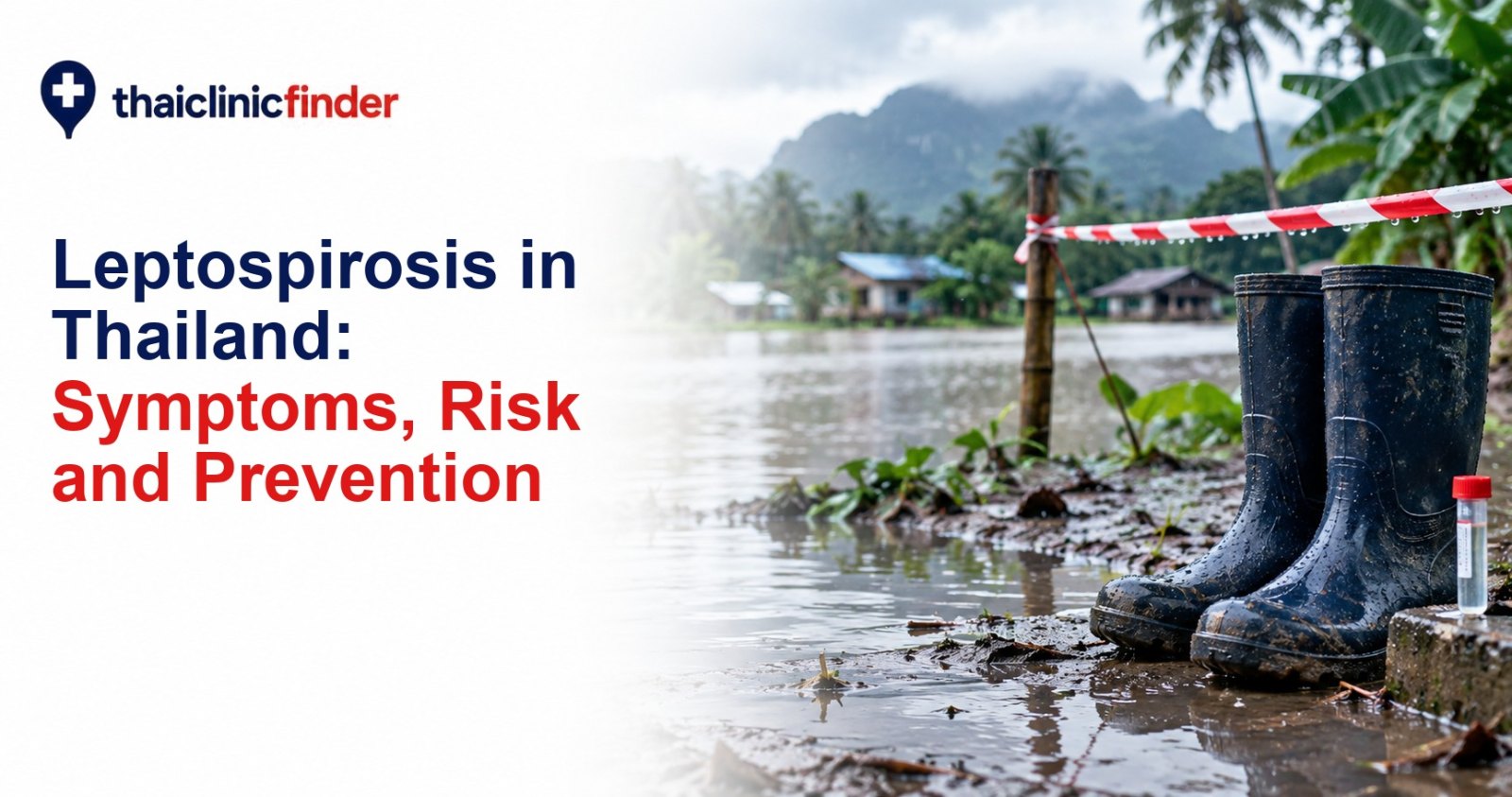
Leptospirosis is not something most visitors think about when planning Thailand, yet the infection becomes relevant in a very specific situation: contact with water or wet soil contaminated by the urine of infected animals. That can mean wading through floodwater after heavy rain, working in a rice field, cleaning a water-damaged building or swimming in freshwater where contamination is possible.
The illness can begin like many other tropical infections, with fever, headache and muscle pain. Most everyday travel does not create the same level of risk, but a recent exposure can be an important clue if you become unwell. This guide explains which situations matter, how to reduce contact and when symptoms need medical attention.
Why rain and flooding change the risk
Leptospirosis is caused by bacteria in the Leptospira genus. Many mammals can carry the bacteria in their kidneys and release them in urine. Rodents are an important reservoir, but dogs, pigs, cattle and other animals can also be involved. The bacteria can survive in moist environments, which is why heavy rain and flooding can connect animal contamination with people who would not normally have direct contact with animals.
Exposure does not require drinking visibly dirty water. The bacteria can enter through cuts and abrasions, through the eyes, nose or mouth, and possibly through skin that has been immersed for a long time. A tiny blister from sandals or an unnoticed scratch may be enough to matter. Human-to-human spread is possible but very rare; this is primarily an environmental and animal-associated infection.
Thailand's tropical climate means leptospirosis can occur throughout the country. Risk is not evenly distributed, however. A person moving between a hotel, office and shopping centre has a different exposure profile from someone cleaning up after a flood or spending several days in wet agricultural land. The useful question is not simply whether leptospirosis exists in Thailand, but whether contaminated water, soil or animal urine may have reached your skin or mucous membranes.
Situations that deserve a closer look
Floodwater is the best-known risk, especially when it covers roads, drains, homes or fields. Water that looks shallow and harmless can contain sewage, sharp debris and contamination from rodents or livestock. Walking through it barefoot or in open shoes increases both contact and the chance of a cut. Children should not play in floodwater, even when it appears calm.
Agricultural and outdoor work can also involve repeated contact with wet soil, irrigation water or animals. Rice farming, livestock handling, sewer work, gardening after flooding and clearing debris are more relevant than ordinary sightseeing. Travelers on adventure itineraries may encounter exposure while rafting, caving, trail walking in mud or swimming in untreated freshwater. The presence of rain alone does not make an activity dangerous, but prolonged wet contact and broken skin raise concern.
Pet owners and people helping sick animals should use care around urine and soiled bedding. Gloves, handwashing and proper cleaning reduce contact. A dog having leptospirosis does not mean everyone nearby will become infected, but nursing an ill animal without protection can create avoidable exposure. Ask a veterinarian how to clean the environment safely.
If severe weather disrupts your trip, avoid entering flooded areas simply to retrieve replaceable belongings. Follow local warnings and keep emergency contacts accessible. Our guide to medical emergencies in Thailand can help you prepare before travelling beyond a major city.
Symptoms and the exposure history doctors need
Symptoms usually begin after an incubation period that can range from roughly 2 to 30 days, often around 1 to 2 weeks. Illness may start abruptly with fever, chills, headache, marked muscle aches, nausea or vomiting. Pain in the calves or lower back and redness of the eyes without discharge are recognised features, though not everyone has them. A mild case can resemble flu, while headache and body pain may also suggest dengue or another infection.
That overlap is why self-diagnosis is unreliable. Tell the clinician exactly what happened: where you were, whether you entered floodwater or freshwater, how long the contact lasted, whether you had cuts, and when the exposure occurred. Mention agricultural work, rodent problems or animal contact even if they seemed unrelated at the time. A clear timeline may influence the tests and treatment the clinician considers.
Do not assume that fever after rain is automatically leptospirosis. Influenza circulates in Thailand, dengue has different safety considerations, and several bacterial and viral illnesses can look similar early on. If you need a broader starting point, what to do when you get sick in Thailand explains how to organise an assessment and what information to bring.
Warning signs that should not wait
Some infections remain mild, but leptospirosis can affect the kidneys, liver, lungs, heart or nervous system. Seek urgent medical care for difficulty breathing, yellow skin or eyes, confusion, very little urine, significant bleeding, collapse, severe weakness or rapidly worsening illness. Do not wait for every classic symptom to appear.
A person who is pregnant, older, immunocompromised or living with kidney, liver, heart or lung disease should have a lower threshold for asking for medical advice. The same applies when a child becomes unwell after a credible exposure. If someone has breathing difficulty, altered consciousness or collapse, call Thailand's medical emergency number, 1669, or go to an emergency department.
Avoid treating suspected leptospirosis with medicine left over from a previous illness. Antibiotic choice and route depend on the diagnosis, severity, allergies and individual factors. Severe illness may require hospital monitoring and intravenous treatment. Taking an unsuitable drug can delay the right assessment and make it harder to understand what is happening.
What a medical assessment may involve
A clinician will consider both the symptoms and the epidemiological history. Early blood tests may look for evidence of inflammation and check kidney and liver function. Specific testing can involve molecular or antibody-based methods, and the usefulness of each test depends partly on when the sample is taken. A negative result at one stage does not always settle the question, so clinical judgement and follow-up can matter.
You may be asked about medicines, allergies, pregnancy, existing health conditions and other possible infections. Bring your passport or identification, insurance details and a list or photograph of medicines you take. If you have records from a first consultation, keep them for any follow-up visit. Costs vary by facility and by whether care remains outpatient or requires admission; medical costs in Thailand provides general context, but the treating facility should give the current estimate.
Treatment should not necessarily wait for perfect laboratory certainty when the clinical picture is concerning. Leptospirosis responds to appropriate antibiotics, and early medical evaluation is important. Follow the prescribed course and return promptly if symptoms worsen, urine output falls, jaundice appears or breathing becomes difficult.
Reducing exposure without cancelling every outdoor plan
The goal is sensible risk reduction, not avoiding Thailand's outdoors. Check weather and local flood warnings before excursions. Do not swim or wade in water that authorities identify as contaminated, and reconsider freshwater activities immediately after flooding. A chlorinated, properly maintained swimming pool is a different environment from an untreated pond, canal or flooded field.
When contact cannot be avoided, wear waterproof boots and gloves suited to the task. Cover cuts with waterproof dressings before starting, but remember that a dressing may loosen during prolonged immersion. Wash exposed skin with clean water and soap afterward, clean new wounds promptly and change out of wet clothing. Protective equipment is particularly important during cleanup because hidden glass or metal can break the skin.
Around accommodation, keep food covered, dispose of rubbish properly and reduce access for rodents. Do not sweep or handle suspected animal urine with bare hands. If a home or business has been flooded, follow local public-health advice for cleaning and disinfection rather than mixing household chemicals. Never combine bleach with ammonia or acidic cleaners, as dangerous fumes can result.
Routine preventive antibiotics are not a substitute for protective behaviour. Recommendations can depend on the type and intensity of exposure, and any preventive medicine has contraindications and side effects. Ask a travel-medicine or infectious-disease clinician rather than buying antibiotics informally.
If you were exposed but feel well
After a single exposure, wash, clean wounds and note the date and place. You do not need to check your temperature every hour, but stay alert for fever, headache, muscle pain, red eyes, nausea or unusual fatigue over the following month. Keep a short record if symptoms appear, including their start time and any medicines taken.
Contact a clinician promptly if fever develops after credible floodwater, freshwater, animal or agricultural exposure. Explain the exposure when booking because it may affect triage. If you are leaving Thailand, tell the clinician in your next country where and when the contact occurred; the incubation period means illness can start after travel. Leptospirosis is not ruled out because the fever began after your flight home.
Flooding can also close roads and reduce access to the clinic you would normally use. Ask accommodation staff or local authorities which routes and facilities are operating, and do not enter deep or fast-moving water to reach a preferred hospital. In a medical emergency, use the safest available route to appropriate care rather than waiting for your usual provider to reopen.
Travel insurance may require contact with an assistance line before non-emergency admission. Do not let administrative steps delay emergency care, but keep policy details and receipts. For non-urgent treatment, confirm whether the facility bills the insurer directly or expects payment first.
A practical plan for rainy-season travel
Before travel, save emergency numbers, check that your insurance covers the activities you plan and pack waterproof dressings if your itinerary includes trekking or fieldwork. Closed footwear is more useful around mud and floodwater than sandals. If you have a condition that makes infection more hazardous, discuss the itinerary with a clinician before departure.
During the trip, treat floodwater as a health and injury risk rather than a photo opportunity. Protect wounds, avoid unnecessary immersion and take local closure notices seriously. If fever follows a possible exposure, arrange an assessment and give the clinician a precise timeline instead of trying to choose between leptospirosis, dengue and flu yourself.
Most visitors will never need leptospirosis treatment, but a little preparation makes the important decisions easier. Keep the exposure details, warning signs and route to care in mind, and use our guide to health insurance for visitors and residents in Thailand to understand why public eligibility and private travel cover should be checked before an emergency, not during one.
Frequently Asked Questions
Is leptospirosis common in Thailand?
Leptospirosis occurs in Thailand, with risk linked to rainfall, flooding, agriculture and contact with contaminated water or soil. Individual risk depends far more on exposure than on simply being in the country.
Can I catch leptospirosis from another person?
Person-to-person transmission is very rare. Infection usually follows direct or indirect contact with urine from an infected animal, often through contaminated water or wet soil.
How soon can symptoms appear after exposure?
The incubation period can range from about 2 to 30 days, with illness often beginning within 1 to 2 weeks. Tell the clinician about any floodwater, freshwater, mud or animal exposure during the previous month.
Should I take antibiotics after walking through floodwater?
Do not start leftover or over-the-counter antibiotics on your own. A clinician should assess the exposure, symptoms, medical history and local situation before deciding whether any medicine is appropriate.
Is there a leptospirosis vaccine for travelers?
No routinely recommended human vaccine is available for most international travelers. Prevention therefore focuses on avoiding contaminated water, protecting broken skin and obtaining prompt care if compatible symptoms develop.
Sources
Writer
Niran Chaiyasit
Niran Chaiyasit is a Thai health writer with a background in public health and a focus on travel health, disease prevention and healthcare access in Thailand. His work covers topics such as common illnesses, vaccinations, mosquito-borne diseases, food safety and practical health information for travelers and expatriates.
Medical review
Justin Brooks
Daniel Brooks is an American health writer with a background in health sciences and a focus on rehabilitation, musculoskeletal health and patient education. He writes about physiotherapy, injury recovery, pain management, preventive health and practical healthcare guidance for international patients and travelers.