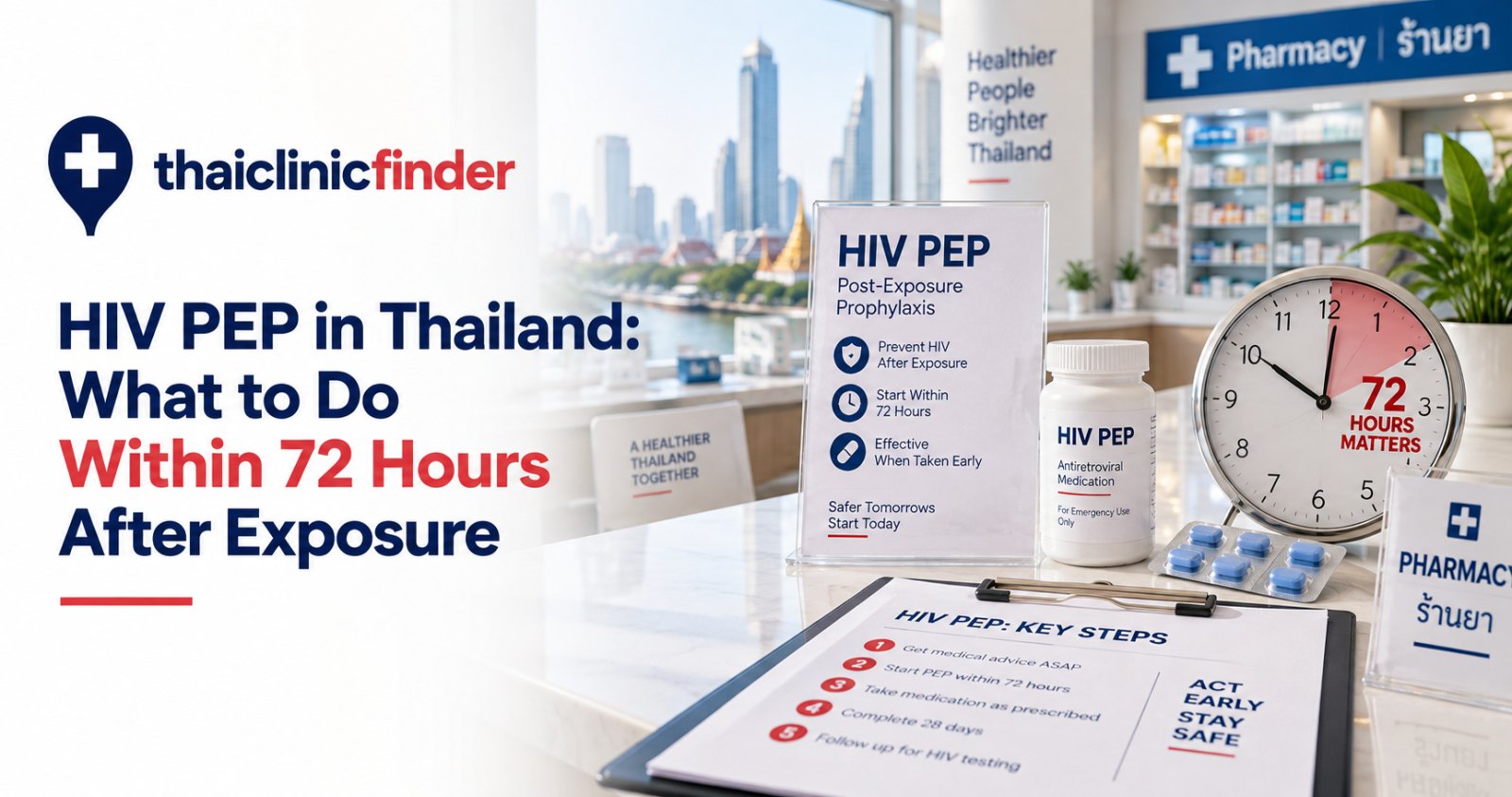
HIV post-exposure prophylaxis, or PEP, is a 28-day course of antiretroviral medication used after a possible exposure to HIV. When started promptly and taken correctly, it can greatly reduce the chance of infection.
Timing is critical. PEP should be started as soon as possible and no later than 72 hours after a potentially significant exposure. The earlier treatment begins, the better.
Not every sexual encounter, needle injury or contact with body fluids requires PEP. The decision depends on what happened, when it happened, the type of exposure and what is known about the other person's HIV status and viral load.
If you are unsure whether an exposure warrants treatment, do not spend valuable time trying to calculate the risk yourself. Contact an emergency department, sexual health clinic or HIV service in Thailand promptly. A clinician can assess the situation and, when appropriate, begin PEP while additional information is still being clarified.
When PEP may be needed
PEP may be considered after an exposure capable of transmitting HIV, particularly when the other person's HIV status is positive without confirmed viral suppression, unknown or cannot be established quickly.
Situations that can require urgent assessment include:
- condomless anal or vaginal sex
- a condom breaking or slipping during a potentially significant exposure
- sharing needles, syringes or other injection equipment
- blood entering the eyes, mouth or another mucous membrane
- blood contacting broken or damaged skin
- occupational needlestick or sharps injuries
- sexual assault
The details matter. Anal sex generally carries a higher transmission risk than vaginal sex, while oral sex is much lower risk in most circumstances. Blood, open wounds, trauma and the exact activity can alter an individual assessment.
Some situations do not normally transmit HIV, including:
- touching or hugging
- contact with intact skin
- sharing food or drinks
- ordinary kissing without blood exposure
- mosquito bites
- contact with sweat, tears or urine when blood is not present
Risk should be assessed from the exposure itself, not from assumptions about someone's nationality, occupation, gender, sexual orientation or appearance.
The 72-hour window is not a target
The phrase "within 72 hours" can create the wrong impression.
It does not mean that starting PEP on the third day is equivalent to starting it a few hours after exposure.
PEP works best when treatment begins as early as possible.
If the exposure happened a few hours ago, seek care now.
If it happened yesterday, seek care now.
If you are approaching 72 hours, go to an appropriate medical service immediately rather than waiting for a preferred clinic appointment.
At night, during a weekend or on a public holiday, an emergency department may be the most practical option.
When you seek care, try to provide:
- the approximate time of exposure
- the type of sexual or blood exposure
- whether a condom was used and what happened to it
- whether blood was present
- what you know about the other person's HIV status
- any information about HIV treatment or viral load
- your current medications and allergies
Do not postpone assessment because some of these details are unavailable.
Where to get HIV PEP in Thailand
PEP can be accessed through HIV services and healthcare facilities in Thailand, particularly in Bangkok and other large cities.
Depending on your location, possible routes include:
- hospital emergency departments
- infectious disease clinics
- sexual health clinics
- HIV clinics
- specialist private clinics
- public HIV services
Bangkok has the widest selection of dedicated HIV and sexual health services.
The Thai Red Cross Anonymous Clinic is one of the best-known HIV testing and prevention services in Thailand. The 1663 AIDS and STI hotline can also provide HIV-related information and help direct people toward appropriate services.
Opening hours, appointment requirements and medicine availability can change, so verify the service directly when possible.
However, if you are within the PEP window, do not delay urgent assessment simply because your preferred clinic is closed.
Outside Bangkok, a hospital emergency department or major provincial hospital can be a practical starting point.
Our guide to healthcare access in Thailand explains the differences between public hospitals, private hospitals and outpatient clinics.
For PEP, speed and clinical capability matter more than amenities.
What happens during the first PEP visit?
The clinician will usually begin by reconstructing the exposure.
You may be asked:
- when it happened
- what type of sexual or blood exposure occurred
- whether a condom was used
- whether the condom broke or slipped
- whether blood was present
- whether there were genital, anal or oral injuries
- whether the other person is known to have HIV
- whether a person with HIV has a documented undetectable viral load
- which medicines you currently take
- whether you have kidney, liver or other medical conditions
- whether pregnancy is possible
These questions can feel personal, but they directly affect the medical decision.
You do not need to know every answer before seeking care.
If communication is difficult, ask for privacy, an English-speaking clinician or an interpreter.
U=U can change the assessment
A person living with HIV who is taking effective treatment and maintains an undetectable viral load does not sexually transmit HIV.
This is known as U=U, Undetectable = Untransmittable.
If the other person has reliably documented sustained viral suppression, tell the clinician because this can materially affect whether PEP is necessary.
However, do not delay your own assessment while trying to obtain another person's medical records or waiting for them to arrange testing.
PEP can be started when indicated and the plan adjusted later if reliable new information becomes available.
What tests are usually done?
A baseline HIV test is normally performed before or around the time PEP is started.
This test is useful for establishing whether HIV was already present before the recent event. It cannot immediately determine whether an exposure that happened a few hours earlier caused infection.
Depending on the circumstances, additional testing may include:
- kidney function
- liver function
- hepatitis B
- hepatitis C
- syphilis
- gonorrhea
- chlamydia
- pregnancy testing
Emergency contraception or hepatitis B vaccination may also be discussed when relevant.
If the clinician considers the exposure significant, PEP should not be unnecessarily delayed while waiting for every laboratory result.
How long do you take PEP?
PEP is normally taken for 28 days.
Modern PEP uses a combination of antiretroviral medicines designed to prevent HIV from establishing infection after exposure.
The exact regimen can depend on factors such as:
- kidney function
- liver function
- pregnancy
- other medicines
- potential drug interactions
- previous use of HIV prevention medication
Take each dose exactly as prescribed and complete the course unless the clinician managing your case advises otherwise.
Do not assemble your own PEP regimen from antiretroviral medicines purchased separately.
Taking PEP while traveling
PEP does not usually prevent travel, but planning matters.
Keep your medicines in their original packaging and carry them in your hand luggage rather than checked baggage.
Ask the prescribing service what to do if:
- you miss a dose
- you vomit after taking it
- you cross several time zones
- you lose your medicine
- you cannot tolerate a side effect
- your trip continues beyond the medication initially dispensed
If you are moving between countries during the 28-day course, carry a prescription or brief medical summary.
Our guide to bringing prescription medicines into Thailand explains the broader issues around traveling with medication.
Side effects are usually manageable
Modern PEP regimens are generally well tolerated, but side effects can occur.
Common complaints can include:
- nausea
- diarrhea
- headache
- fatigue
- stomach discomfort
Do not stop PEP on your own because of mild side effects.
Contact the prescribing service first. The clinician may be able to manage the symptoms, adjust how the medicine is taken or change the regimen if necessary.
Seek urgent medical care for severe symptoms such as:
- difficulty breathing
- facial swelling
- severe or spreading rash
- jaundice
- persistent severe vomiting
- marked deterioration in your general condition
Tell the clinician about all medicines, supplements and recreational substances you use.
Some antacids, mineral supplements and prescription medicines can interact with particular antiretroviral drugs.
PEP does not protect against other STIs
PEP is specifically designed to reduce the risk of HIV infection.
It does not prevent:
- gonorrhea
- chlamydia
- syphilis
- hepatitis
- herpes
- HPV
- pregnancy
A thorough post-exposure consultation should therefore look beyond HIV.
Depending on what happened, you may need:
- STI testing
- hepatitis B vaccination
- pregnancy testing
- emergency contraception
- additional follow-up testing
Some infections have a window period and cannot be reliably detected immediately after exposure.
If you develop symptoms such as discharge, sores, pelvic pain, testicular pain, rash or unexplained fever, seek medical review rather than waiting for a routine follow-up date.
Follow-up HIV testing is essential
A negative baseline HIV test is only the beginning of the follow-up process.
Further testing is needed because an infection acquired during the recent exposure would not necessarily be detectable immediately.
Your clinic should give you specific follow-up dates based on:
- the HIV test being used
- your PEP regimen
- the timing of the exposure
- individual medical circumstances
Follow-up may include testing several weeks after exposure and again later in the post-exposure period.
Write the dates down.
Do not rely on remembering that you need another test "sometime next month."
If you will leave Thailand before follow-up is complete, ask for a medical summary containing:
- date of exposure
- baseline HIV result
- PEP regimen
- date PEP was started
- expected completion date
- STI results
- future testing dates
The medical appointment checklist can help you keep this information organized.
Sex during the follow-up period
Follow the advice given by your clinic during and after PEP.
PEP can substantially reduce HIV risk when taken correctly, but it is not a guarantee.
Until follow-up is complete, you may be advised to:
- use condoms
- avoid sharing injection equipment
- avoid donating blood
- follow specific guidance around breastfeeding when relevant
Do not share your PEP tablets with another person.
Someone else who experiences a possible exposure needs their own urgent assessment.
If this could happen again, ask about PrEP
PEP is designed for an emergency after exposure.
PrEP, or pre-exposure prophylaxis, is designed for people who may have ongoing or recurring exposure to HIV.
If you have needed PEP more than once, or think similar exposures may happen again, ask the HIV service whether PrEP would be appropriate.
A clinic can discuss:
- available PrEP options
- HIV testing
- kidney monitoring when relevant
- STI screening
- how to transition from PEP to PrEP
PEP and PrEP are different tools used at different stages of prevention.
After sexual assault
After sexual assault, HIV prevention is only one part of the medical response.
Your immediate safety comes first.
A hospital or appropriate medical service can assess:
- injuries
- HIV PEP
- pregnancy risk
- emergency contraception
- hepatitis prevention
- other STIs
- forensic options
You can seek healthcare even if you have not decided whether to report the assault to police.
Because PEP and some forensic procedures are time-sensitive, medical assessment should happen as soon as possible.
If preserving evidence is something you may want, healthcare staff can explain the relevant steps. Your immediate health and safety take priority.
For severe injuries or a medical emergency in Thailand, call 1669.
Our Thailand emergency numbers guide covers the main emergency contacts.
Confidentiality and privacy
HIV exposure can involve sensitive information, and you can ask how the service handles:
- identification
- medical records
- HIV results
- communication
- insurance claims
- payment information
The Thai Red Cross Anonymous Clinic is known for anonymous HIV-related services, although current registration, identification and payment procedures should be confirmed directly.
Private hospitals may require normal patient registration and may ask for payment or a deposit.
If you plan to claim through travel or international health insurance, remember that the insurer may receive medical information necessary to process the claim.
If language is a barrier, ask for an English-speaking doctor or trained interpreter instead of relying on a partner to translate highly personal details.
See our guide to choosing an English-speaking clinic in Thailand.
What if more than 72 hours have already passed?
The standard window for starting PEP is within 72 hours of exposure.
If more time has passed, do not assume there is nothing useful to do.
You should still seek medical advice for:
- HIV testing
- follow-up HIV testing
- STI screening
- hepatitis assessment
- pregnancy-related care where relevant
- PrEP planning if future exposure is possible
A clinician can create an appropriate follow-up plan even when the normal PEP window has already closed.
The key decision
After a possible significant HIV exposure in Thailand, seek medical assessment immediately rather than waiting to see whether symptoms appear.
There are no symptoms in the first hours that can tell you whether HIV transmission occurred.
PEP is time-sensitive, should begin as soon as possible when indicated and is normally taken for 28 days.
You do not need to calculate the risk perfectly before asking for help.
Give the clinician the facts you know, start treatment promptly if recommended, take the full course and complete the follow-up testing plan.
Frequently Asked Questions
Can I start HIV PEP more than 72 hours after exposure?
PEP should be started as soon as possible and no later than 72 hours after a substantial exposure. If more time has passed, still seek clinical advice promptly for testing, prevention and follow-up.
Do I have to know the other person's HIV status?
No. Give the clinician whatever reliable information you have, but do not delay assessment while trying to obtain it. The decision can be based on the type and timing of exposure.
How long is a PEP course?
PEP is normally taken for 28 days. Take it exactly as prescribed and contact the treating service before stopping or changing it, including if side effects occur.
Does a negative test right after exposure mean I do not need PEP?
No. A baseline test cannot exclude infection from an event that just occurred. It helps identify pre-existing infection; PEP decisions and follow-up testing depend on the exposure and timeline.
Sources

Writer
Niran Chaiyasit
Niran Chaiyasit is a Thai health writer with a background in public health and a focus on travel health, disease prevention and healthcare access in Thailand. His work covers topics such as common illnesses, vaccinations, mosquito-borne diseases, food safety and practical health information for travelers and expatriates.

Medical review
Justin Brooks
Daniel Brooks is an American health writer with a background in health sciences and a focus on rehabilitation, musculoskeletal health and patient education. He writes about physiotherapy, injury recovery, pain management, preventive health and practical healthcare guidance for international patients and travelers.