The cost of IVF in Thailand is best understood as the price of a treatment pathway, not a single procedure. Current published examples range from THB 280,000 for a resident IVF/ICSI package at MedPark Hospital to THB 335,000 for Bangkok Hospital Headquarter's fly-in pathway from ovarian stimulation through embryo transfer. Packages that add embryo testing and freezing are listed at THB 380,000 and THB 456,000 by those providers.
Those figures are useful reference points, not a national average or a promise of what your own cycle will cost. Your medication dose, fertilisation method, number of embryos, need for testing and whether transfer happens during the same cycle can all affect the final bill. This guide explains what the published prices contain and how to compare quotations without being caught out by a low headline figure.
IVF cost in Thailand: current provider examples
Each offer has different eligibility rules and inclusions, so the rows are not like-for-like alternatives. Prices and terms can change. Confirm the exact package, branch, validity date and eligibility directly with the fertility centre before paying or arranging travel.
| Provider and pathway | Published price | Main published inclusions | Important limits or exclusions |
|---|---|---|---|
| MedPark Hospital IVF/ICSI package | THB 280,000 | Specialist, nursing and hospital fees for specified visits; monitoring blood tests and ultrasound; up to 3,000 units of stimulation drugs; egg retrieval; ICSI and embryo culture; one embryo transfer; two weeks of post-transfer hormones | For Thai nationals and expatriates residing in Thailand; pre-package consultation and tests, EmbryoScope, PGT and embryo freezing are excluded |
| Bangkok Hospital Headquarter Package A | THB 335,000 | Ovarian stimulation at THB 138,000; egg retrieval at THB 139,000; embryo transfer at THB 58,000; procedure doctor fees included | For fly-in patients at Bangkok Hospital Headquarter; medical clearance before treatment is excluded |
| MedPark Hospital IVF/ICSI with PGT-A, up to five embryos | THB 380,000 | Monitoring, up to 3,000 units of stimulation medicine, retrieval, ICSI and culture, PGT-A for up to five embryos, one transfer, post-transfer support and one year of freezing for five embryos | For Thai nationals and resident expatriates; additional medicines and investigations for other conditions are excluded |
| Bangkok Hospital Headquarter Package B | THB 456,000 | Stimulation and retrieval; PGT and freezing for two embryos; transfer with thawing and post-transfer medicine; procedure doctor fees included | For fly-in patients; medical clearance is excluded; the PGT component is specified for two embryos |
The comparison shows why it is misleading to ask which clinic has the cheapest IVF without first defining the treatment. A THB 280,000 package includes ICSI but excludes freezing and PGT. A THB 335,000 pathway is divided into three stages and does not advertise genetic testing. Even packages that both contain PGT cover different numbers of embryos and different storage arrangements.
What happens during an IVF cycle
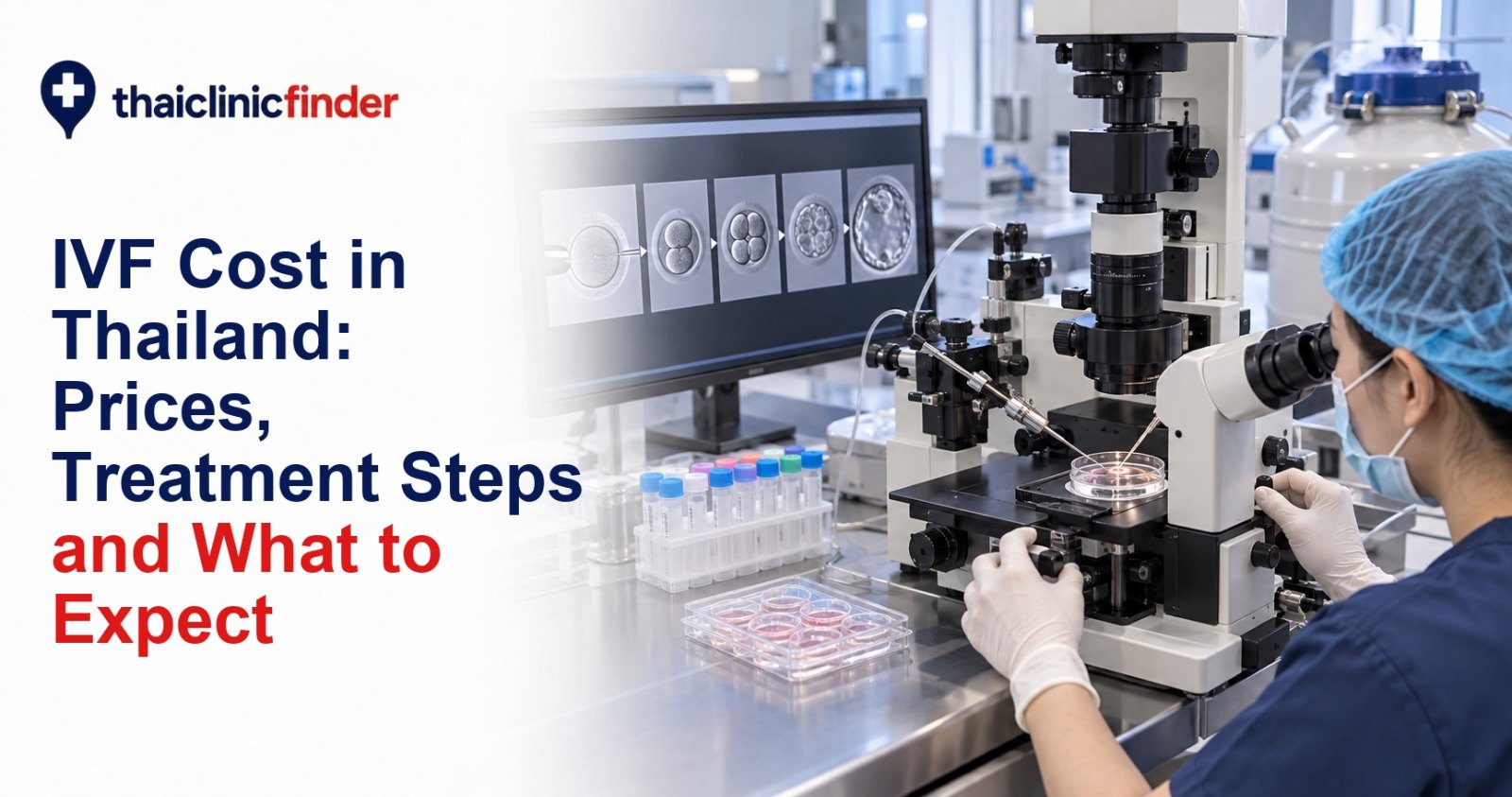
IVF involves stimulating the ovaries with fertility hormones, monitoring follicle development, collecting eggs and fertilising them in a laboratory. If embryos develop, one may be transferred to the uterus and suitable remaining embryos may be frozen. The HFEA notes that a cycle can take roughly three to six weeks, although a freeze-all plan or later frozen transfer changes the timeline.
Before treatment, the clinic will normally assess the people providing eggs and sperm. The work-up may include a medical history, ovarian reserve testing, ultrasound, semen analysis and infection screening. Ask which overseas records it accepts and which tests must be repeated before you travel.
Ovarian stimulation usually means daily injections followed by repeat ultrasound scans and sometimes blood tests. The dose is adjusted according to response, which is why medicine is a major source of uncertainty in a quotation. A package that includes a fixed allowance can still generate an extra bill if more medication is clinically required. Egg retrieval is then performed as a procedure, and you should ask whether anaesthesia, theatre charges and recovery are included.
With conventional IVF, eggs and sperm are placed together in the laboratory. With ICSI, an embryologist injects one sperm into an egg. ICSI can be appropriate in some circumstances, including certain sperm-related fertility problems, but it is not simply a more expensive name for every IVF cycle. A useful quotation states whether IVF or ICSI is planned, what happens if the laboratory recommendation changes, and whether embryo culture is included through the intended day of development.
Why the final bill may be higher
The safest way to budget is to request an itemised estimate for your likely protocol. It should separate the initial assessment, medicine allowance, monitoring, retrieval, anaesthesia, laboratory work, transfer and follow-up. If the clinic only provides a single total, ask it to mark each item as included, excluded or dependent on clinical need.
Medication is the first variable to clarify. Ask which drugs are covered, whether the allowance is expressed in units or baht, and what an extra dose costs. Also ask what happens financially if stimulation is stopped because the ovaries respond too little or too strongly. Cancellation terms matter because a cycle can end before retrieval, and package refund rules differ.
Laboratory additions can substantially change the comparison. PGT involves embryo biopsy and genetic analysis and normally requires embryos to be frozen while results are processed. Discuss the medical reason, limits of the test, number of embryos covered and the charge for each additional embryo. Do not assume that testing guarantees a pregnancy or a healthy baby.
Freezing has its own chain of costs: cryopreservation, an initial storage period, later storage, thawing and a frozen embryo transfer. A package may include one year of storage but not the transfer that follows, or include a transfer while limiting the number of embryos covered. Ask what happens to storage fees if you return home and how consent is managed from overseas.
How to compare clinics and success information
Price matters, but it should sit beside clinical suitability, laboratory practice, communication and follow-up. Confirm the exact facility where retrieval and embryo culture take place, who will manage your cycle and how you can reach the team after a procedure. You can use the Medical Council of Thailand's online service to check a doctor's registration, while recognising that registration alone does not compare experience in a particular fertility treatment.
Be careful with a single headline success percentage. Ask whether the figure refers to pregnancy, clinical pregnancy or live birth; whether it is reported per cycle started, retrieval or embryo transfer; and whether it applies to your age group and use of your own eggs. Also ask about the period covered and the number of patients behind the figure. Two clinics can publish different percentages because they treat different populations or use different denominators.
A consultation should also cover risks and realistic alternatives. Fertility medicines can cause side effects and, less commonly, ovarian hyperstimulation syndrome. Retrieval is an invasive procedure. Transferring more than one embryo can raise the chance of a multiple pregnancy, which carries additional risks. Your specialist should explain how those considerations apply to you and why a particular transfer plan is being recommended.
Planning IVF travel to Thailand
Do not buy a rigid return ticket around a predicted retrieval date. Follicles develop at different rates, so monitoring may shift the trigger injection and retrieval. Bangkok Hospital advises fly-in patients to plan about three to four weeks in Thailand for a complete cycle. A freeze-all pathway may involve a shorter retrieval visit and a separate trip for transfer, but only your clinic can map the likely schedule for your protocol.
Ask when you must be physically present, whether any monitoring can be done at home and how results should be sent. Build in time for the first consultation, tests, medication teaching and recovery after retrieval. If a partner or sperm provider must attend, confirm exactly when and which identification or consent documents are required. Current Thai eligibility and reproductive-law requirements should be checked with the clinic before deposits or flights are booked.
Plan for ordinary travel costs as well as treatment. Accommodation near the clinic can make frequent morning monitoring easier, while flexible flights reduce the pressure to proceed on a fixed date. Keep electronic and paper copies of prescriptions, treatment summaries and contact details. For a broader overview of appointments and payment at Thai facilities, see how healthcare access works in Thailand.
Questions to ask before paying a deposit
A written quotation is more useful than a sales summary. Take it home after the consultation and check these points:
- Is the quote for conventional IVF or ICSI, and what clinical reason supports that choice?
- Which consultations, scans, blood tests, medicines, doctor fees, anaesthesia and hospital fees are included?
- Is there a medication cap, and how are extra doses charged?
- Are embryo culture, freezing, storage, thawing and one transfer included?
- If PGT is proposed, what type is it, why is it recommended and how many embryos does the price cover?
- What are the cancellation and refund terms if the cycle stops before retrieval or transfer?
- What will a later frozen transfer, another year of storage or another full cycle cost?
- Which results or consent documents must be completed before travel?
- Who provides follow-up after retrieval and after you return home?
Also confirm how long the quotation remains valid and whether paying a deposit locks in the price. Provider pages can be updated without notice, and a package may be restricted to fly-in patients, Thai nationals or expatriates living in Thailand. A clear eligibility answer is essential before you treat an advertised figure as your budget.
Making a practical IVF budget
Start with the pathway your specialist actually recommends, then add every likely item outside the package. These examples alongside our guide to medical costs in Thailand place published private-hospital pathways at THB 280,000 to THB 456,000, but that span combines different patient groups, laboratory services and testing. It is not a Thai average and it should not replace a personal estimate.
Compare two or three written quotations using the same headings: assessment, medication, monitoring, retrieval, fertilisation, embryo culture, testing, freezing, storage, transfer and follow-up. Add travel, accommodation and a contingency for extra medicine or schedule changes. This makes a higher but more complete quotation easier to recognise than a cheaper headline that leaves several stages open.
Finally, choose the team whose plan you understand and whose answers remain clear when you ask about exclusions, risks and what happens if treatment does not proceed as hoped. Review the quotation alongside our guide to what to check before a medical appointment in Thailand, and confirm the current package terms directly with the named fertility centre before paying.
Frequently Asked Questions
How much does IVF cost in Thailand?
There is no single national price. Current provider examples include THB 280,000 for MedPark Hospital's resident IVF/ICSI package and THB 335,000 for Bangkok Hospital Headquarter's fly-in IVF pathway, while packages with PGT are higher. Ask for a personalised, itemised quotation because eligibility, medication needs and laboratory services can change the final total.
Are fertility medicines included in an IVF package?
Sometimes, but the allowance may be limited. MedPark's THB 280,000 package lists up to 3,000 units of ovulation-induction medicine, while Bangkok Hospital presents ovarian stimulation as a priced stage. Confirm the drug allowance and the cost of any additional doses.
Is ICSI included in the cost of IVF in Thailand?
It depends on the provider and package. MedPark's published THB 280,000 package includes ICSI and embryo culture, but you should not assume that every IVF quote does. Ask which fertilisation method is included and why it is recommended for you.
Does a standard IVF package include PGT?
Usually not. Bangkok Hospital and MedPark both publish separate, more expensive pathways that include preimplantation genetic testing and embryo freezing. PGT should be discussed with a fertility specialist rather than treated as an automatic upgrade.
How long should an international patient stay in Thailand for IVF?
The timeline depends on whether stimulation, retrieval and transfer happen in one visit or the embryos are frozen for a later transfer. Bangkok Hospital advises fly-in patients to allow about three to four weeks for a complete cycle, but your clinic should provide a personal schedule before you book flexible travel.
Sources
Writer
Niran Chaiyasit
Niran Chaiyasit is a Thai health writer with a background in public health and a focus on travel health, disease prevention and healthcare access in Thailand. His work covers topics such as common illnesses, vaccinations, mosquito-borne diseases, food safety and practical health information for travelers and expatriates.
Medical review
Justin Brooks
Daniel Brooks is an American health writer with a background in health sciences and a focus on rehabilitation, musculoskeletal health and patient education. He writes about physiotherapy, injury recovery, pain management, preventive health and practical healthcare guidance for international patients and travelers.