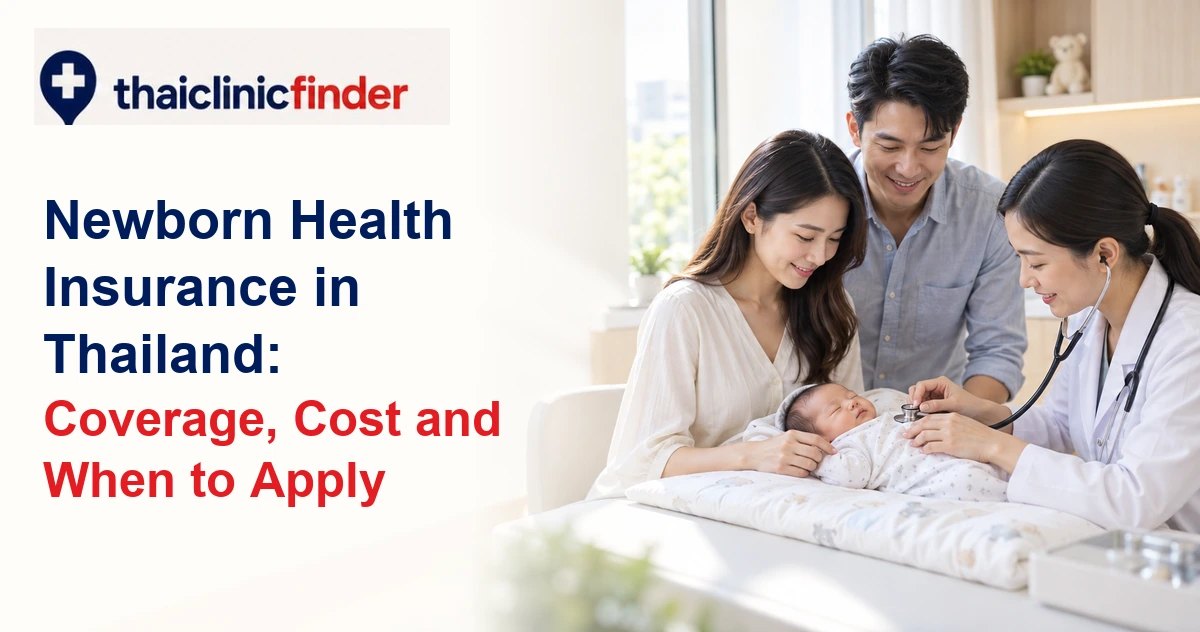
For expat families in Thailand, arranging health insurance for a newborn is one of those jobs that is easier before the baby arrives. The difficult part is not finding a policy with a large headline limit. It is understanding when the baby becomes eligible, what must be submitted after delivery, and how the policy treats care in the first weeks of life.
There is no single rule across Thai insurers. Some products accept children from 15 days old; others offer a newborn route when a parent is already insured and the family meets a short notification window. Rules for prematurity, congenital conditions, neonatal intensive care and vaccinations can differ sharply.
This guide explains what to ask, how to compare cover and where common gaps appear. Ask the insurer or licensed broker to confirm current wording in writing.
Start before the birth, even if the application comes later
Parents often cannot complete a baby's application until they have the birth record and medical information. Foreign parents may also be waiting for civil registration, a passport or proof of dependency. That does not mean the research should wait. Before delivery, ask the current family insurer whether it offers newborn enrolment and request the exact endorsement or policy section that applies.
Timing matters because a newborn route may be different from an ordinary child application. Allianz Ayudhya's 2026 FlexCare plan guide, for example, describes a route for a newborn to be added when the company receives an application and birth certificate or delivery record within 30 days of birth. Acceptance and the detailed conditions still matter. A different insurer or plan may use another minimum age or process.
Without a newborn provision, a child may need to reach the normal entry age. AIA Health Starter and AXA SmartCare Essential currently state a minimum application age of 15 days for relevant options; AXA also requires a child under 18 to apply with a parent or legal guardian. A rule from one product must not be carried over to another.
Put the deadline in your calendar and ask who must receive the documents. Sending information to an agent is not necessarily the same as the insurer accepting an application. If one parent is insured through work, check whether the baby can join that group plan and whether cover would end if the parent's employment or immigration status changes.
What cover from birth really means
The phrase covered from birth sounds reassuring, but it needs unpacking. Ask whether it means routine care after an uncomplicated delivery, eligible treatment when the baby is ill, or both. Also ask whether the baby's benefit is separate from the mother's maternity allowance.
A maternity add-on may pay for specified newborn services during the mother's admission without creating a comprehensive policy for the child. Allianz Ayudhya's UltraCare maternity add-on, for example, lists a newborn examination, vitamin K, specified vaccinations and screening. Those benefits are not open-ended cover for every neonatal admission.
The policy schedule and newborn endorsement should answer:
- Does the baby receive a separate annual limit?
- Is neonatal intensive care covered, and is there a sublimit?
- Are physician fees, medicines, tests and surgery included?
- Does a room limit or co-payment apply?
- When does outpatient cover begin?
- Is treatment outside Thailand included?
If the answer is given verbally, ask for the policy clause or a written confirmation. A friendly summary is useful, but the contract determines how a claim is assessed.
Congenital conditions, prematurity and existing treatment
This is the section to read slowly. Congenital conditions are not handled uniformly. A plan may exclude them, cover only specified conditions, impose a separate maximum, or apply special rules during the first months. Conditions identified on a prenatal scan may also be relevant to underwriting.
Prematurity and low birth weight can involve respiratory or feeding support and a longer neonatal stay. Some endorsements also contain terms for multiple births or assisted conception. This does not mean automatic refusal, but the family needs the actual wording before relying on cover.
If the baby is already receiving treatment when an application is made, ask how that treatment will be classified. A policy bought after an admission will not normally turn an existing hospital bill into a covered claim. The insurer may request discharge notes, test results or a medical report before deciding whether to accept the child and on what terms.
Families using fertility treatment may also find it helpful to review IVF costs in Thailand alongside the insurance documents, while keeping fertility, maternity and newborn benefits as three separate questions.
Compare benefits, not just the premium
There is no single price for newborn health insurance in Thailand. Premiums depend on benefit limits, deductible, outpatient options, area of cover and underwriting. Age can affect later renewals, and insurers may revise rates under the contract.
Start with the risks that would be hard for your family to pay directly. For many parents, that means inpatient admission, neonatal intensive care and surgery. Then look at routine outpatient visits and vaccinations. Paying a little more for a broad benefit is not automatically good value if the exclusions remove the care you are most concerned about.
Use a simple comparison sheet with these rows:
- annual inpatient limit and any per-disability limit
- NICU and newborn treatment limits
- congenital-condition wording
- room, doctor, surgery and medicine limits
- deductible and co-payment
- outpatient and vaccination benefits
- geographical area, home-country visits and emergency treatment abroad
- hospital network and pre-authorisation rules
For context on how private bills are structured, read our guide to medical costs in Thailand. If you are comparing the baby's policy with cover for older siblings, health insurance for children in Thailand provides a broader child-focused checklist.
Local and international plans solve different problems
A local Thai plan can be a sensible fit when the family expects most treatment to take place in Thailand and is comfortable with the available network and benefit limits. An international plan may be relevant when the family regularly visits a home country, expects a future relocation or wants planned treatment across a wider region.
The label alone does not settle the choice. Check the geographic area, rules for planned care outside Thailand, emergency cover while travelling and whether the insurer can continue the child's cover after a move. Worldwide cover may exclude the United States or price it separately.
Also ask how claims work at the hospitals you would realistically use, including the branch nearest home and the hospital with the neonatal unit you would choose in an emergency. Cashless or direct billing is not a guarantee of payment. The hospital may still need pre-authorisation, and the family may have to pay deductibles, excluded items or charges above a policy limit. Confirm the current arrangement with both the insurer and the exact hospital branch.
Our guide to choosing health insurance in Thailand explains the wider trade-offs between local and international policies.
Documents to prepare after delivery
The insurer will tell you exactly what it requires. Common requests can include the baby's birth certificate or hospital delivery record, a completed application, the parent's policy information and medical documents if the baby received treatment. International families may also be asked for identification documents once available. Ask whether the hospital delivery record can start the process while a foreign passport or translated civil document is pending; never assume a missing document automatically extends the enrolment deadline.
Ask these questions before leaving the hospital:
- Which document starts the enrolment process?
- Is a hospital record acceptable while the civil birth certificate is pending?
- Must the baby be discharged before an application is assessed?
- Does the insurer need a newborn examination or medical report?
- When will written confirmation of cover be issued?
Keep copies of every form and note the date it was submitted. If the baby needs urgent care, seek medical help first rather than delaying treatment for insurance paperwork. Ask the hospital's billing team to contact the insurer as soon as practical, but remember that clinical admission and claim approval are separate decisions.
Routine care, vaccinations and outpatient visits
A healthy baby still has regular appointments. A standard inpatient plan may not pay for well-baby checks, vaccinations or developmental reviews. Some plans offer outpatient benefits, but the premium and annual limit may make self-payment reasonable for routine care.
Separate predictable costs from expensive risks. Ask for the annual outpatient maximum, per-visit limit, pharmacy rules and whether vaccinations are specifically listed. AXA's International Exclusive information, for example, describes vaccination benefits on selected plan levels and subject to plan conditions. That does not mean every AXA product includes them.
The same caution applies to maternity benefits. Routine newborn items included during delivery do not necessarily continue after discharge, so ask the maternity insurer and the baby's insurer to explain where one benefit ends and the other begins.
Questions worth asking in writing
A short, precise email can expose gaps faster than a long sales conversation. Include the plan name and ask the insurer or broker to answer each point against the current wording.
- What is the earliest application age or newborn notification deadline?
- If accepted, what is the exact effective date?
- Are NICU, prematurity and congenital conditions covered?
- Are there special terms for IVF, surrogacy or multiple births?
- What waiting periods apply to illness, outpatient care and vaccinations?
- Does the child have an individual annual limit?
- Which deductibles, co-payments and room limits apply?
- Which documents are required, and where must they be sent?
- What happens if the baby is admitted before acceptance is confirmed?
- Is renewal guaranteed, and how can premiums change?
Do not rely on a quotation alone. Ask for the benefit schedule, exclusions and newborn endorsement, and check that every document refers to the same product version.
A practical plan for the first month
Before the due date, shortlist the plans that match where your family lives and travels, then request the newborn clauses in writing. Compare them with the family's wider needs using our guide to healthcare access in Thailand, and confirm the claims process with the hospital you expect to use.
After delivery, collect the required records and submit the application well before any stated deadline. Keep proof of submission and check the effective date, exclusions, limits and any special terms on the issued documents. If something differs from what you were told, raise it immediately with the insurer or licensed intermediary.
The best outcome is not simply the cheapest premium. It is a policy whose timing and newborn rules you understand before you need to make a claim. Recheck current terms directly because availability, fees, hospital networks and product wording can change.
Frequently Asked Questions
Can a newborn be insured from birth in Thailand?
Some plans offer a newborn enrolment route that can make cover effective from birth if the application is accepted and submitted within the stated deadline. Other products use a minimum entry age, so parents should check the exact plan wording before delivery.
Is a baby automatically covered by the mother’s health insurance?
Usually not as a general rule. Maternity benefits may pay for specified routine newborn services, while treatment for the baby may require a separate child policy or accepted newborn endorsement.
Does newborn health insurance cover NICU care?
It may, but the annual limit, newborn sublimit, room allowance and exclusions can differ by plan. Ask the insurer to confirm neonatal intensive care in writing, including how prematurity and treatment before acceptance are handled.
Are congenital conditions covered?
Coverage varies significantly. A policy may exclude congenital conditions, cover only specified conditions, or impose a separate maximum, so families should read the congenital-condition clause rather than relying on a general benefit summary.
What documents are needed to insure a newborn in Thailand?
Requirements depend on the insurer, but they can include an application, birth certificate or hospital delivery record, parent policy details and medical records if the baby received treatment. Confirm the submission route and keep proof that the insurer received the documents.
Sources

Writer
Niran Chaiyasit
Niran Chaiyasit is a Thai health writer with a background in public health and a focus on travel health, disease prevention and healthcare access in Thailand. His work covers topics such as common illnesses, vaccinations, mosquito-borne diseases, food safety and practical health information for travelers and expatriates.

Medical review
Justin Brooks
Daniel Brooks is an American health writer with a background in health sciences and a focus on rehabilitation, musculoskeletal health and patient education. He writes about physiotherapy, injury recovery, pain management, preventive health and practical healthcare guidance for international patients and travelers.