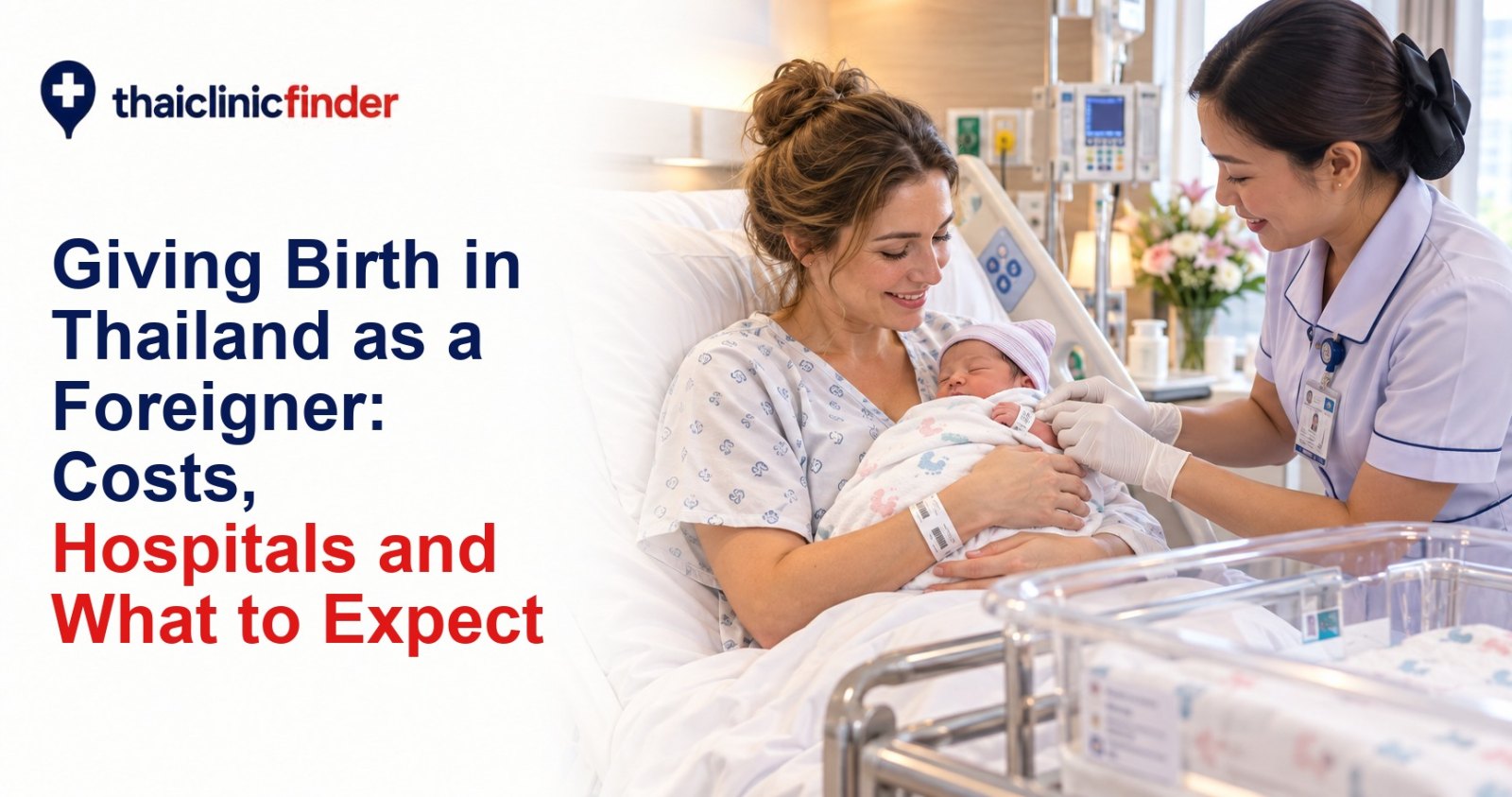
Foreign residents can give birth in Thailand through both public and private hospitals. The main differences are usually cost, appointment experience, language support, room type and access to specific obstetric and neonatal services.
Private hospitals publish maternity packages that make budgeting easier, but the package price normally assumes an uncomplicated pregnancy and delivery.
Complications, neonatal intensive care, extra hospital nights and specialist treatment can add substantial costs.
Start hospital planning before the final trimester
Do not wait until the last weeks of pregnancy to decide where to deliver.
An early hospital discussion allows you to confirm:
- obstetrician availability
- prenatal appointment process
- delivery package conditions
- emergency cesarean capability
- neonatal services
- language support
- insurance authorization
If the pregnancy is high-risk, specialist capability becomes more important than package price.
Current private maternity prices in Bangkok
Samitivej Srinakarin currently publishes 2026 delivery packages including:
- normal labor: THB 99,990
- natural childbirth program: THB 120,000
- cesarean birth: THB 129,990
- cesarean twin birth: THB 219,000
Bangkok Hospital Headquarter currently lists:
- normal labor: THB 110,400
- cesarean section: THB 151,800
- cesarean twins: THB 240,000
These are hospital-specific published packages, not national averages.
Prices and conditions should be confirmed directly before booking.
Packages are designed for uncomplicated cases
Samitivej states that its childbirth package conditions apply to pregnancies at the required gestational stage without complications.
A fixed package may stop applying if the mother or baby needs additional care.
Potential extra costs can include:
- longer admission
- intensive care
- neonatal intensive care
- treatment of pregnancy complications
- additional specialist consultations
- blood products
- additional procedures
Ask for a written list of exclusions.
Normal delivery and cesarean packages differ
Cesarean delivery generally costs more because it involves:
- operating room
- anesthesiologist
- surgical team
- longer stay
- more medical supplies
The decision to perform a cesarean should be clinical rather than based on which package is more convenient.
Ask the obstetrician how emergency cesarean delivery is handled if labor does not progress as expected.
NICU capability can matter
For a low-risk pregnancy, neonatal intensive care may never be needed.
For premature birth, twins or higher-risk pregnancy, access to an appropriate neonatal intensive care unit can become a major consideration.
Ask whether the exact hospital has:
- pediatricians at delivery
- neonatal resuscitation
- NICU
- neonatal specialists
A maternity center should be evaluated on emergency capability, not only room quality.
Prenatal care is usually separate from the delivery package
The delivery package often does not include the full pregnancy.
Prenatal costs can include:
- obstetric consultations
- ultrasound
- laboratory tests
- genetic screening
- vaccines
- specialist maternal-fetal medicine
- medicines
Samitivej, for example, markets separate prenatal membership and pregnancy services in addition to delivery packages.
Budget for the whole pregnancy rather than only the final hospital bill.
English support varies
International private hospitals often advertise international patient services, but you should confirm the language of the exact obstetrician and pediatric team.
The doctor who follows the pregnancy may not be the only clinician involved during an emergency.
Ask how interpretation is handled outside normal clinic hours.
Public hospitals can cost less
Government and university hospitals can offer much lower self-pay costs than premium private hospitals.
However, foreign patients may experience:
- longer waits
- more complex registration
- less predictable English support
- fewer room choices
Some major public teaching hospitals have excellent high-risk obstetric and neonatal services.
The best choice depends on clinical needs, language and budget.
For a broader overview, see How Healthcare Access Works in Thailand.
Insurance needs to be checked early
Maternity insurance often has waiting periods.
Buying insurance after pregnancy has already started may not create immediate maternity coverage.
If you already have insurance, ask:
- Is prenatal care covered?
- Is normal delivery covered?
- Is cesarean delivery covered?
- What is the maternity limit?
- Is newborn care included?
- Is NICU included?
- Is pre-authorization required?
Samitivej notes that its maternity packages can be used with insurance but advises families to contact the insurer in advance.
High-risk pregnancy can change everything
Conditions such as hypertension, diabetes, placenta problems, multiple pregnancy or fetal concerns may require maternal-fetal medicine specialists.
If the pregnancy is high-risk, ask whether the hospital has the relevant specialty and neonatal support.
A low-cost package at a facility without the needed specialist team is not a meaningful saving.
Newborn care
Published maternity packages may include routine newborn services such as:
- nursery care
- basic screening
- hearing tests
- vaccinations
- vitamin K
Do not assume expanded metabolic screening or other optional testing is included.
Ask for the newborn package details separately.
Birth registration and nationality questions
Medical care and nationality are separate issues.
A baby born in Thailand does not automatically become Thai simply because the birth occurs in a Thai hospital.
Parents should confirm birth registration, passport and immigration requirements with the relevant civil authorities and embassy or consulate.
The hospital can usually explain its part of the birth documentation process, but citizenship advice should come from the appropriate authority.
What to bring for admission
Hospitals may request:
- passport
- insurance documents
- prenatal records
- blood test results
- medication list
- obstetric notes
Ask the hospital for its specific admission checklist before the due date.
When to go to hospital urgently
Seek immediate obstetric assessment for symptoms such as:
- heavy bleeding
- severe abdominal pain
- seizures
- severe headache with visual symptoms
- reduced fetal movement when clinically concerning
- suspected labor well before term
- difficulty breathing
Do not wait for a routine appointment if serious symptoms develop.
Questions to ask when comparing hospitals
Ask:
- What is the current normal delivery price?
- What is the cesarean package?
- Which complications are excluded?
- Is the obstetrician fee included?
- Is the pediatrician included?
- Is anesthesia included?
- How many nights are included?
- Is NICU available?
- What does newborn care include?
- Can insurance be billed directly?
- What language support is available?
- What happens if the baby needs longer admission?
These answers make packages easier to compare.
Comparing a package with the likely total bill
A maternity package is useful only after you understand its boundaries. Ask whether the obstetrician, pediatrician and anesthesiologist are included, how many nights the room covers and what level of room is specified. Laboratory tests, additional medicines, epidural analgesia, induction, extra monitoring or a longer stay may sit outside the headline price.
Also ask what happens if a planned vaginal birth becomes an emergency cesarean. Some hospitals switch to a different package, while others charge additional services individually. The family should know how a deposit is handled and whether an insurer can issue a guarantee of payment. Our overview of medical costs in Thailand explains why an itemised estimate is more useful than comparing one advertised number.
Current published Bangkok examples place selected uncomplicated normal-delivery packages around THB 99,990 to THB 110,400, with cesarean packages higher. These figures belong to named hospitals and package conditions. They are not a national average and may change.
Planning when the pregnancy is not low risk
Twins, placenta problems, hypertension, diabetes, fetal growth concerns and a history of premature birth can change the level of care required. Ask whether the exact hospital has maternal-fetal medicine, round-the-clock operating capability, blood bank support and neonatal intensive care appropriate to the pregnancy. A beautiful maternity room is less important than access to the right team.
Request a realistic discussion of possible neonatal charges. Routine newborn care and NICU care are financially very different, and a baby's admission may be billed separately from the mother's. Confirm whether insurance covers the newborn from birth, requires enrolment within a deadline or excludes congenital conditions.
Families considering fertility treatment may also find the budgeting framework in our IVF cost guide helpful, although fertility treatment and maternity care are separate services with separate insurance rules.
Records, registration and communication
Bring a concise set of prenatal records, including ultrasound reports, laboratory results, blood group, medication list, allergies and any specialist letters. If records are not in Thai or English, ask the hospital whether translation is needed. Transfer them before the due date so the obstetric team has time to review the pregnancy.
Confirm who to call when labor starts, which entrance is used outside normal hours and whether your chosen obstetrician is always available. Ask who provides cover and how decisions will be explained in an emergency. Language support should be checked for the exact appointment and delivery unit, not inferred from a hospital's general international marketing.
After birth, the hospital provides medical documentation, but parents remain responsible for civil registration, nationality, passport and immigration requirements. A child is not automatically Thai merely because the birth took place in Thailand. Contact the relevant district office and the parents' embassy or consulate for current requirements.
Preparing for discharge with a newborn
Before leaving hospital, ask for the mother's discharge summary, operative record if relevant, medication list and clear warning signs. Obtain the baby's birth and medical records, screening results, vaccination record and feeding or follow-up plan. Confirm where both mother and baby should return for review.
Practical arrangements matter. Have an appropriate infant car seat, safe transport and help at home. Families staying in Thailand should choose a pediatric service before discharge rather than searching during an illness. Insurance for the child may have separate enrolment rules; our guide to health insurance for children in Thailand covers questions worth asking.
Seek urgent maternity or emergency assessment for heavy bleeding, severe headache with visual disturbance, seizures, chest pain, difficulty breathing or severe abdominal pain. For a newborn, breathing difficulty, blue colour, poor responsiveness, fever or feeding problems require prompt professional assessment.
A practical plan for giving birth in Thailand
Choose the hospital early enough to review clinical capability, communication and cost before the final weeks of pregnancy. Obtain written estimates for vaginal and cesarean delivery, ask how complications and NICU care are billed, and give the hospital your prenatal records in advance.
Check maternity insurance directly with the insurer, including waiting periods, benefit limits, pre-authorisation and newborn cover. Foreign residents who are reviewing broader eligibility can also read about Thai public health insurance for foreigners, while recognising that eligibility and maternity benefits depend on the specific scheme.
The safest choice is the facility that can meet the pregnancy's clinical needs and communicate clearly, not simply the one with the lowest package. Reconfirm prices and conditions close to admission because promotions, staffing and package terms can change.
Frequently Asked Questions
Can foreigners give birth in Thailand?
Yes. Foreign residents and visitors can use Thai public or private maternity services, subject to hospital registration and payment arrangements.
How much does childbirth cost in Bangkok?
Current 2026 private packages include examples around THB 99,990 to THB 120,000 for selected normal delivery programs and higher prices for cesarean delivery.
Does maternity insurance cover childbirth in Thailand?
Some plans do, but maternity benefits often have waiting periods and separate limits. Confirm coverage before pregnancy where possible.
Do Thai private hospitals have NICUs?
Many major private hospitals do, but capability differs by hospital. Confirm the exact facility if neonatal intensive care is important.
Does a baby born in Thailand automatically get Thai citizenship?
No. Nationality depends on Thai nationality law and the parents' circumstances, not simply the place of birth.
Sources

Writer
Niran Chaiyasit
Niran Chaiyasit is a Thai health writer with a background in public health and a focus on travel health, disease prevention and healthcare access in Thailand. His work covers topics such as common illnesses, vaccinations, mosquito-borne diseases, food safety and practical health information for travelers and expatriates.

Medical review
Justin Brooks
Daniel Brooks is an American health writer with a background in health sciences and a focus on rehabilitation, musculoskeletal health and patient education. He writes about physiotherapy, injury recovery, pain management, preventive health and practical healthcare guidance for international patients and travelers.