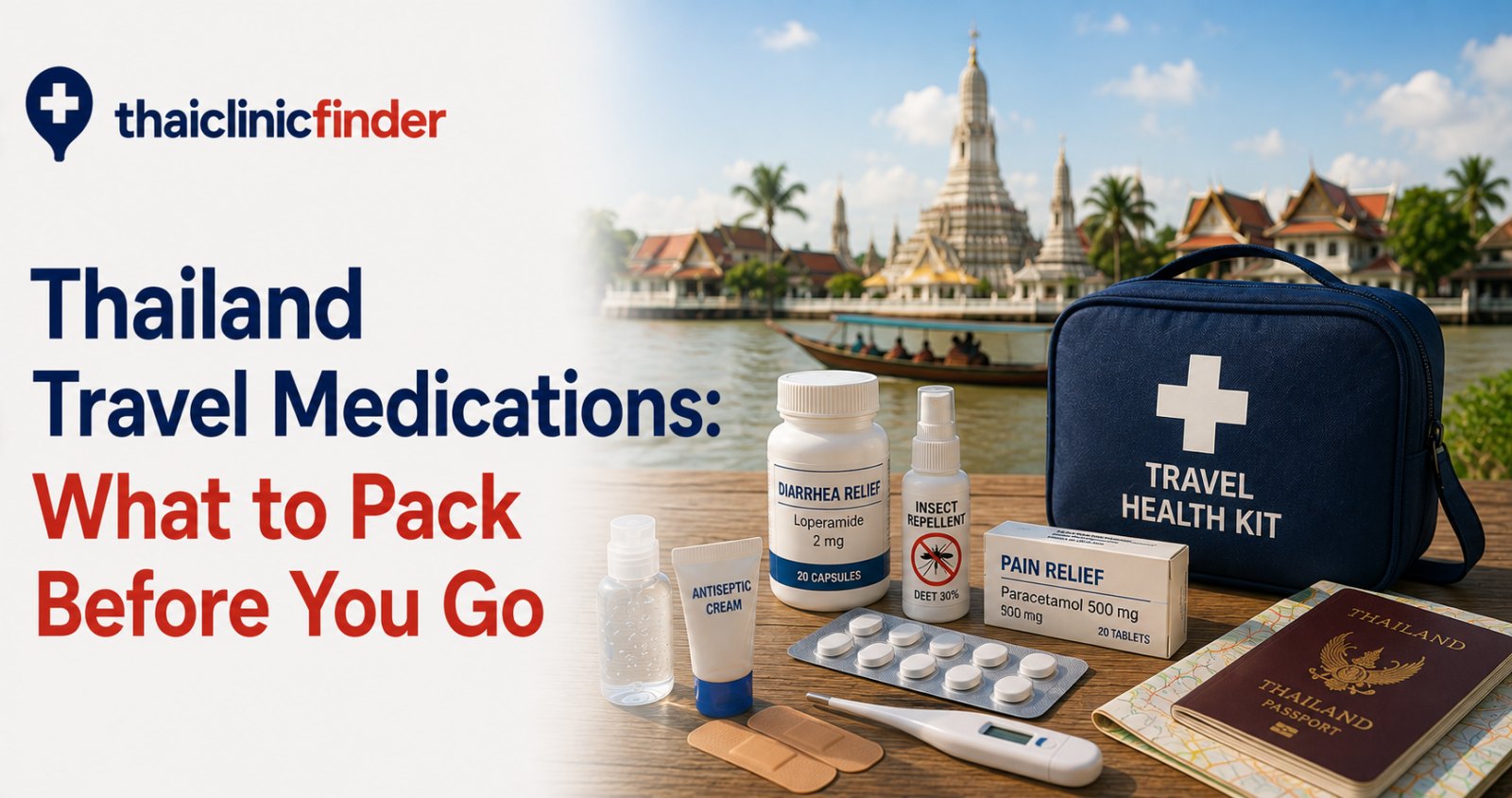
Packing medications for Thailand is less about creating a huge travel pharmacy and more about making sure you have the medicines you personally need, plus a small number of useful treatments for common travel problems.
Thailand has pharmacies, clinics and hospitals throughout major cities and tourist areas, but that does not mean every medicine you use at home will be available under the same brand name, strength or regulatory category. Some medicines are also subject to specific Thai import rules.
CDC currently recommends bringing the medicines, including over-the-counter products, that you expect to need during your trip, with extra supply in case of delays. Thailand's Food and Drug Administration separately regulates medicines containing narcotic drugs and psychotropic substances, and some travellers need documentation or a permit before arrival.
Here is a practical way to build a medication kit for Thailand without packing unnecessary products.
Your regular medicines come first
The most important medicines in your bag are not the classic travel remedies. They are the treatments you already use regularly.
Bring enough of your prescribed medication for the trip, with some additional supply if your travel plans are delayed. CDC specifically advises travellers to bring the medicines they expect to need rather than assuming they will be able to replace them easily overseas.
Examples can include medicines for:
- asthma
- allergies
- high blood pressure
- diabetes
- thyroid conditions
- epilepsy
- migraine
- mental health conditions
- contraception
- other chronic conditions
Keep a list containing the generic names of your medicines rather than relying only on brand names. The brand you know at home may not exist in Thailand or may be marketed differently.
If a medicine is essential to your health, splitting your supply between checked and hand luggage is generally less sensible than keeping it accessible in your cabin baggage, subject to airline and security rules.
Check Thai medicine rules before packing controlled medication
Not every prescription medicine can simply be placed in your suitcase without checking its status.
Thailand's FDA has specific rules for medicines containing narcotic drugs and psychotropic substances.
Under current Thai FDA guidance, travellers receiving treatment with medicines containing Schedule II or III narcotic drugs can bring up to a 90-day prescribed supply when they comply with the applicable rules. These travellers must obtain a Thai FDA permit before travelling and are instructed to apply online at least 15 days before arrival.
For Schedule II, III or IV psychotropic substances, a prescribed quantity of up to 30 days can generally be carried with the required medical certificate or prescription. A supply of 31 to 90 days requires additional permission under current Thai FDA rules.
Do not try to guess whether your medicine falls into one of these categories. Thai FDA operates an official online Check the Drug system where travellers can search by active ingredient.
For a detailed explanation, see bringing prescription medicines into Thailand.
Keep prescription medicines identifiable
Avoid carrying important prescription tablets loose in an unlabelled container.
Where possible, keep medicines in their original packaging and bring supporting medical documentation, particularly for controlled medicines or treatments that could raise questions at the border.
Useful documentation can include:
- your prescription
- a doctor's letter
- the generic name of the medicine
- the strength
- your prescribed dose
- the medical reason for treatment
For medicines subject to Thai FDA controls, follow the exact documentation and permit requirements published by the agency rather than relying on generic travel advice.
A small diarrhoea kit can be genuinely useful
Acute diarrhoea is one of the travel health problems for which having medication immediately available can make a practical difference.
A basic kit can include:
- oral rehydration salts
- loperamide for appropriate uncomplicated diarrhoea
- any other medication specifically recommended by your travel-health clinician
Oral rehydration is more important than simply stopping bowel movements because diarrhoea causes loss of both fluid and electrolytes.
Loperamide can help reduce stool frequency in uncomplicated watery diarrhoea, particularly when a traveller needs to take a flight, bus or other long journey. It should not be treated as the correct response to every gastrointestinal illness.
CDC advises against using loperamide alone when diarrhoea is bloody or accompanied by fever.
Do you need to pack antibiotics for Thailand?
Not automatically.
CDC does not recommend antibiotics for mild travellers' diarrhoea. Whether an antibiotic is appropriate depends on the severity of illness, symptoms and likely cause.
Carrying an antibiotic for self-treatment may be appropriate for some travellers when it has been prescribed in advance by a travel-health clinician with clear instructions about when to use it.
What is less useful is packing random leftover antibiotics and taking them whenever diarrhoea, sore throat or fever develops.
Antibiotics do not treat viral infections, and inappropriate use contributes to antimicrobial resistance and can cause side effects.
If you become significantly unwell in Thailand, a clinic can determine whether an antibiotic is actually indicated.
Oral rehydration salts deserve more attention than most travel medicines
For diarrhoea, vomiting or significant heat-related fluid loss, oral rehydration solution can be one of the most useful items in a travel health kit.
ORS contains a specific balance of glucose and electrolytes designed to support fluid absorption.
Use the exact quantity of water indicated on the packet. Making the solution too concentrated or too dilute changes the intended electrolyte balance.
For mild dehydration, ordinary fluids may also be appropriate, but persistent vomiting, severe weakness, dizziness or very limited urination should prompt medical assessment.
Pack a pain and fever medicine you already tolerate
A simple pain reliever is useful for headache, muscle pain, mild fever and minor injuries.
Paracetamol, also known as acetaminophen, is a common option for travellers who can take it safely.
One reason paracetamol is particularly useful in Thailand is dengue. WHO advises avoiding aspirin and non-steroidal anti-inflammatory medicines such as ibuprofen when dengue is suspected because of bleeding risk.
This does not mean ibuprofen is never appropriate during a trip to Thailand. It means that if you develop an unexplained fever compatible with dengue, you should not automatically continue taking aspirin or ibuprofen without appropriate medical advice.
See dengue fever in Thailand: symptoms, risk areas and prevention for the warning signs that matter.
Antihistamines can help with several common travel problems
An oral antihistamine can be useful for allergies, itching and some reactions to insect bites.
Travellers who already know which antihistamine works well for them may prefer bringing their usual product rather than selecting an unfamiliar medicine after arrival.
Some older antihistamines can cause substantial drowsiness. That matters if you plan to drive, ride a motorbike or combine the medicine with alcohol or other sedating drugs.
A non-sedating or less-sedating antihistamine may be more practical for daytime use when medically appropriate.
If swelling is severe, breathing becomes difficult or you develop signs of a serious allergic reaction, an antihistamine is not a substitute for emergency medical treatment.
Motion sickness medication may be useful even if you rarely need it at home
Thailand itineraries often include ferries, speedboats, winding mountain roads and long bus journeys.
If you are prone to motion sickness, carrying a medicine you have previously tolerated can be useful for journeys to islands or mountainous destinations.
Some motion sickness medicines cause drowsiness, blurred vision or impaired coordination. Check the instructions before combining them with driving, alcohol or other sedating medicines.
If you have glaucoma, urinary problems, heart conditions or take other regular medication, check with a pharmacist or doctor before using an unfamiliar motion sickness medicine.
Mosquito protection belongs in the medicine kit too
In Thailand, mosquito prevention matters because dengue is endemic and malaria occurs in selected parts of the country.
CDC recommends effective repellents containing recognised active ingredients such as:
- DEET
- picaridin or icaridin
- IR3535
- oil of lemon eucalyptus or PMD
- 2-undecanone
Dengue-transmitting Aedes mosquitoes commonly bite during the day, so repellent is not something to reserve only for evenings.
See mosquito bites in Thailand: risks and prevention for practical bite-prevention guidance.
Do you need malaria tablets for Thailand?
Most standard tourist itineraries do not require malaria medication.
Current CDC guidance places the main malaria transmission risk in selected rural forest and forest-fringe areas near Thailand's borders with Myanmar, Cambodia and Malaysia.
CDC recommends prescription malaria prevention medicine for some of these areas, while mosquito-bite precautions alone are advised for many places with rare or very limited transmission.
For example, malaria prevention tablets are not routinely recommended simply because you are visiting Bangkok, Phuket, Chiang Mai city, Koh Samui or Pattaya.
If your itinerary includes rural border areas, trekking or forest exposure, check destination-specific malaria advice before departure. Some preventive medicines need to be started before you enter the risk area.
See malaria in Thailand: risk areas, prevention and what travellers should know for a detailed geographical breakdown.
Your asthma or allergy medication should not depend on finding the same brand in Thailand
Travellers with asthma, severe allergies or another condition requiring rapid-access medication should carry their established treatment.
For asthma, that can include prescribed inhalers. For people with a history of severe allergic reactions, it may include prescribed emergency medication such as an adrenaline auto-injector.
Do not place essential emergency medicine somewhere you cannot access during a flight or long journey.
Bring a copy of your treatment information and know the generic name of each medicine.
If your condition is unstable before departure, arranging a medical review before travelling is more useful than simply packing more medication.
Consider a basic skin and wound kit
Minor cuts, blisters and abrasions are common during travel.
A compact kit might contain:
- adhesive dressings
- sterile gauze
- antiseptic suitable for minor wounds
- blister dressings
- any regular topical treatment you use
Thailand's heat and humidity can make skin irritation uncomfortable, especially during long periods of walking.
For a deep wound, animal bite, contaminated wound or signs of infection, a basic first-aid kit is not enough.
Animal bites and scratches deserve particular attention because rabies exists in Thailand. Wash the wound thoroughly and seek medical assessment promptly rather than waiting to see whether it heals normally.
Sunscreen is a health item, not just a beach product
Strong sun exposure can occur during sightseeing, boating, hiking and motorbike travel as well as at the beach.
Bring or buy broad-spectrum sunscreen and reapply it according to the product instructions, particularly after swimming or sweating.
Sun protection is especially important if you take medication that increases photosensitivity. Some antibiotics, acne medicines and other drugs can make skin more sensitive to sunlight.
If you take a medicine with this warning, ask your doctor or pharmacist about practical sun precautions before travelling.
Avoid building a huge just-in-case pharmacy
More medicine is not automatically better preparation.
Packing multiple antibiotics, several overlapping painkillers, sedatives, sleeping tablets and unfamiliar treatments increases the risk of taking the wrong medicine or combining products inappropriately.
A better approach is to carry:
- your essential regular medication
- a few familiar over-the-counter treatments
- travel-specific medicines recommended for your itinerary
- clear instructions for anything prescribed specifically for self-treatment
Thailand has extensive healthcare services in major destinations. For anything more serious than a straightforward minor illness, medical assessment can be safer than experimenting with a large collection of medications.
Be careful with combination cold and flu products
Combination products can contain several active ingredients in one tablet or sachet.
A cold medicine may already contain paracetamol, an antihistamine or a decongestant. Taking an additional product containing the same active ingredient can unintentionally increase the total dose.
Check the ingredient list rather than looking only at the brand name.
This becomes especially important when switching between medicines purchased in different countries, where familiar brands may have different formulations.
Sleeping pills and anxiety medicines need extra checking
Some medicines used for sleep, anxiety and other psychiatric conditions can fall within Thailand's psychotropic-substance controls.
Thai FDA rules depend on the active ingredient, schedule and amount being carried.
For Schedule II, III and IV psychotropic medicines, current Thai FDA guidance distinguishes between a supply of up to 30 days and quantities of 31 to 90 days, with additional requirements applying to the larger amount.
Do not assume that a prescription from your home country automatically makes every quantity legal to bring into Thailand.
Search the active ingredient through the official Thai FDA traveller portal before departure.
Opioid pain medicines can require a Thai FDA permit
Travellers taking certain opioid or other narcotic medicines need particular care with the import rules.
Thai FDA states that medicines containing Schedule II or III narcotic drugs can be carried for treatment for up to a 90-day prescribed supply when the traveller complies with the rules, including obtaining the required permit.
The agency instructs travellers who require this permit to apply at least 15 days before travelling.
If you use a strong prescription pain medicine, check its generic ingredient rather than assuming that normal prescription status in your home country is sufficient.
Do not mail controlled medication to yourself
Thai FDA rules concerning narcotic drugs and psychotropic substances apply to importation, not only what is physically carried in your luggage.
Sending medication by post can therefore create legal and customs problems and should not be treated as an easy workaround if you did not bring enough medicine.
If you may need more than your permitted personal supply, discuss the situation with your prescribing doctor and check Thai regulations before travelling.
What if you forget a medication?
If you arrive in Thailand without an important medicine, start with its generic name, dose and formulation.
A Thai clinic or hospital can assess whether the same medicine or an appropriate alternative is available locally. Prescription and dispensing rules may differ from your home country.
Do not buy medication from an informal seller or unidentified online source merely because the packaging resembles what you normally take.
CDC notes that medicines in some destinations can be substandard or counterfeit and recommends bringing needed medicines from home when possible.
If you need a consultation, how to choose an English-speaking clinic in Thailand explains what to verify before booking.
A realistic Thailand medication packing list
For many healthy adult travellers, a sensible kit may include:
- enough regular prescription medicine for the full trip plus a reasonable delay margin
- copies of prescriptions or relevant medical documentation
- paracetamol or another appropriate familiar pain reliever
- oral rehydration salts
- loperamide for appropriate uncomplicated diarrhoea
- an antihistamine you already tolerate
- motion sickness medication if relevant to your itinerary
- mosquito repellent with a recognised active ingredient
- prescribed malaria prevention medication if your itinerary requires it
- sunscreen
- a small wound-care kit
- any condition-specific emergency medicine prescribed to you
What belongs in the kit depends on your health and itinerary. Someone trekking near a malaria-risk border area has different needs from someone spending one week in central Bangkok.
When your travel kit is no longer enough
A medication kit is intended for minor, predictable health problems. It should not delay assessment of a potentially serious illness.
Seek medical care for symptoms such as:
- high or persistent fever
- severe dehydration
- bloody diarrhoea
- repeated vomiting
- severe abdominal pain
- breathing difficulty
- confusion or fainting
- severe allergic reaction
- rapidly worsening illness
- significant animal bites or scratches
For an immediately life-threatening emergency in Thailand, the emergency medical services number is 1669.
See medical emergencies in Thailand: numbers and practical steps for more information.
Pack for your itinerary, not for every illness imaginable
A good Thailand travel medication kit should be small enough to understand and useful enough that you can manage predictable problems without searching for an unfamiliar product when you are already unwell.
Start with your regular prescriptions. Then add a few practical items for dehydration, diarrhoea, pain, allergies, mosquito exposure and minor injuries based on your trip.
Most importantly, check the active ingredients of controlled prescription medicines with Thai FDA before departure. Some narcotic and psychotropic medicines require documentation or advance permission, and these rules matter more than whether the medicine is routinely prescribed in your home country.
Frequently Asked Questions
What medications should I take to Thailand?
Bring enough of your regular prescription medicines, plus practical items such as oral rehydration salts, an appropriate pain reliever, loperamide for uncomplicated diarrhoea, an antihistamine and any travel-specific medicine recommended for your itinerary.
Can I bring prescription medication into Thailand?
Many medicines can be brought for personal treatment, but Thailand applies specific rules to narcotic and psychotropic substances. Check the active ingredient with the official Thai FDA traveller system before departure.
Do I need a doctor's letter for medication in Thailand?
A doctor's prescription or medical certificate is required in some situations, particularly for controlled medicines. Even when not specifically required, carrying documentation for important prescription treatment can be useful.
Do I need malaria tablets for Thailand?
Not for most standard tourist itineraries. Prescription malaria prevention is mainly recommended for selected rural forest and border areas. Check your exact itinerary before travelling.
Should I bring antibiotics to Thailand?
Routine antibiotics are not necessary for every traveller. A travel-health clinician may prescribe an antibiotic for self-treatment in specific circumstances, but mild travellers' diarrhoea does not generally require antibiotics.
Should I pack loperamide for Thailand?
It can be useful for uncomplicated watery travellers' diarrhoea, particularly during long journeys. It should not be used alone for bloody diarrhoea or diarrhoea accompanied by fever.
Can I bring sleeping pills or anxiety medication to Thailand?
Some of these medicines are regulated as psychotropic substances. Thai FDA requirements depend on the active ingredient and quantity, so use the official Check the Drug tool before travelling.
How much controlled medication can I bring into Thailand?
Current rules vary by classification. Thai FDA allows up to a 90-day prescribed supply of certain Schedule II or III narcotic medicines with the required permit. For Schedule II, III or IV psychotropic medicines, quantities up to 30 days and quantities from 31 to 90 days have different documentation and permit requirements.
Sources

Writer
Thai Clinic Finder Editorial Team
The editorial team checks public healthcare information against official provider and institutional sources. It does not provide medical advice.